





November 18, 2026

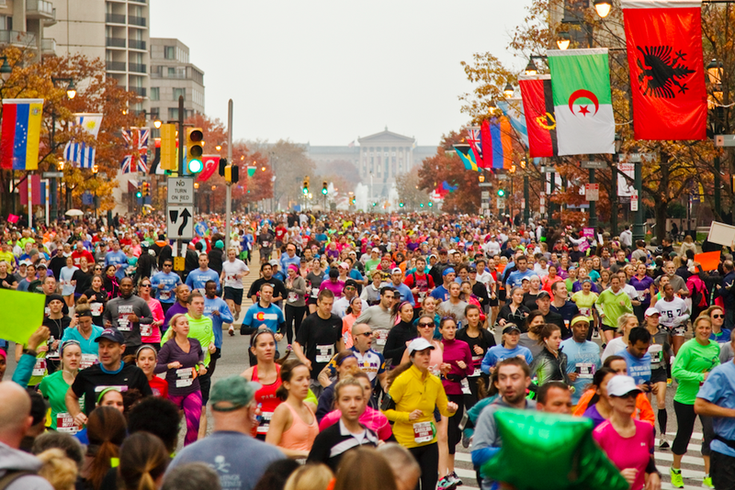 M. Edlow/Visit Philadelphia™
After completing a marathon, runners should spend about two weeks doing gentle exercises — walking, swimming or riding an exercise bike — before beginning to run again, Dr. John Luksch says.
Dr. John Luksch will be part of the medical team that tends to runners needing attention at the end of the Philadelphia Marathon on Sunday. As part of that experience, Luksch is looking forward to cheering for runners taking their final strides of the race.
"It's fun, because you see these people who have worked so hard and put so much into being able to accomplish this," said Luksch, a sports medicine physician at Rothman Orthopaedics. "It's kind of cool to be one of the first people to congratulate them on having been able to successfully do this. Plus, you can see people within that last stretch before they cross the finish line, they're starting to tire a little, and you can be that voice like, 'Hey, you're almost there. It's just ahead.'"
MORE: Running hard isn't always necessary —slow jogging has health benefits, too
Runners can expect to feel that "real runner's high, elation, sense of pride and accomplishment" after they cross the finish line, Luksch said.
At the same time, completing a marathon puts a lot of stress on the body, "on not just your muscles, your bones, but on your respiratory system, your cardiovascular system," he added.
To help runners recover safely and successfully from the marathon, Luksch offered the following advice.
"The one thing that you'll see if you ever spectate at one of these events is that people will come through the final stretch, cross the finish line, and a lot of them will kind of keep going a little bit, slow to a jog, and then stop," Luksch said.
But he warned that it is important to keep moving.
"As soon as you stop running, all those muscles, especially the muscles in the lower legs that have been working and pumping blood back up to your heart — all of a sudden are no longer going to be pumping as hard," Luksch said. "And then all of the blood is going to pool down in your lower extremities."
This can cause people to get light-headed and dizzy, putting them at risk of falling and injuring themselves. Instead of abruptly stopping, Luksch said runners should "gradually slow down and then keep walking, even if you're just going back and forth or walking in a circle with your hands on top of your head."
It is crucial to stay warm after the race, at first by using a mylar blanket handed out at the finish line and then by changing from sweat-damp clothes into dry ones, Luksch said.
"You don't want your muscles to have to constantly contract, like shivering, to bring your body temperature up, because then that's using even more of your energy stores" as the body is trying to recover, Luksch said.
It is also very important to rehydrate and refuel immediately after the race. Eating bananas and soft pretzels and drinking electrolyte-enhanced drinks can start "replenishing some of those energy stores that it (the body) was blowing through during the course of the run," Luksch said.
Chocolate milk is a good post-race choice, because it has a simple sugar-carbohydrate combination that is easy for the body to digest. Drinking plenty of water and nourishing the body with complex carbohydrates, protein and fruits and vegetables in the days after the race is also critical, Luksch said.
"I've seen people ... they cross the finish line. They get their medal. They eat a banana, and then as soon as they catch up with their friends and family, they're drinking beer," Luksch said. "I know that sounds kind of gross, but actually, it's not that bad because it's water based. There's some carbohydrate in it."
But avoid excessive alcohol, Luksch said: "Maybe just stick into one, and not get too overzealous."
Make sure to get plenty of sleep after a marathon to help the body repair muscles and other tissues. "Sleep is when our bodies recover," Luksch said.
Runners should generally expect to feel sore and stiff in the days after the race. The clinical name for this feeling is delayed onset muscle soreness, or DOMS. It is muscle pain that occurs 1-3 days after intense exertion that then diminishes as muscles restore themselves.
"I think a lot of times the inclination is, 'Oh well. If it's hurting, if it's sore, I need to rest it,'" Luksch said. "But in this case, it's a little more the opposite. We want you to actually keep moving, not very strenuous, vigorous exercise or activity, but going for short, easy walks around the neighborhood or around a high school track."
Pedaling on an exercise bike at low resistance and going for an easy swim are other good options. It is important to ease gradually back into movement with these gentle forms of exercise for about two weeks after a marathon, before starting to run again, Luksch said.
At that point, people may think about reverse tapering, starting with low mileage, slow runs and gradually increasing mileage over time. Luksch advised waiting at least nine months before running another marathon to allow the body to recover fully.
During and after a marathon, be alert for signs that the body is in serious distress, Luksch said.
"If you are noticing pain with running throughout the course of the race that is getting worse and not really improving with either slowing down or going from running to walking, or if it's significant enough that you are having a hard time even walking on (a sore leg or foot) or putting weight on it, that's concerning," he said.
Also, runners who feel very light-headed or out of sorts should seek medical help. Friends or family members or other race participants who notice runners acting disoriented should alert a member of the medical team, Luksch said.
People experiencing "diffuse, entire body pain" or who have "pronounced swelling of the extremities" or chest pain, also should get medical help, he said.