






September 30, 2026

 Ketut Subiyanto/Pexels
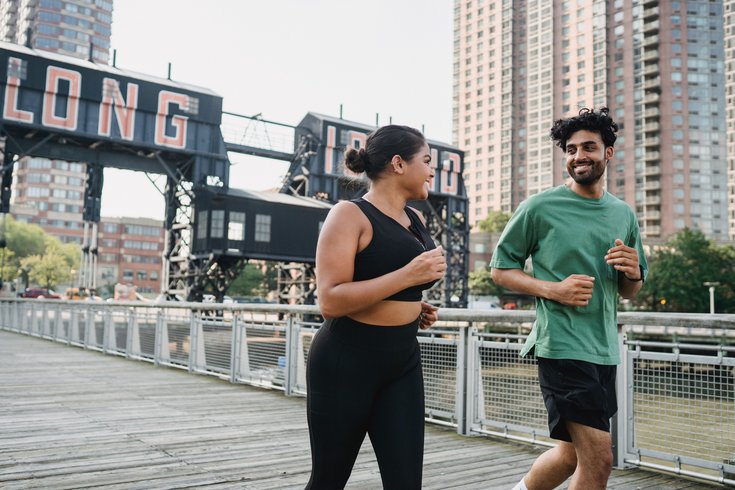
Running at a 'smiling pace,' when you can easily carry on a conversation, for just 10 minutes is enough to boost mood, research shows.
Always pushing harder, faster and longer when it comes to running may not be necessary to reap mental and physical health benefits.
That is what a growing chorus of health and fitness voices – and research – has been saying.
MORE: Fishtown man is biking from Indiana to Pittsburgh to raise money for cancer research
Running at a glacial pace, sometimes even at a pace slower than walking, has been linked to elevated mood, better blood pressure and heightened focus.
For instance, a recent study found that running with shorter steps, at "walkable speeds" of about 17 to 21 minutes per mile, for 10 minutes at a stretch, was enough to "brighten moods and sharpen prefrontal function," the study's lead author, Hideaki Soya, told the Washington Post.
Soya, a professor emeritus of exercise biochemistry and neuroendocrinology at the University of Tsukuba in Japan, said the study confirmed that "running does not have to be hard to be good for your brain."Japanese researcher, Dr. Hiroaki Tanaka — author of the 2016 book "Slow Jogging: Lose Weight, Stay Healthy, and Have Fun with Science-Based, Natural Running" — calls slow jogging "niko niko" running, or running at a "smiling" pace.
Niko niko running calls for slowing to a pace at which it's easy to chat with a buddy. Such a pace that varies from person to person. But there are some key elements, Tanaka, an exercise physiologist, explains. Here's her advice:
• Take small steps.
• Pay attention to footfalls and land on the ball of your foot, not on the heel or toe.
• Keep the back straight.
• Relax the arms and shoulders.
• Keep your chin up slightly and look ahead.
• Relax your arms and shoulders.
• Don't kick the ground.
Running at a slow pace, with "no huffing and puffing," still boosts stamina and also improves the body's resistance to fatigue, Dr. Tamanna Singh, a cardiologist, told the Cleveland Clinic in 2024.
Additionally, slow running about 80% of the time – with 20% of training at faster paces – helps bones, ligaments, tendons and muscles better adapt to the stressors that running puts on the body. Running at much slower than normal paces also strengthens muscles and the heart and lungs, according to Singh.
"If you wanted to sing to a song you're listening to while you're running, you could," Singh said. "It's an effort that you could sustain essentially forever."