




September 25, 2026
 Michaela Althouse/PhillyVoice
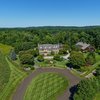
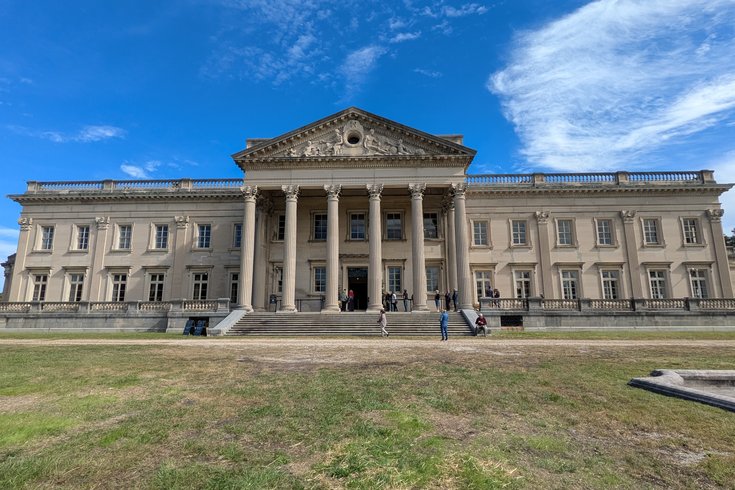
Lynnewood Hall in Elkins Park is the second-largest neoclassical mansion in North America. The building, which was abandoned for decades, is open through Oct. 4 for a 'Gilded Age'-inspired flower show.
Lynnewood Hall is in the midst of a restoration process that could take 20 years, but the public likely will get to see inside the historic mansion in Montgomery County multiple times before it is fully restored. And in the eyes of Edward Thome, the executive director of the organization overseeing the project, that's not a bad thing.
"The house is mostly useable, but it'll continue to look better and improve every time people come back, so I think that's the biggest thing guests can look forward to," Thome said. "They'll come and they'll see the house in a specific state, and come six months, a year later, and some rooms will look entirely different for the better."
MORE: Here are 5 'artifacts' in the Museum of the Philadelphian, an ode to residents' gritty reputation
The Lynnewood Hall Preservation Alliance purchased the Elkins Park property three years ago, after it had been abandoned for almost 30 years. The mansion is typically closed to visitors, but is currently open through Oct. 4 for Fleurs de Villes: The Gilded Age, a 10-day flower show inspired by HBO's "The Gilded Age."
At 110,000 square feet, Lynnewood Hall is believed to be the second-largest neoclassical mansion in North America. It was built between 1897 and 1899 by the Widener family, who opened it to the public periodically from 1915 to 1940. But it's been closed off since 1944.
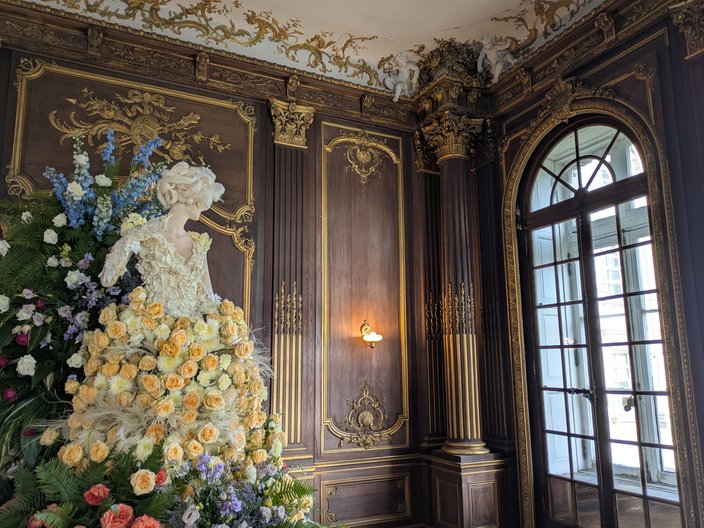
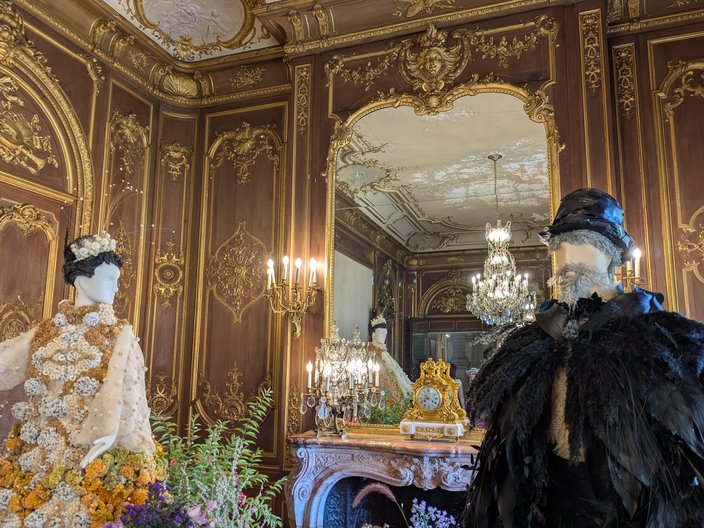
The mannequins on display, such as the one above in the ballroom, are inspired by the HBO show 'The Guilded Age.'
The Preservation Alliance plans to restore the mansion in the coming decades. That process will include consulting experts to fix some of the home's finer details. But Thome sees this process serving as an educational tool for people looking to fix up other buildings from that time period.
"One of the core components of our mission and vision is to utilize every aspect of the restoration for education in the skilled trades," Thome said, "So these contractors and architects and artisans are going to play a huge factor in training the next several generations."
In the spring, the Preservation Alliance opened the mansion to a few hundred visitors for a Titanic-themed event in partnership with Laurel Hill Cemetery. Two members of the Widener family — George Dunton Widener and his son Harry Elkins Widener — died in the 1912 shipwreck.
Thome said the Preservation Alliance hoped to host a similarly sized event this fall. But when floral organizers reached out about hosting a show themed on "The Gilded Age," it forced the group to "think bigger" and push some of the restoration work forward to accommodate the expected 10,000 guests.
Since purchasing the building, the preservation team has added a ramp to make the property accessible to people with disabilities, updated the electrical work, removed asbestos and mitigated some water issues caused by the failure of internal downspouts.
The house also got a "really, really good deep scrub everywhere," Thome said. The biggest project at the moment involves roof work. A new roof was put onto the east conservatory and one currently is being put onto the Van Dyke Gallery. After the flower show wraps up, the west conservatory will receive a new roof, too.
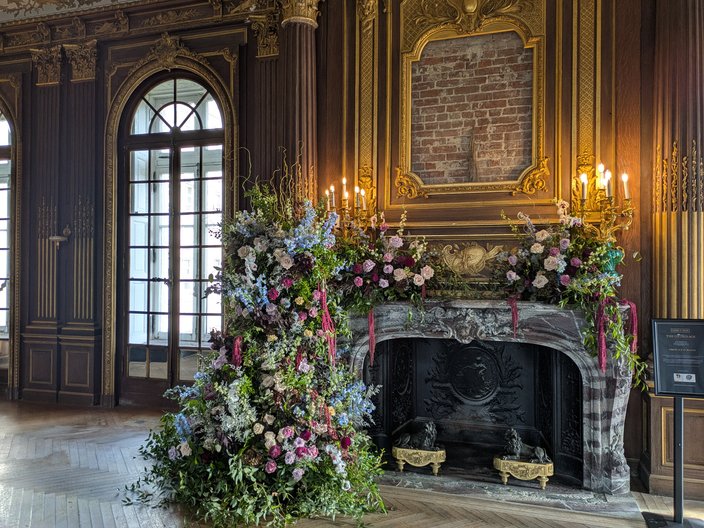
A fireplace inside the ballroom is decked out in florals.
Peter Widener, a descendant of the original homeowners, grew up hearing his grandfather talk about his time at the house. He said being in the space "kind of feels like home."
"There's not enough words that can describe the thankfulness to what they're doing for the building," Widener said. "The repurpose of the building with the underlying tone of education for a lot of different venues out of this building is really important."
The flower show marks the first time in decades that the majority of the house will be open to visitors. But Thome said he'd love to make it even more accessible by documenting the restoration in a TV show or YouTube series. He thinks that Lynnewood is a masterpiece, especially given that everything was made by hand, calling the mansion a "piece of Europe that's here in America."
"You're restoring a public work of art," Thome said. "Architecture is your must public work of art, but it's often the most forgotten works of art. "This is actually a three-dimensional work of art that you can actually walk in and be enveloped by and experience from all angles."
The flower show is open daily from 10 a.m. to 6 p.m. through Oct. 4. Tickets cost $30.50.
Here's more pictures from inside the mansion:
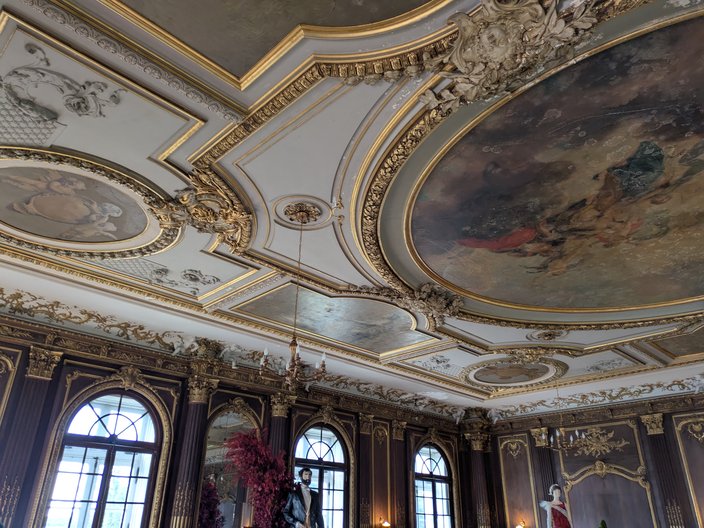
A look at the ornate ceiling inside the mansion's ballroom.
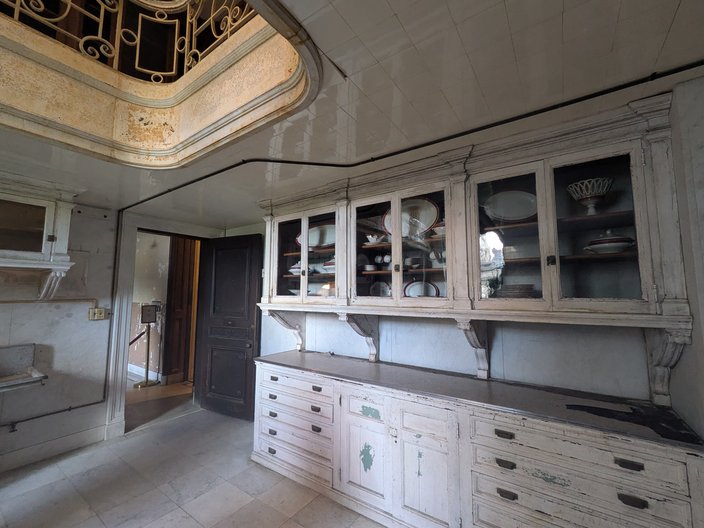
The Butler's Pantry is one of the rooms on display during flower show.
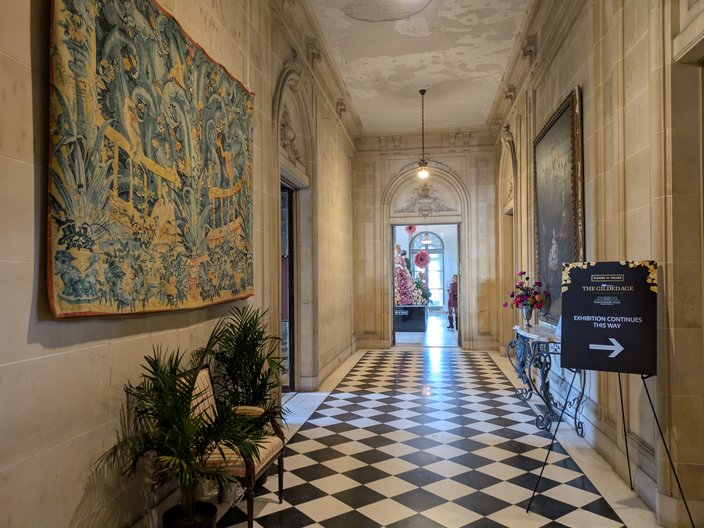
The hallways inside the home feature checkered floors and are decorated with antiques.
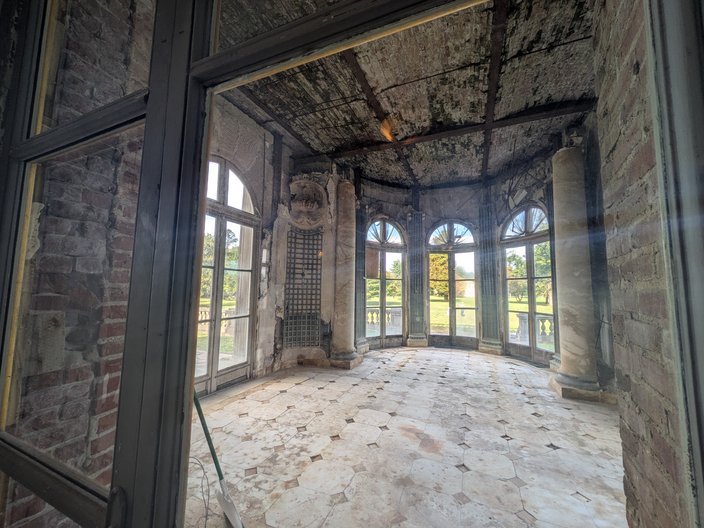
This dining room offers a peek at one of the conservatories, which is closed to visitors.
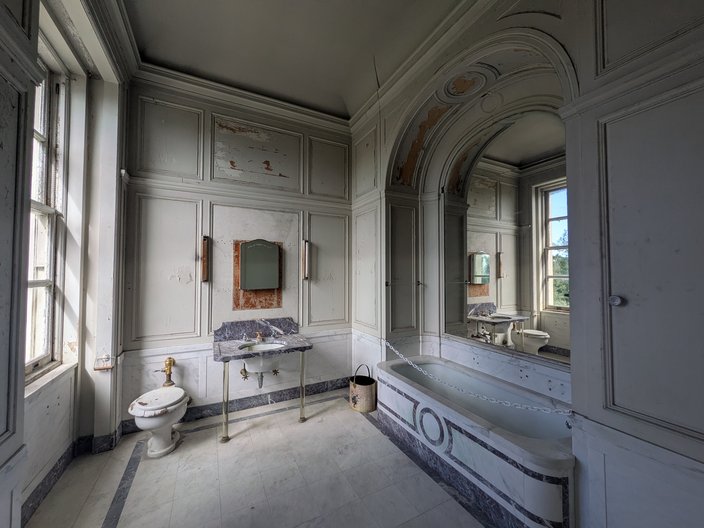
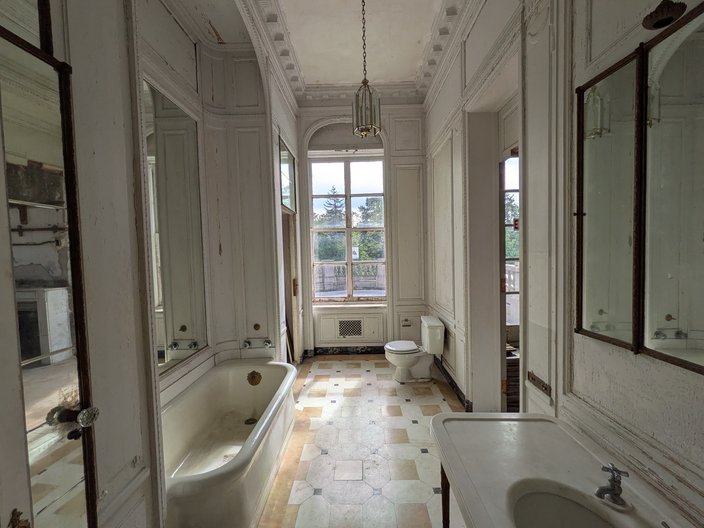
An upstairs bathroom overlooks the front lawn.
Inside the reception room, visitors to the Fleurs de Villes flower show can find floral displays inspired by
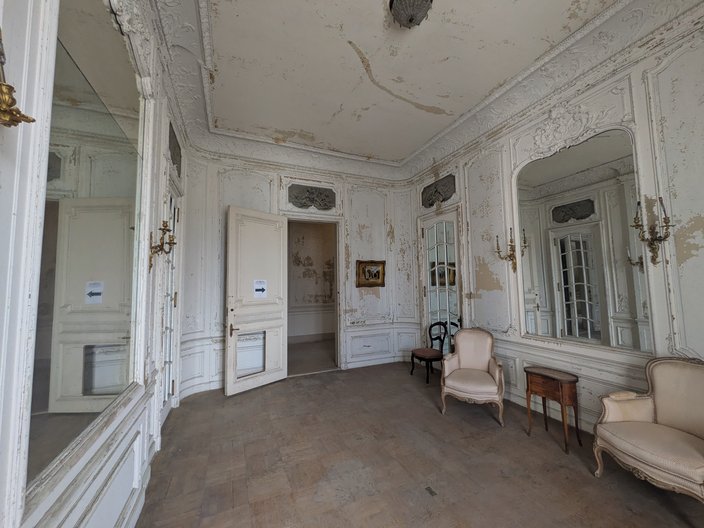
This dressing room belonged to Eleanor E. Widener.
A bathroom adjacent to a room belonging to Ella P. Widener.
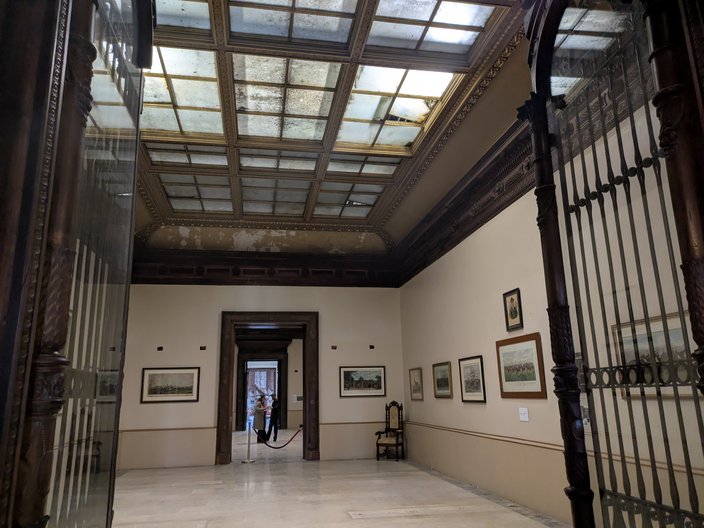
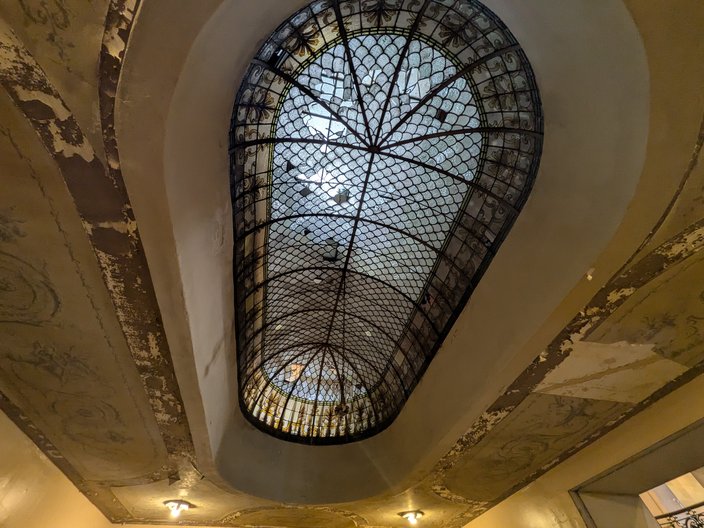
A gallery on the second floor features an large skylight.
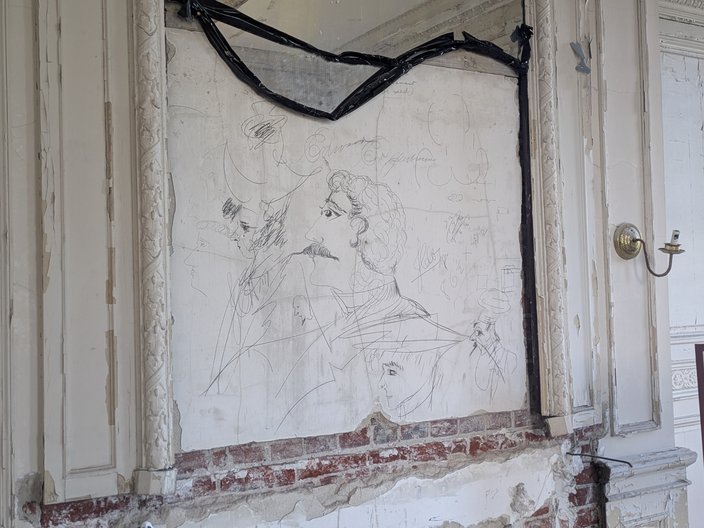
Pencil sketches believed to be drawn by some of the craftsman who made the house were found after a mirror was broken by trespassers.
An ornate, stained glass skylight found is in the tea room, which connects the original part of the house to a newer addition.