




September 18, 2026

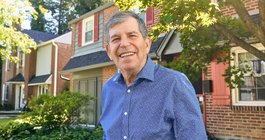
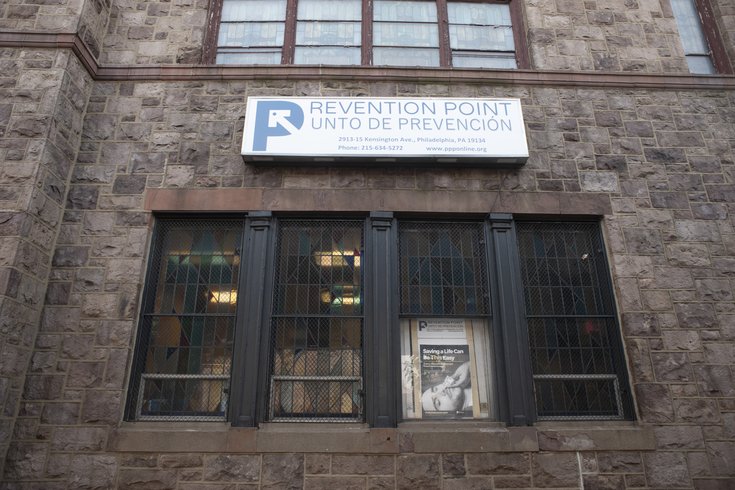 Kit Ramsey/Prevention Point Philadelphia
Prevention Point Philadelphia, a public health and social services organization, offers a syringe exchange program, but it has distributed fewer clean syringes and collected fewer used syringes since the city cut funding to the program last year..
Prevention Point Philadelphia is a hub of low-barrier public health and social services for people with substance use disorders, many of whom are homeless. The organization started as a grassroots effort, by members of the activist group ACT UP, to reduce the spread of HIV at a time when the AIDS crisis was killing as many as 33,000 people a year. In the early 1990s, volunteers were offering people who used drugs sterile syringes on card tables set up on the sidewalk and from the back of cars.
Through the decades, Prevention Point has evolved into a place where people impacted by drug use and poverty can access medical care, case management, HIV prevention and education, medications for substance use disorders and other services. Few organizations in the city have done as much to reach this population.
But since Mayor Cherelle Parker pulled nearly $1 million from the nonprofit's syringe exchange program, which now receives no public funding, its has distributed fewer clean syringes and collected fewer used ones than in recent years.
For the fiscal year 2025-2026, Prevention Point dispensed and collected back 1.7 million syringes. But these figures are way down from previous years.
In 2016, Prevention Point distributed 2.4 million syringes and collected 2.2 million used syringes. In 2019, the syringe exchange program, fully funded by $1.2 million from the city, distributed just under 3 million needles. It dispensed roughly three times as many syringes in 2022, at 8.8 million, and collected 10 million used ones – the first time that Prevention Pointed took back more needles than it gave out. In 2023, it distributed roughly 8 million syringes and took back more than 95% of that number.
Parker's administration withheld Prevention Point's syringe program funds despite outcry from public health leaders and research establishing the efficacy of needle exchange. A 2019 study specifically showed that Prevention Point's syringe exchange had saved the city millions of dollars in averted HIV cases.
City administrators did not respond the inquiries for this story, but Parker explained the motives for slashing funding during her first budget address in 2024.
"While I'm the mayor, I will fight tooth and nail to ensure that not one city dollar is invested in the distribution of clean needles," Parker said. "It was trailblazing while we did it — and I still think it's an important part of the harm-reduction strategy — but we can't afford ... to appropriate our very scarce resources to do it."
Prevention Point is much more than a syringe exchange, its leaders noted Thursday, but they declined to further comment on its lower syringe distribution and collection numbers.
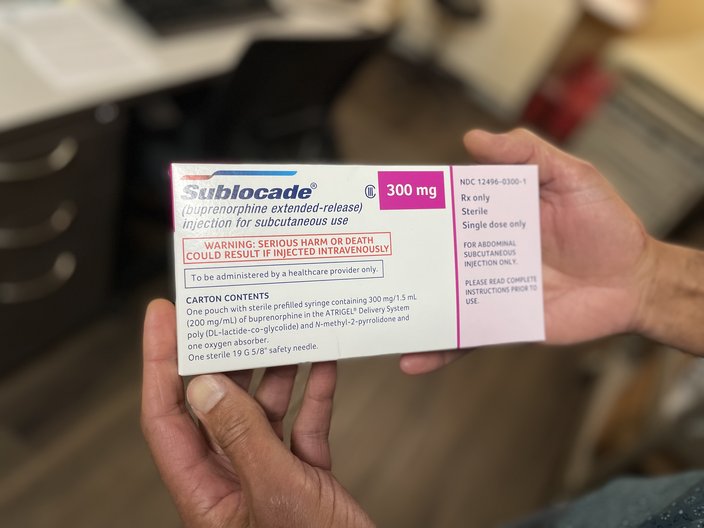
Prevention Point offers Sublocade, a monthly injection medication for people with opioid use disorder.
According to its 2025-2025 fiscal report, Prevention Point had:
• 7,690 onsite medical visits, a 128% increase over the previous year
• 2,479 drug treatment visits for 450 patients, providing 1,890 long-acting medication injections for opioid use disorder — double the prior year
• 1,773 HIV tests administered, a 14% increase, along with 1,294 PrEP prescriptions provided to 499 patients, a 56% increase, and 951 doses of long-acting injectable PrEP provided through its Sana Clinic and other sites
• 106,113 doses of the opioid overdose reversal medication, Narcan, distributed, along with 2,103 people trained to recognize and reverse overdoses, a 61% increase over the prior year.
• 21,056 social services provided by Prevention Point case managers, an 84% increase over the last year, along with 4,145 navigator encounters connecting participants to services
For the past two years, Prevention Point also has collaborated with the city's health department and two other behavioral health and social services organizations, Project HOME and Warren E. Smith, to run Philly Home at Girard. It is a low-barrier safe haven that offers shelter beds and intensive wraparound medical and behavioral health services, as well as case management, for people who have experienced chronic homelessness and also have complex medical conditions, mental health issues or substance use disorders.
Prevention Point also operates Beacon House, an emergency shelter with on-site case management in Kensington.