





July 24, 2025

 Courtenay Harris Bond/PhillyVoice
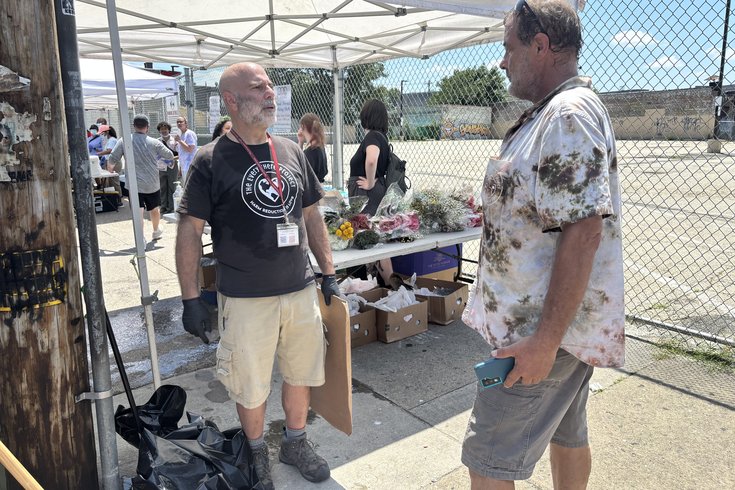
Steven Bravato and Thomas Frey of the harm reduction organization The Everywhere Project, talk during an outreach event in Kensington earlier this month. The group will be affected by a law taking effect Monday that restricts mobile outreach services in the neighborhood. Enforcement of the law will be delayed, city officials say.
Enforcement of a new law that restricts mobile outreach services in Kensington will be delayed until a permitting process is in place, according to city officials.
The takes effect Sunday. Multiple city departments have been working together to establish logistics relating to the law.
"We want providers to understand the process before it starts," a city spokesperson said in an email Thursday. "When all steps have been taken in the proper order, the City will be able to begin disseminating regulations to providers, outlining how we plan to govern enforcement and then we will open the application process for permits."
The law requires mobile medical providers that offer medications for opioid use disorder, HIV testing and other services to be permitted. They will be restricted to providing these services at a city-owned location and along two blocks of Allegheny Avenue between 11 p.m. and 6 a.m.
Groups that provide other forms of outreach also must have permits. They can operate anywhere in the neighborhood, but not for longer than 45 minutes in one place. Groups that violate the law will subject to $1,000 fines, according to the law.
City Councilmember Quetcy Lozada, who drafted the law last fall, released a statement through her office earlier this week that acknowledged more time is needed to determine the permitting process.
"The Administration fully intends to give providers ample time to apply for and receive permits prior to beginning enforcement," said Lozada, who represents Kensington. "The City will announce, in advance, the date on which enforcement will be set to begin."
Lozada drafted the law in response to constituents' concerns that mobile outreach groups offering food, clothing, wound care and other services cause litter and attract crowds of people who use drugs. After months of revisions, city council passed the law in May. The permitting process and details about enforcement were left up to Mayor Cherelle Parker's office.
Critics have said the law will worsen the city's addiction and homelessness crises.
As of Monday, some mobile service providers were still expressing concerns that they did not know how to apply for permits, what government agency would be overseeing permitting, what would be needed to obtain a permit and how the city would carry out enforcement.
"We understand the critical nature of this legislation and are committed to ensuring that effective care can continue to be delivered to those in need," Lozada's statement added. "We appreciate the patience of all stakeholders during this process and will keep you updated as more information becomes available."