



July 21, 2025

 Courtenay Harris Bond/PhillyVoice
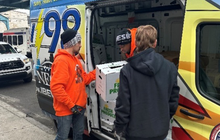
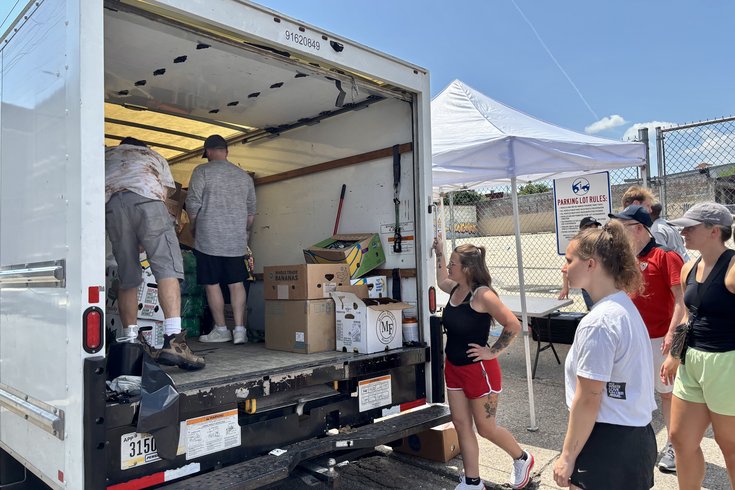
Volunteers with the harm reduction group The Everywhere Project unload meals and supplies on East Clearfield Avenue earlier this month. The Everywhere Project is one of the outreach groups whose operations will be restricted in Kensington when a new law takes effect Sunday.
A new law that puts strict restrictions on mobile medical and outreach services in Kensington takes effect Sunday, but questions linger about how it will be implemented.
Under the law, mobile providers that offer medications for opioid use disorder, free HIV testing and other medical services will be restricted to operating at specific locations and times. Other mobile service providers, like those that distribute food, clothing and harm reduction supplies, can operate anywhere in Kensington — but only for 45 minutes at a time. They then must move to another location at least 1,000 feet away.
Groups that do not abide by these rules will be subject to $1,000 fines. Three or more fines will preclude mobile services groups from being able to obtain the annual permits now required to operate in Kensington.
Marisa Kosman, who heads a small Kensington outreach group, said she has been sending emails and calling city officials since April with questions about permitting and other details about the law's implementation. "But the lack of communication on this is really dividing us," Kosman said.
Outreach organizations say they have not been informed which governing agency will oversee permitting, where organizations should apply for permits and what they need to apply. They also are wondering how enforcement will work.
"Myself and other organizations have a lot of community members that rely on us every week," Kosman wrote in an email to City Council members and the Mayor Cherelle Parker's office on July 7. "They keep asking us what's going on and unfortunately we don't have answers for them."
Kensington has the largest open-air drug market on the East Coast and is home to about 35% of Philadelphia's homeless population, not including people staying in emergency shelters, safe havens or transitional housing. Homelessness in Kensington increased by 23% last year, when there were 337 unsheltered residents living in the neighborhood. But that figure is likely an underestimate, because it does not include people staying in abandoned structures, sleeping in vehicles or couch-surfing.
Opponents of the new law say it will exacerbate homelessness and hunger in Kensington, put people who use drugs at greater risk and increase public health issues due to a loss in harm reduction services. This concern is heightened by the impact of the Trump administration's new domestic policy law. Some 240,000 people in Pennsylvania are expected to be impacted by Medicaid cuts and more than 40,000 Philadelphia residents stand to lose food benefits.
Proponents of the mobile services law say it will improve quality-of-life for Kensington residents who have witnessed open-air drug use and violence, and dealt with the trash created by the crowds that gather for outreach services.
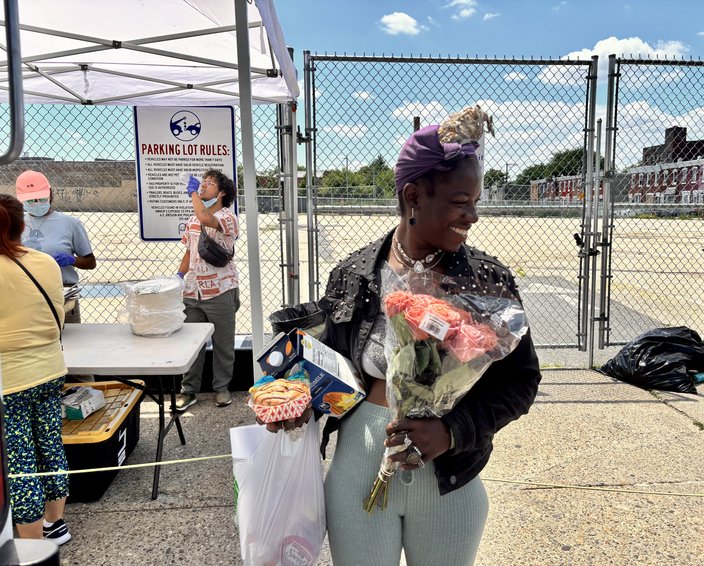
Amor, who is homeless in Kensington, receives pastries, almond milk and roses on a recent Saturday from the harm reduction group The Everywhere Project.
City Councilmember Quetcy Lozada, whose Seventh District includes Kensington, crafted the law last fall in response to residents who said mobile services attract crowds that sometimes block sidewalks, leave trash and create safety concerns. Her law, which evolved during a months-long legislative process, left Parker's administration to hammer out the permitting process and logistics.
The mayor's office did not respond to multiple requests for comment, including an interview request. A spokesperson for the Office of Public Safety said the office is working with multiple departments on the law's logistics.
City Councilmember Mark Squilla, whose First District includes part of Kensington, said he and Lozada have been coordinating efforts to get details about the law's implementation. He said they were told that information would be available by mid-July, but as of Thursday, he still did not have it. A spokesperson for Lozada said she was not available for comment.
Kosman, who began volunteering with harm reduction groups in 2023 because she had lost many friends "to Kensington," works with two other people to distribute hygiene products, water and snacks Monday evenings to anyone who shows up at Ruth Street and East Clearfield Avenue. Usually, she said, there are 50 to 75 people.
"We don't just serve the unhoused community," she said. "I have elderly neighbors that come by. I have kids that come by. I have people just doing work in the neighborhood that come by. I don't have really restrictions on who we give stuff to. 'It's a hot day. Come get a freeze pop, come sit under our canopy.'"
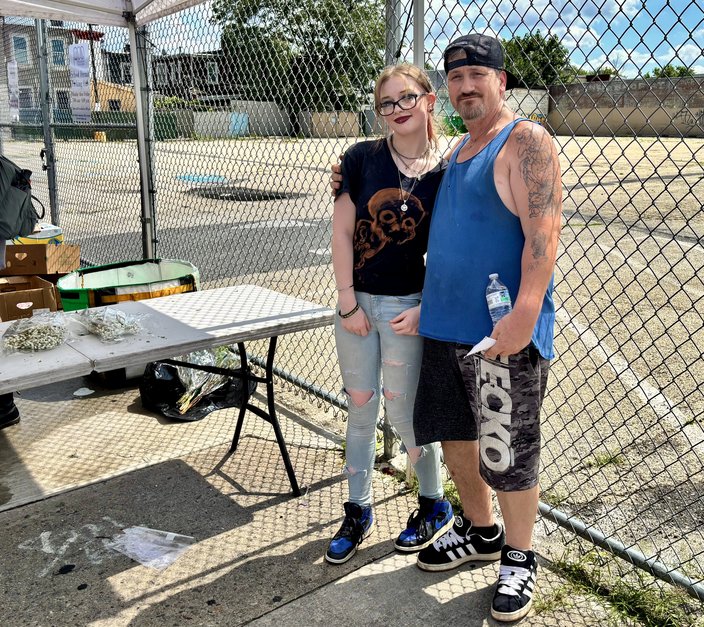
Peter Mellor and his daughter, Alyssa, live near where The Everywhere Project does a major outreach each Saturday in Kensington. 'It's a blessing they come here,' Mellor says about the nonprofit's efforts to help people who are unhoused and use drugs.
Similarly, The Everywhere Project has served large meals and provided wound care and harm reduction supplies to dozens of people each Saturday since the COVID-19 pandemic began. The nonprofit organization sets up at a lot at Ruth Street and East Clearfield Avenue.
These organizations have continued to provide their services as the date the new law takes effect draws nearer.
On a recent Saturday, The Everywhere Project served 7,300 pounds of food and distributed 1,300 bottles of water to anyone who showed up between 1 p.m. and 4:30 p.m. As volunteers handed out bottles of water, people could take fresh greens, apples, berries, cups of popcorn and iced cupcakes.
Lu Collina, a recent Temple University graduate, was among about 70 volunteers who assisted with the outreach that day. Collina helped serve hot dishes of tuna casserole and ham and potatoes.
"As long as there are unmet needs, there will be people attempting to meet those needs in their communities," Collina said. "Even when official sites like this go down, all you're really doing is forcing people who want to do this work to do it in ways that are more unsafe, less regulated. And more people will go hungry."
Amor, 43, who said she has been experiencing homelessness "for a while now" was among the people who showed up to receive food. She said she has lived in Kensington since she was 8 years old.
"I don't even want to think about it too much, because it makes me sad sometimes," said Amor, who asked to be identified only by her first name for privacy reasons.
She chose some pastries, a carton of almond milk and a bunch of deep pink roses.
"I feel special today," Amor said, smiling.
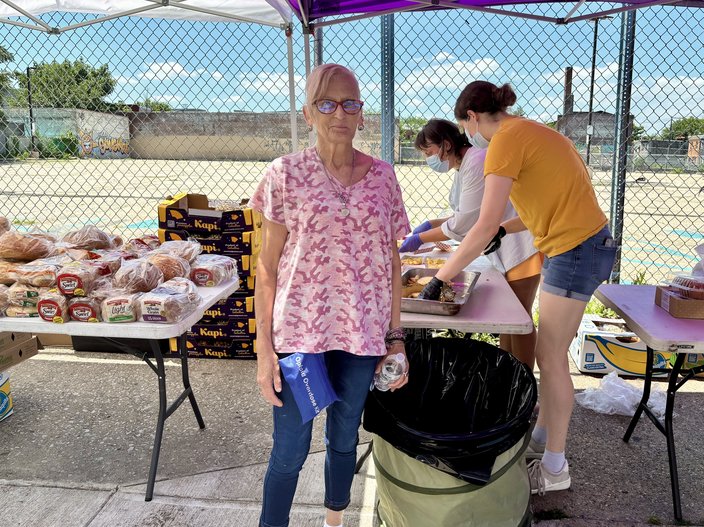
Joan Vieldhouse, 60, says she takes care of her adult daughter who had a stroke from drug use and is partially paralyzed. 'People will die' as a result of the mobile services law's restrictions on wound care, food distribution and other forms of outreach will, she says.
That same day, about 45 people lined up to receive safe sex and harm reduction supplies at another tent across Clearfield Avenue. Volunteer nurses tended to the wounds of a couple at The Everywhere Project's tents on Ruth Street.
Joan Vieldhouse, 60, who has been volunteering with the Everywhere Project for several years, manned a table piled with donated loaves of bread. Her daughter had a stroke as a result of drug use and is partially paralyzed and in a wheelchair.
She said she fears the new law will have an adverse effect on the people living on the street.
"People are going to die because the resources won't be here — like the wound care, like food to make sure people have food in their stomach," Vieldhouse said. "Just the simple things — water, Narcan (the opioid reversal medication)."
Another volunteer, Cecil Brown, who helps out once a month, fears the new law may have an adverse impact on crime.
"I think we're probably going to see more crime increasing, more robberies and break-ins, because people are desperate, and they're going to do what they have to do to eat, to survive," Brown said.
Peter Mellor, who lives with his wife and several of his children on East Clearfield Avenue, was out with his 16-year-old daughter, Alyssa, who was volunteering. Mellor said he is in long-term recovery for addiction and knows what it is like to be hungry.
"People don't understand how hard it is for other people out here who have to live on the street," he said. "They have nobody."