



May 05, 2026
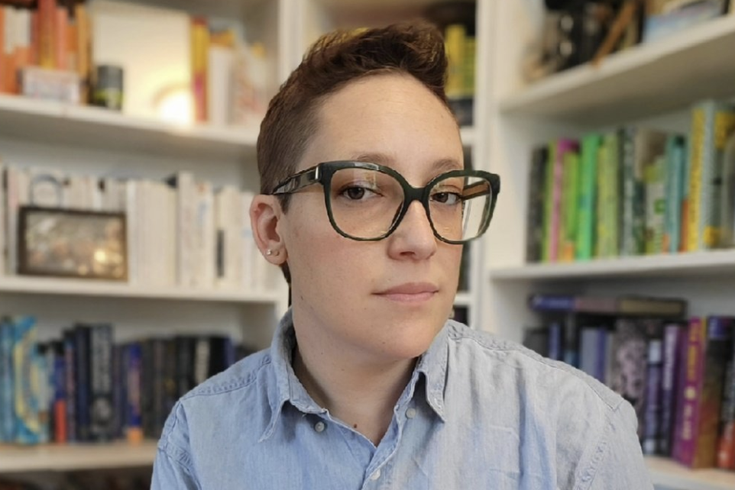 Provided image/Zachary Stone
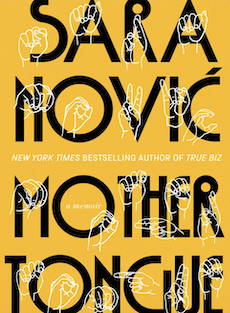
Sara Nović's fourth book, 'Mother Tongue' is out Tuesday. The memoir explores the personal and systemic reasons behind her childhood inclination to hide her deafness.
Sara Nović hid her deafness for years. When the longtime Philadelphia resident failed her first hearing test in middle school, she faked her way through the follow-up exam by peeking through the curtain in the nurse’s office, raising her hand when she noticed the nurse press the audiometer buttons. To get through high school, she read lips and buried her head in books. She took her first American Sign Language class not out of any need, she told her parents, but for college credits.
“I think I was very conditioned as a person to try and make myself small, make sure that I'm not a burden on anyone,” Nović said.
The deaf activist doesn’t hide anymore. But she explores the personal and systemic reasons behind this prior impulse in her new book, “Mother Tongue,” out Tuesday. The memoir — Nović’s fourth book and first since “True Biz,” the bestseller selected for One Book, One Philadelphia in 2024 — functions not just as an autobiography but as a history of deaf culture and the various figures who tried to destroy it.
Alexander Graham Bell had a big hand in that fight, as Nović demonstrates in her text. “Mother Tongue” details his championing of oralism, a teaching method that limits deaf education to speaking and lipreading. Bell, whose mother and wife were deaf, crusaded against sign language on the grounds that it was un-American for deaf people not to speak English, tapping into the anti-immigrant rhetoric pushed by nativists at the time. This fear of difference also animated eugenicists, who sought to sterilize disabled people.
Nović draws a line from this history to the present day through modern examples like the story of Lee Larsen, a deaf woman from Michigan who objected to cochlear implant surgery for her sons. The electronic devices are controversial in the deaf community; Nović likens their effect to "turning up the volume on an out-of-range radio station." In 2002, a state agency tried to force operation on Larsen's sons through a lawsuit. It ultimately lost. But stories like these have taken on a new resonance for Nović as the mother of two school-age children, one deaf and one hearing.
'Mother Tongue' is Sara Novic's fourth book.
The boys, who recently gained a baby brother, helped shape the structure of the book. Nović originally envisioned "Mother Tongue" as a series of letters to her sons, tailored to their different needs. But as she wrote, she found the division was just getting in the way.
"As I tried to start parsing out what should go where, I realized that it was a lot more complicated than that, and we can't just section off different parts of ourselves," she said in an interview. "And once I realized that structurally, then I was like, OK, well that has to be true in real life, too. That's how all the connections between different parts of my identity and the different parts of their identity got involved in the story."
To dissect the different parts of herself, Nović occasionally breaks from her otherwise chronological narrative. Standalone chapters focus on her heart condition, queerness and childhood steeped in evangelical Christianity — leaders of which, she notes, opposed the Americans with Disabilities Act. The main storyline follows her from her tween and teen years of denial and hiding through college, when she began embracing her deafness. Her children enter the picture quickly after these formative chapters, albeit through very different journeys. Nović gave birth to her younger son, whom she refers to as S. in the book, right before the COVID-19 pandemic swept the country. She and her husband then adopted their deaf older son, dubbed K., from a Thai orphanage after years of starts, stops and copious visits to their "stoop notary."
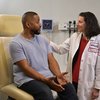
Parenting K. has forced Nović even more frequently into fraught environments for deaf people like doctors offices and hospitals. Accessing interpreters, she said, is surprisingly difficult in medical spaces. She pointed to a recent episode of "The Pitt" where a deaf woman waits for hours in the emergency room, forgotten by the harried doctors who missed the ASL note on her chart.
"You would think that a hospital full of very highly educated people would be able to facilitate communication better," Nović said. "I think people also panic in the fate of disability in general because they kind of grow up being told, 'Oh, don't look at that person. Don't ask questions about that.'"
This panic and fear is what fuels so much disinformation about deaf people, "Mother Tongue" argues. Nović hopes the world can move away from strict binaries of oralism vs. signing — or, in more modern times, cochlear implants vs. signing — to a more fluid approach to language.
"That's something that showed up, a through line again and again, where we are trying to fix a problem and we, in some ways, make it worse by being like, no, you have to pick this thing or this thing," she said. "But actually we probably need to pick the thing in the middle."
Follow Kristin & PhillyVoice on Twitter: @kristin_hunt
| @thePhillyVoice
Like us on Facebook: PhillyVoice
Have a news tip? Let us know.