




April 23, 2026
 Thom Carroll/PhillyVoice
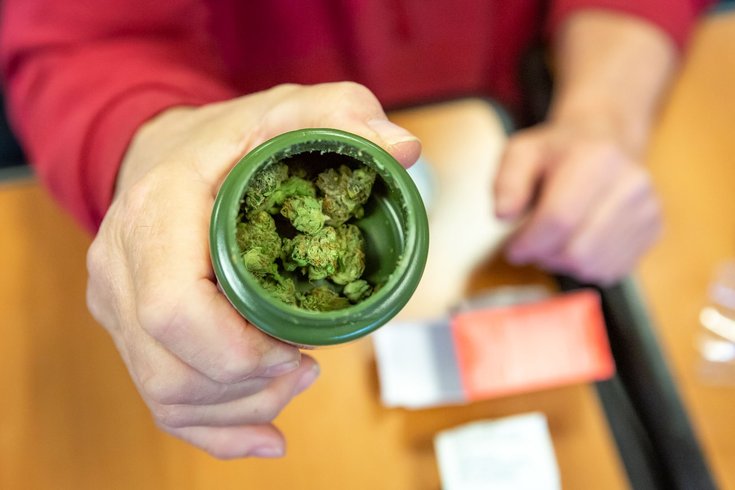
Medical marijuana will no longer be classified among drugs with a high potential for abuse, but no medicinal value. The move by the Trump administration paves the way for more research into marijuana's medicinal benefits.
Medical marijuana will no longer be listed in the same class as heroin and other drugs with a high potential for abuse, the justice department said Thursday.
The reclassification of marijuana products approved by the Food and Drug Administration and state-regulated marijuana comes after President Donald Trump signed an executive order in December to loosen restrictions on the drug to encourage more research.
MORE: When people in addiction go missing, their loved ones often turn to Facebook groups to find them
The move recognizes cannabis's potential for medicinal purposes, making it easier for scientists to obtain for studies, but it does not decriminalize it for recreational purposes, the Associated Press reported. It also gives tax breaks to licensed medical marijuana operators.
Marijuana has been classified by the U.S. Drug Enforcement Administration as a Schedule I drug — those that have a high potential for abuse with no accepted medical use. The shift of cannabis to a Schedule III drug puts it in a category with anabolic steroids, ketamine and testosterone and lists it as a less-addictive drug.
The rescheduling "will enable more targeted, rigorous research into marijuana's safety and efficacy, expanding patients' access to treatments and empowering doctors to make better-informed healthcare decisions," acting Attorney General Todd Blanche said on X.
Blanche said the DEA would hold a June hearing to consider a broader decriminalization of marijuana at the federal level.
Thursday's move also could be a financial boon to the cannabis industry.
"We're talking about billions of dollars in new economic activity, tens of thousands of new jobs or just really a wind in the sail for this industry that's really paid a very heavy tax burden for years," Brian Vicente, a founding partner of Vicente LLP, a Denver-based cannabis law firm, told CNN. "That would be life-changing for many, many state-legal cannabis businesses."
Forty states, including Pennsylvania and New Jersey, have comprehensive medical cannabis programs, according to the National Conference of State Legislatures. Another eight states allow people to use low THC, high cannabidiol products for medical reasons in certain situations. Only Idaho and Kansas do not permit cannabis use in any form.
Twenty-four states, including New Jersey, have approved the recreational use of cannabis. Momentum has been building in Pennsylvania to approve recreational marijuana.