






April 23, 2026

 Thom Carroll/for PhillyVoice
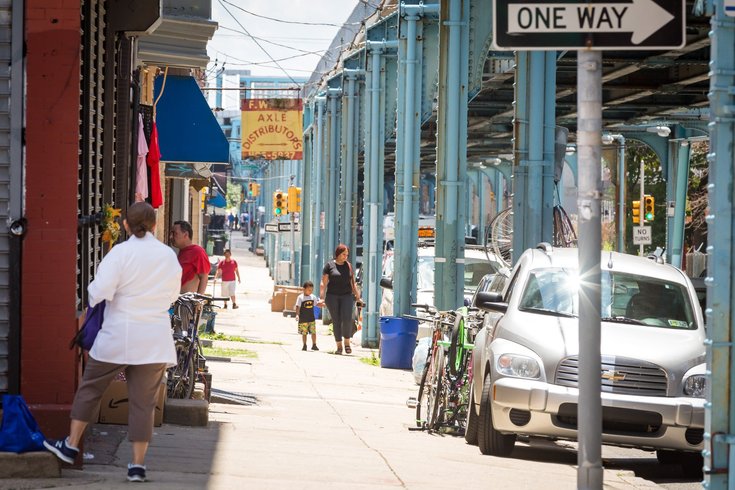
For families of people in addiction, Facebook groups like Lost in Kensington offer a way for them to find loved ones who are living on the streets of Philadelphia. The image above is a file photo of North Front Street in Kensington. The neighborhood has a large open-air drug market.
A woman recently posted photos of her brother in a local Facebook group, saying he hung out in Kensington — where there's a vast open-air drug market — and that she hadn't heard from him in three years.
"I pray daily I can hear his voice and see him again," she wrote, asking for help.
Another woman recently posted in the same online forum to see if anyone had information about her mom, who also spends time in the Kensington.
"My heart hurts," the woman wrote. "Something isn't right."
Messages like these pop up daily in Facebook groups like Lost in Kensington, Found in Kensington and Found in Camden — each dedicated to helping people locate missing loved ones in the Philadelphia region. Many of the missing people have substance use disorders. Sometimes, their families fear they are dead.
That was the case for Craig and Connie Snyder, whose son, Ryan, had struggled with addiction since his teens. Ryan died on July 28, 2018, when he was 38.
But his family did not learn about his death until mid-2023, even though they had filed a missing persons report with the Philadelphia Police Department when Ryan stopped contacting them in 2018.
"He would always call every couple weeks or so and let (Connie) know what was going on," Craig said. "So that's why, when we didn't hear from him for about three weeks, Connie said, 'He's gone.' She said, 'I don't know where he is ... but he's gone.'"
Police found Ryan's body near his former recovery house about six weeks after the Snyders reported him missing. But officials didn't connect the dots, in part because Ryan's body was badly decomposed, Craig said.
"So he was basically down the morgue for the next five years," Craig said.
It was only after Craig and Connie, who live in West Chester, posted about Ryan in a local Facebook group, along with photos of tattoos he had done on people through the years, that the pieces came together. Cristina Mancini, the lay leader at St. Mark's Church in Frankford, reached out right away, saying she had seen what looked like one of Ryan's signature owl tattoos in the National Missing and Unidentified Persons System.
After verification of his dental records, the Philadelphia Medical Examiner's Office confirmed that it had Ryan's remains. But if Mancini hadn't seen the Snyders' Facebook post, Craig said they might still be looking for Ryan.
Ryan Snyder died in 2018, at age 38, after struggling with addiction for years. But his parents could not confirm his death until 2023, after they had posted about him in a Facebook group that aims to help people find their missing loved ones.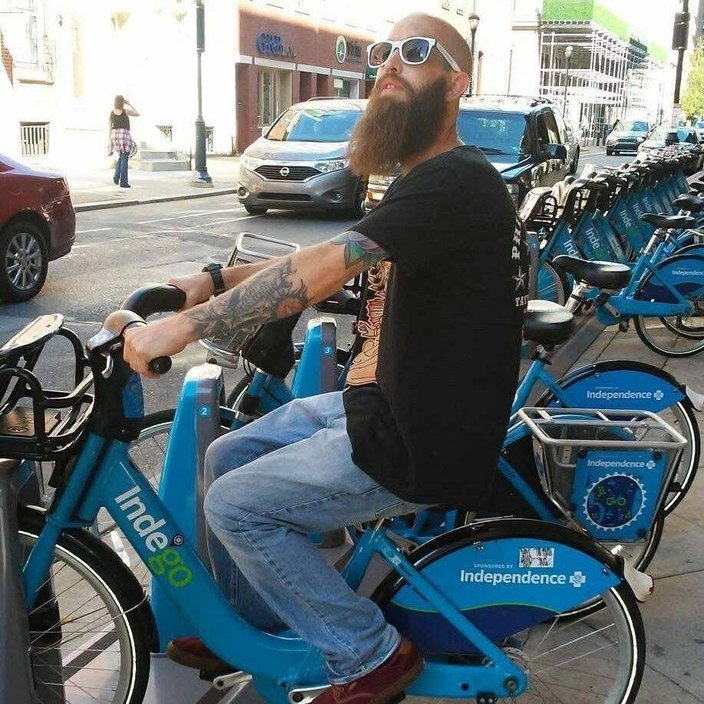 Provided Image/The Snyder Family
Sadly, the Snyders' story is not unique.
About 100,000 people are reported missing in the United States at any given point in time, and the total number of people reported missing each year is as high as 600,000. That's according to the National Missing and Unidentified Persons System, or NamUS, a public database that collects and centralizes information about missing people.
Last year, 1,903 adults were reported missing in Philadelphia, and 1,212 adults were found, data from the city's police department shows.
But those numbers only provide limited insight due to a variety of factors, said detective Kathryn Gordon, of the department's special victims unit. Families may forget to inform police if their loved one returns. Children in foster care may be reported missing when they leave one placement center, but are not taken out of the system when they arrive at another. Some families may not feel safe filing reports in situations involving domestic violence.
Add in other factors, such as substance use disorders and mental health issues, and missing persons data can become "very ebb and flow," Gordon said.
For people who may be experiencing homelessness and addiction in Kensington — Facebook groups and other online forums tend to act as unofficial databases.
"These groups are so important, because (they're) the closest thing that we have to a centralized location for that kind of information," said Mancini, who works with people who are homeless, in addiction or have mental health issues, and their families. "If it wasn't for the groups, then we wouldn't have a central place to kind of be informed about who's missing and whose parents are looking for their children, or who's looking for their loved ones."
In Ryan Snyder's case, the tattoo picture that Craig posted — and Mancini spotted — helped resolve the case. Another time, Mancini saw a mother's posts about her missing son, who had behavioral health challenges. Mancini recognized the man as someone she saw every morning at the Dunkin' where she gets coffee.
"I drove back over there and called him out by his name," Mancini said. "I said, 'Your mom is looking for you. Are you willing to talk to her on the phone?' And he said, 'Yeah, absolutely. I really want to talk to her.' So he did, and he reconnected with her, and he's been getting all the mental health support that he needs."
Stazj, 34, knows what it's like to be missing.
She was homeless and in addiction in Kensington for many years, until about a year ago. That's when she got into long-term recovery and moved back in with her father in Levittown, Bucks County.
But when Stazj was still homeless, her father posted in a Facebook group, looking for news on her whereabouts. The people who responded to his post told him they had seen her, said Stazj, who asked that PhillyVoice only use her nickname to protect her privacy.
"He was calling the morgue and stuff to try and make sure I wasn't dead, so just knowing that I was still alive kind of gave him the hope that I would come back someday," Stazj said.
She did.
"For so long, I was so addicted to that concrete jungle (Kensington), and now being able to come up here and live with my dad again, I'm like, 'Oh, my God, this is so beautiful. Why would I ever choose being down there?'" Stazj said.
Now Stazj monitors Lost in Kensington and some of the other Facebook groups to keep track of friends who are still living on the streets. She also shares pieces of her story to try to buoy the spirits of other families.
"I was able to get out of it, so that gives me the experience, strength and hope to be able to help other people get out of it," Stazj said. "If I can, anybody can."
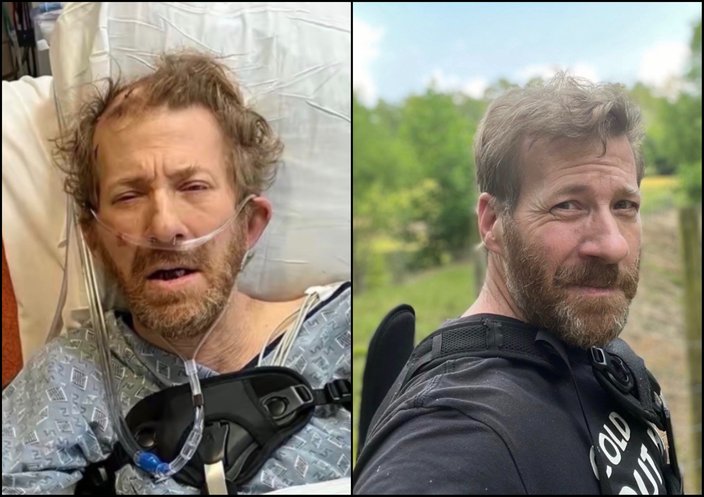
Christopher Brickle spent 12 years homeless in Kensington after injuries from a car crash led to an addiction to painkillers. He's since been in long-term recovery and works as a carpenter in Tennessee. He recently posted these photos in a Facebook group to try to lift up families and help break down the stigma about addiction.
Christopher Brickle, who spent 12 years homeless in Kensington after injuries from a car crash in his teens led to an addiction to painkillers, also has visited Philly Facebook forums to spread some hope. He recently posted side-by-side photos of himself – then and now – to try to lift up families and help break down the stigma about addiction.
"When I left, my kids were 6, 8 and 10," Brickle said.
But Brickle, 50, was able to get into long-term recovery and see all three of his sons graduate from basic training in the Army. He now works as a carpenter and lives near his brother's family in Tennessee.
"People don't want to talk about it when they come out of it," Brickle said. "They don't want to say, 'I used to be in Philly and this and that.' And I think it's important to tell our stories, and our testimonies can lead others to freedom."
Facebook forums dedicated to missing people also offer a way "to get community support that you might not get in another place," said Eliza Eastman-Jepson, an overnight coordinator at an addiction treatment center in Montgomery County who is in long-term recovery.
People who have been in addiction help people looking for treatment recommendations – people who may have had poor experiences with health care systems and providers who view them just as "addicts," Eastman-Jepson said.
"There's a lot of fear around like, 'Hey, am I going to be judged when I go and try and get help?'" Eastman-Jepson said. "When people are hearing from other people in the same situation, like, 'No, this place was great. These people were nice to me. They didn't judge me because of my wounds or because of my addiction.' I think that really kind of opens up people who are like, 'Maybe I wasn't going to make this jump, but I heard from A, B and C that it's a great program. I'm going to try it.'"
People should be careful about what they post in these Facebook groups and how they use them, especially people in active addiction, people in early recovery and families looking for loved ones. Predators do troll the forums. But for the most part, in her experience, people in these Facebook groups have "good motives," Eastman-Jepson said.
"It's a form of solidarity, like, 'We're all in this fight together,'" she said. "Like 99% of people are there for the same reason, and we're all supporting each other. It's just a nice way to sort of see the community come together, especially in Philadelphia, where we're suffering so much from this disease."
But people who post within these Facebook groups should know that "not everybody wants to be found, or maybe is in a safe space to be found," Mancini said. "There may be reasons why people do not want to be reconnected with their family or with others for safety or other reasons."
Also, for some families, it's easier not to know where their loved ones are, said Gordon, the Philadelphia detective.
"Sometimes you may see your person that you're looking for, and they have no interest in getting help or coming home," Gordon said. "I've talked to people, and they say sometimes that's worse than not knowing. If you don't know that, you can imagine that they're doing well, they're just not ready to talk to you yet.
"But then if you do see them horrendously in pain, but they're not ready, and they've said it out loud, and you've offered, and you've gone and you've met them, and you've given them money, and you've done laundry, and you've done all the things — it's a slow death for both sides of the fence on the missing person in the family."
For Ryan Snyder's family, finding his remains with the help of a Facebook group confirmed their worst fears, but at least it closed the door. Limbo was a torturous place to be, Craig Snyder said.
"You don't want to sell your house, because what if they show up?" he said. "They get that 30 seconds of clarity in their head and decide to go back, and you're no longer there. So, 'Oh, my God, you gave up on me. That's the end of it. I'm going back to the streets again.'"