






April 29, 2026

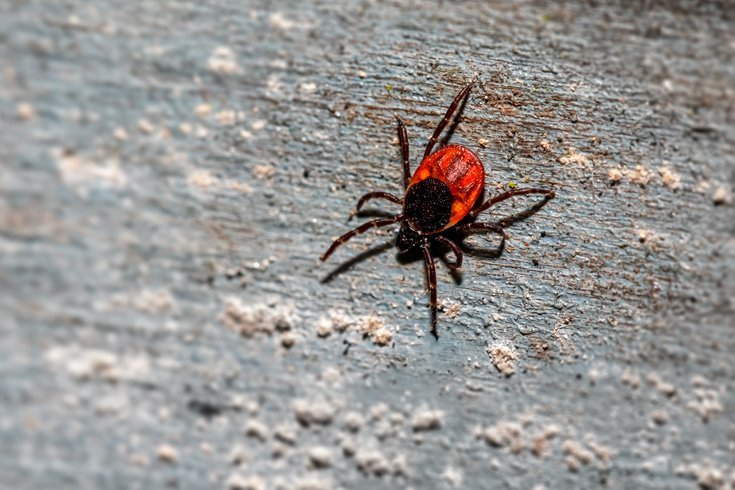 ERIK KARITS/PEXELS.COM
This year has seen a sharp rise in the number of people visiting emergency departments to be treated for tick bites, the Centers for Disease Control and Prevention says. Lyme disease, spread by bites from the blacklegged tick, shown above, infects an estimated 476,000 people in the U.S. each year.
Emergency department visits for tick bites are at the highest levels seen in nearly a decade, the Centers for Disease Control and Prevention says, and Pennsylvania and New Jersey are among the states seeing the most tick activity this spring.
The CDC put out an advisory last week noting that hospital visits for tick bites and illnesses are "higher than normal" in nearly every part of the country. Spring is usually when tick bites spike, but the weekly rate of emergency department visits for this time of year is the highest since 2017.
MORE: Hatching of three eaglets in nest at Kerr Park in Downingtown causes area to be blocked off
In the Northeast, emergency department visits have increased by 40% this April in comparison to last April, CDC data shows. The Pennsylvania Tick Research Lab at East Stroudsburg University says it has tested 55% more ticks submitted for analysis this year compared to 2025 — a year that was higher than normal.
Pennsylvania's climate, deer population and development in forested areas make the state especially suitable for tick species to thrive most of the year. Both Pennsylvania and New Jersey consistently have among the highest rates of Lyme disease in the country.
One reason for the spike in tick activity this year could be the region's snowy winter.
"Unfortunately, the snow actually helps them survive," Nicole Chinnici, director of the Pennsylvania Tick Research Lab, told FOX29. "The moisture from the snow, the ticks use and they have components in their mouth parts that then don't freeze over the winter months."
The Pennsylvania Tick Research Lab's data dashboard shows children under 11 years old have been most susceptible to tick bites this year, accounting for about one-third of self-reported cases. About 60% of all ticks analyzed this month did not contain any pathogens. The rest contained anywhere from one to five pathogens.
Black-legged ticks, also called deer ticks, carry Lyme disease and five other pathogens, including Powassan virus, a rare neurological disease that has become more prevalent in recent years in the United States. The American dog tick and the lone star tick, also present in Pennsylvania and New Jersey, carry other pathogens that commonly cause diseases in people.
The lone star tick has garnered growing attention because it has been linked to the spread of alpha-gal syndrome, which can cause a potentially life-threatening allergy to red meat and other animal products like cow's milk. A New Jersey man was identified earlier this year as the first known person to die from the disease. He died in September 2024.
About 31 million people are bitten by ticks every year in the U.S., according to the CDC, and about 476,000 people are treated for Lyme disease annually.
To prevent tick bites, experts recommend using EPA-registered repellents and taking other precautions to protect the body from exposure. Hikers are advised to stick to the center of trails and wear light-colored clothing that makes it easier to spot ticks. Property owners should clear leaf litter from their yards, mow their lawns regularly and keep wood piles stored in sunny areas.
The CDC also recommends treating clothing and gear with sprays containing 0.5% permethrin, an insecticide that targets ticks and other biting insects. Permethrin can be used to treat boots, clothing and camping gear, remaining effective through several washes.
After outdoor activities, it's advised to check the body for ticks and regularly check pets for bumps.
If bit by a tick, the best remedy is remove it as soon as possible using tweezers. The tick should be removed at the head, not the body, with firm pressure close to the skin so the entire tick is removed. Bite marks should be cleaned with an antiseptic.
A doctor should be called if a tick has been attached to the skin for more than 24 hours or if someone bit experiences fever, body aches and a rash at the site. Emergency care is recommended if someone bit develops severe headache, difficulty breathing, heart palpitations or paralysis.