




June 26, 2026
 Michaela Althouse/PhillyVoice
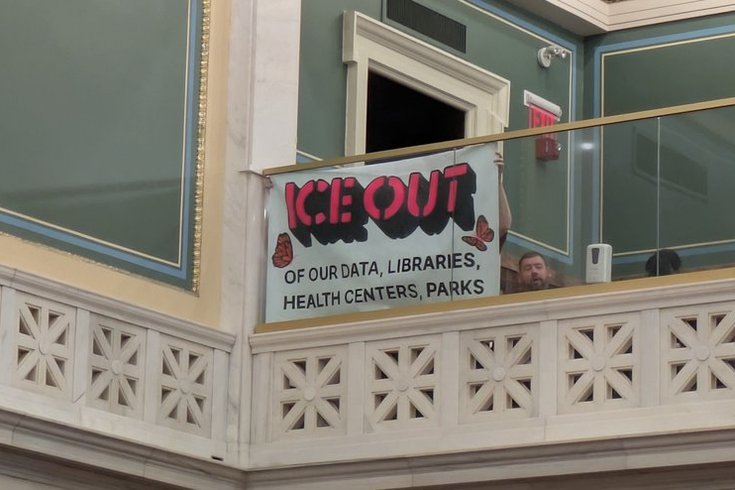
In a new filing, Philadelphia officials argued that the federal government doesn't have cause for an injunction against a law in the city's 'ICE Out' package that bans agents from wearing masks and using unmarked vehicles. Above, a supporter of the bills package hangs a banner during the final vote for the legislation.
Philadelphia officials responded Thursday afternoon to a lawsuit from the federal government claiming one of the city's new laws about immigration enforcement, set to take effect next month, is unconstitutional.
In April, City Council approved the "ICE Out" bill package, which includes an ordinance banning Immigration and Customs Enforcement agents from wearing face masks and using unmarked vehicles. The Trump administration requested an injunction last week that would stop the bill from taking effect. A new filing from law firm Ballard Spahr on behalf of Mayor Cherelle Parker, District Attorney Larry Krasner and City Solicitor Renee Garcia said nothing can be done by the federal government until the city attempts to enforce the law starting July 7.
The bill also says that officers must identify themselves during an arrest and bans officers from concealing or removing badges, labels or other forms of identification tags. According to the city's filing, the federal government can't show irreparable harm because it does not say how law enforcement operations will be compromised beyond tactical teams and undercover operations, which are exceptions permitted under the new bill.
"Community members and law enforcement personnel are both safer when people can ascertain that individuals engaged in law enforcement activity are affiliated with law enforcement," the new filing says. "It aims to ameliorate the confusion and fear created by the activity of anonymous law enforcement agents and to restore public trust and accountability to law enforcement operations."
According to federal prosecutors, the law is in violation of the Supremacy Clause in the Constitution, which says federal laws take priority over conflicting state laws.
"Philadelphia may not regulate Federal operations and its unconstitutional attempt to do so must be stopped," Brett Shumate, assistant attorney general of the Justice Department's Civil Division, said in a statement.
The package includes six other bills related to immigration and ICE agent activity, including banning agents from conducting operations on city-owned properties and prohibiting city agencies from sharing data or collaborating with ICE. It also makes discrimination based on citizenship status illegal.
Following their approval, Parker signed six of the seven bills in the package. She did not sign the bill addressing facial coverings, but it became law anyway as it had supermajority from City Council, making it veto-proof.
At the final hearing for City Council's Committee of the Whole, the Parker administration recommended amendments to address legal concerns it had with most of the bills. At one point in the process, Garcia also told the mayor that the city would be unable to enforce a law barring officers from concealing their identities, the Inquirer reported.
At the final hearing for City Council's Committee of the Whole, Office of Immigrant Affairs Director Charlie Elison said Parker supported the bill prohibiting discrimination based on immigration status. But he said there were legal concerns for the remaining six bills. At the time, Garcia said the expected amendments would address some of those issues. At one point in the process, she also told the mayor that the city would be unable to enforce a law bars officers from concealing their identities, the Inquirer reported.