






July 21, 2025
West Nile virus is the leading cause of mosquito-borne disease in the continental United States, with the illness posing a risk to people from the start of summer into the fall.
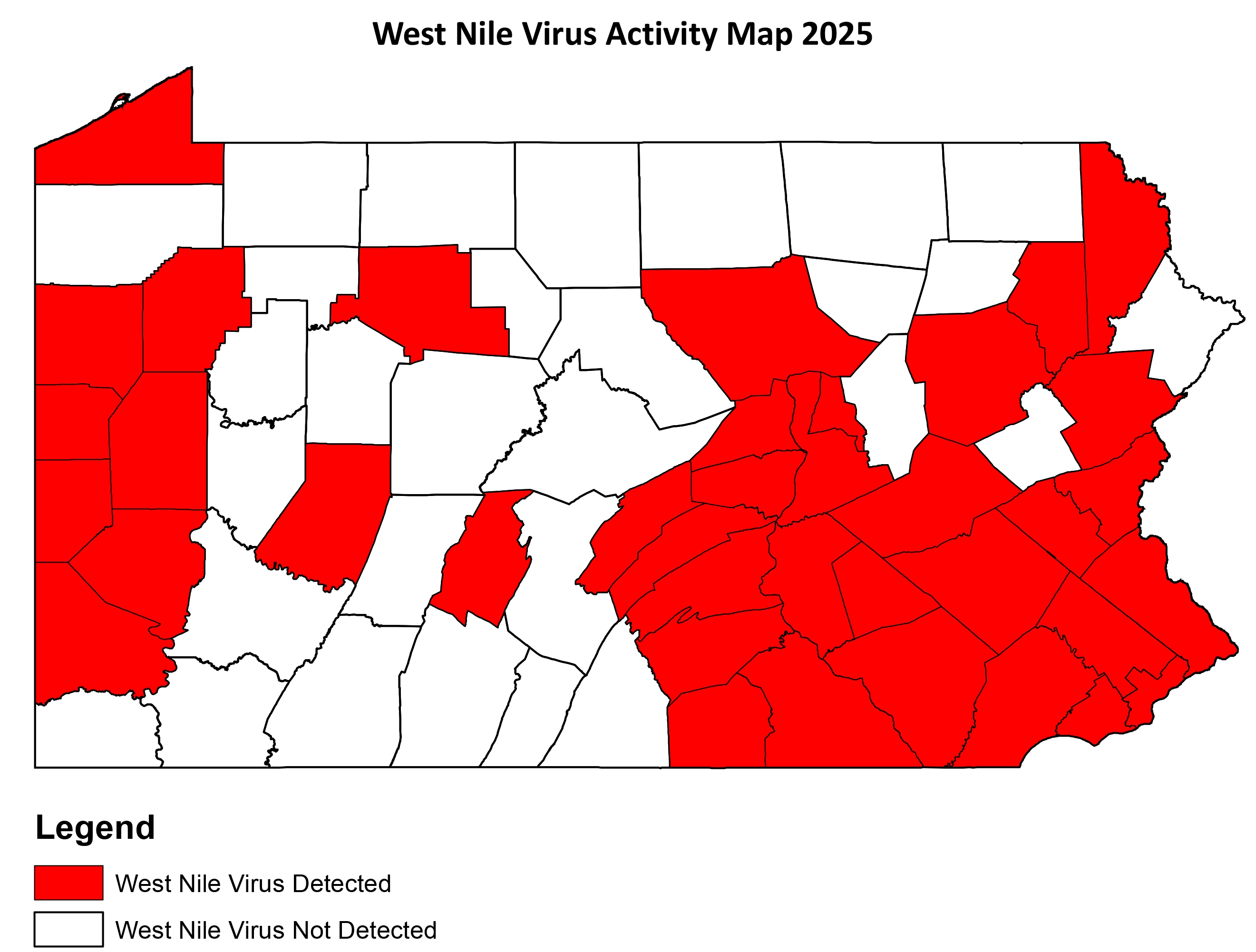
Mosquitoes infected with West Nile virus were detected near Pennypack Park in Northeast Philadelphia last month, the first — and so far only — occurence in the city this year. Infected mosquitoes also have been found in the four collar counties, and in Burlington and Gloucester counties in South Jersey. No human cases have been reported in Pennsylvania or New Jersey.
MORE: Many vaccines contain aluminum, but it does not cause autism, study finds
The Pennsylvania Department of Environmental Protection conducts mosquito surveillance, West Nile virus testing and efforts to control mosquito populations — including the elimination of breeding sites and ground spraying — from May to October, the Philadelphia Department of Public Health said in a notice earlier this month.
West Nile virus can cause serious and even fatal illnesses, but most people infected with the virus do not feel sick, The Centers for Disease Control and Prevention says. About 1 in 5 people infected with the virus develop a fever or other symptoms; about 1 in 150 develop more serious illnesses.
Symptoms can include headache, joint pains, vomiting, diarrhea and a rash, the CDC says. Serious illnesses also may cause "high fever, headache, neck stiffness, stupor, disorientation, coma, tremors, convulsions, muscle weakness, vision loss, numbness and paralysis."
The people at greater risk of severe West Nile infections include older adults, people who have received organ transplants and people with underlying medical conditions like cancer, diabetes, high blood pressure and kidney disease.
For people spending time at Pennypack Pack and other outdoor places where mosquitoes are commonly found, knowing how to prevent West Nile virus is is key.
Because there are no vaccines or medications that protect against West Nile virus, the best way to prevent the illness is to avoid mosquito bites — the way the disease is contracted.
To minimize the risk of mosquito bites, the CDC recommends using EPA-registered insect repellent. For people spending time outside during the daylight, sunscreen should be applied before applying bug spray. Follow the other instructions on the label and reapply as directed.
EPA-registered repellents include those made with DEET, Picardin and oil of lemon eucalyptus, the Philadelphia Department of Public Health notes.
The CDC also recommends people wear loose-fitting, long-sleeve shirts and pants when spending time where mosquitoes are known to be. It also suggests using gear and wearing clothes treated with permethrin, an insecticide that can kill or repel mosquitoes.
Permethrin is a synthetic chemical that is used to control the insect population, according to The National Pesticide Information Center. When mosquitoes eat or touch it, it leads to paralysis, muscle spasms or death. The chemical is more toxic to insects than to people or dogs.
Permethrin-treated clothing can be bought or people can spray their clothes and gear with the chemical when outdoors. Permethrin-treated items provide protection after multiple washes. But the CDC warns against putting permethrin-treated clothing directly against the skin.
People in Philadelphia can report mosquito issues to the city's mosquito complaint hotline at (215) 685-9000.
Follow Shamus on X: @shamus_clancy
Follow Shamus on Bluesky: @shamus