






February 09, 2026

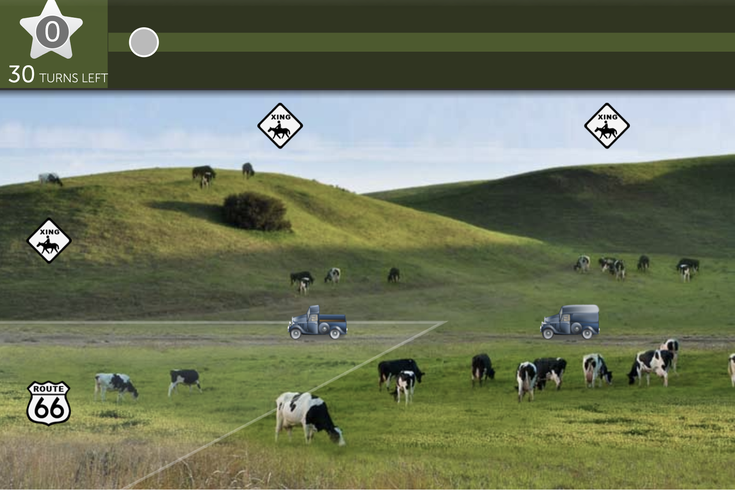 Provided Image/BrainHQ
Older adults who completed certain amounts of the cognitive training game above, found on the BrainHQ app, reduced their risk of dementia by 25%, a new study says.
So-called "brain training" games may help guard against Alzheimer's disease and other types of dementia, a new study suggests.
The research found some older adults who completed specific cognitive exercises, called speed training, lowered their risk of developing dementia by 25%. Scientists put participants through the speed training games during a three-year period, and then followed up on their cognitive function over 20 years.
The speed training, available on the BrainHQ app, shows participants objects on a screen and asks them to make quick decisions about the objects. This teaches the brain to process information quickly and accurately, researchers said. The games are adaptive, meaning they get more challenging when participants are successful. They also get easier when participants struggle.
The study, published Monday in an Alzheimer's Association journal, involved 2,800 people 65 and older from six states, including central Pennsylvania. Those randomly selected to receive speed training completed 60-to-75-minute sessions twice each week for five weeks. Six months later, some participants were asked to complete booster sessions totaling 1 to 12 1/2 hours. Those participants then completed additional booster sessions two years after that.
Over the next two decades, researchers tracked the participants' Medicare records to see whether they developed dementia. The initial speed training appeared to have little impact, researchers said, but the participants that completed the booster sessions were 25% less likely to develop dementia.
Other participants took part in games developed to help memory and reasoning skills, but those games did not appear to have any affect on preventing dementia.
"These results change what's possible — now — for better brain health and Alzheimer's prevention, by demonstrating a specific type of cognitive training reduces the incidence of dementia reported in Medicare data over decades – an impeccable outcome measure," Henry Mahncke, CEO of Posit Science, said in a statement. "No other type of intervention – physical exercise, diet nor other brain training – has shown such evidence." Posit Science made the games.
Dr. Sanjula Singh, an instructor in neurology at Harvard Medical School, told NBC News that speed training is about quick decision-making. It's similar to how the brain functions when driving a vehicle.
"If we're driving in a car and we have all these things going on in the periphery that we're paying attention to, we have to decide what's important and what's not," Singh said.
Exactly why speed training may have guard against dementia is not known. But it is similar to implicit learning — developing an unconscious habit or skill. Once the the brain rewires itself for these skills, Signh said, the change is long-lasting.
Alzheimer's is the most common form of dementia. An estimated 7.2 million Americans were living with Alzheimer's in 2025, with the vast majority 75 or older, the Alzheimer's Association says. By 2050, 12.7 million Americans are expected to have Alzheimer's. Women are more likely than men to develop it, and Black and Hispanic people also are more susceptible than white people.
Early symptoms include forgetting recent events and conversations, but, in time, dementia leads to serious memory loss and impacts a person's ability to carry out daily tasks. The exact causes of Alzheimer's are not fully understood, but scientists believe, for most people, it is caused by a combination of genetic, environmental and lifestyle factors. There is no known cure.
Some experts said the study showed much promise in cognitive training. Dr. Thomas Wisniewski, the director of cognitive neurology at NYU Langone Health, told NBC it was the strongest evidence he's seen for its use in dementia prevention.
"It's really the first clear documentation in a randomized controlled trial that at least some form of cognitive training can lower the risk of dementia," Wisniewski said.
However, Emma Duerden, a researcher at Western University in Ontario, noted that the training activity is sedentary. Other physical activities, such as pickleball and getting enough sleep, also can be important for prevention, she told the Boston Globe.
"For brain training games, it's not a one-size-fits all solution for everybody," Duerden said. "But yes, we have to use our brains and keep them active."