






August 01, 2025

 Maryam Sicard/UNSPLASH.COM
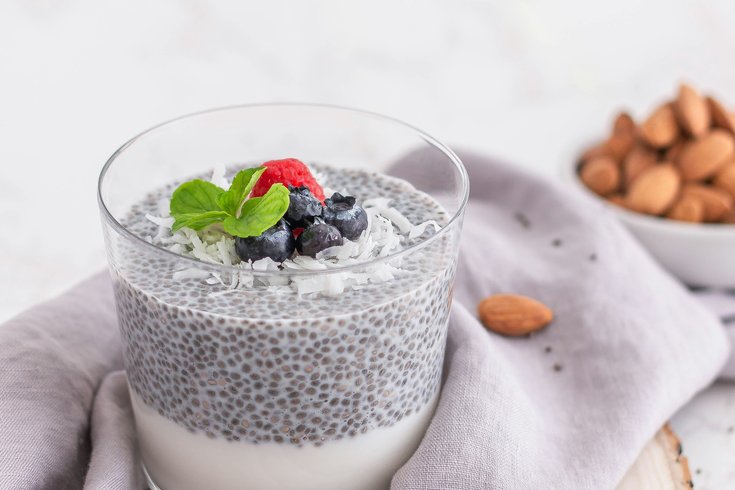
Chia seeds mixed with yogurt is one of the dishes promoted by fibermaxxers on TikTok. One tablespoon of chia seeds has more than 4 grams of fiber.
Health experts have flagged the dangers of cooking chicken in NyQuil, taping one's mouth before going to bed and other so-called wellness trends that TikTok influencers have promoted through the years. But fibermaxxing is one many dietitians seem to be backing.
Fibermaxxers eat more than the recommended daily amount of fiber to boost their overall health, promote a sense of fullness and lose weight. TikTokers are posting videos of themselves mixing chia seeds, quinoa, legumes and other fibrous foods into meals, and using taglines like "Hemorrhoids no more!"
Adults should be getting about 14 grams of fiber for every 1,000 calories. That adds up to about 25 grams of fiber a day for women and 38 grams for men, but most people don't hit those targets, according to the Dietary Guidelines for Americans.
"People eat more ready-to-eat processed foods, which are made from refined grains stripped of fiber, such as white rice and white flour and found in pasta, pastries, cakes, and crackers," Dr. Walter Willet, a professor of epidemiology and nutrition at Harvard's T.H. Chan School of Public Health, said in a Harvard Medical School publication last year.
Because of these deficits, many nutrition experts are backing the fibermaxxing trend.
"Whether it's adding chia seeds to everything, sneaking veggies into your meals, or finding new ways to love whole grains, fibermaxxing might just be the trend we didn't know we needed," registered dietitian Lauren Manaker told CNN in July.
Another registered dietitian, Emily Haller, agreed.
"A lot of times we see people obsessing about things that really don't move the needle in terms of health, whereas eating more plants and ingesting more fiber is going to have a positive health benefit," Haller recently told the New York Times.
But fibermaxxers need to hydrate well and be careful not to load up on too much fiber too quickly – otherwise bloating, gas and even constipation can occur, registered dietician Eliza Whitaker told Real Simple in May.
"Add a few extra grams of fiber for a few days and see how your body tolerates it before adding more," Whitaker said. "Your body will adjust to having more fiber over time."
Fiber comes in two types: Soluble fiber absorbs water, creating a gel-like substance in the stomach that helps regulate digestion. Insoluble fiber bulks up stool to help with regular bowel movements, according to the Mayo Clinic.
High-fiber diets promote bacteria that is good for the gut, lowers cholesterol and improves sugar absorption.
A 2019 review of studies found that people with high-fiber diets are less likely to die of coronary artery disease and are less likely to develop type 2 diabetes or colorectal cancer.
Legumes, fruits, vegetables, whole grains, nuts and seeds are all fiber-rich foods.
• Legumes: Lima beans, green peas, French beans and split peas have between 8 and 9 grams of fiber per serving.
• Fruits: Guava, blackberries, raspberries and boysenberries have the most fiber, with between 7 and 9 grams of fiber per cup.
• Vegetables: Artichoke, pumpkin, Brussels sprouts and sweet potato contain between 6 and 9 grams of fiber per cup.
• Whole grains: Shredded wheat, popcorn and bulgur are fiber-rich whole grains, ranging from 4 to 6 grams of fiber per serving.
• Nuts and seeds: Pumpkin seeds, coconut, chia seeds and almonds have between 4 and 5 grams of fiber per serving.
Harvard Health has a comprehensive list of high-fiber foods.