






August 13, 2025

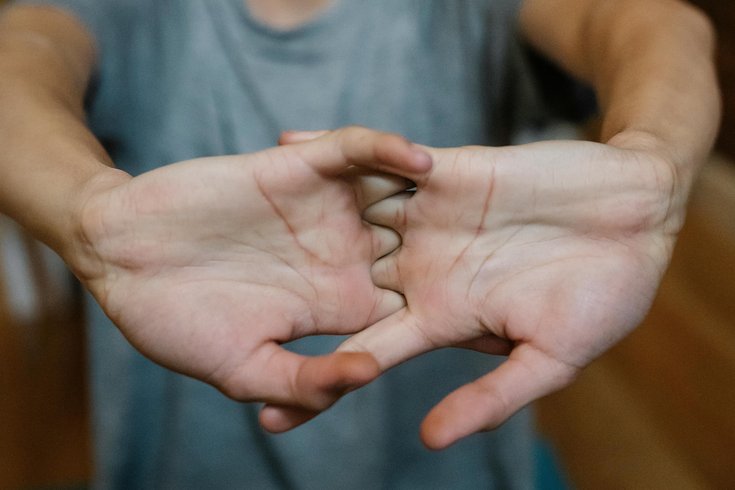 Eren Li/Pexels
Somewhere between 20% and 54% of people crack their knuckles on a regular basis, a habit that is generally harmless, according to studies.
The popping sound habitual knuckle crackers make may be annoying — or even alarming — but are they actually harming themselves?
The research is somewhat limited but generally concludes that manipulating finger joints is not harmful.
“My mother used to tell me don’t crack your knuckles. But sorry, mom: There’s no science to say it’s bad for your joints," Dr. Kim Stearns, an orthopedic surgeon, said in a 2023 Cleveland Clinic post.
A study from 1975, based on a survey of elderly people with a history of cracking their knuckles, did not find a link between the habit and the development of arthritis.
In another study, a doctor cracked his knuckles only on his left hand at least twice a day for 50 years, leaving his right hand alone. Ultimately, he found no difference in the function of his hands and did not develop arthritis in either one throughout the decades.
A 2011 study confirmed these results, finding no correlation between habitual knuckle cracking and arthritis in the fingers.
Even though knuckle cracking is generally harmless, the sound can be surprisingly loud – loud enough to be heard across a room.
The popping or cracking occurs when the space between joints is elongated, causing negative pressure in the fluid between the joints and releasing gas, according to the Cleveland Clinic.
The process is similar to inflating a balloon and stretching it out until it pops, according to Harvard Health.
Knuckle cracking is pretty common.
Studies suggest that between 20% and 54% of people do it on a regular basis. Knuckle crackers typically do it an average of five times a day, an orthopedic surgeon said in a 2017 Mayo Clinic post.
While the act can be a form of stress or anxiety relief, other people may simply enjoy the sensation.
But why knuckle cracking becomes habitual is still somewhat of a mystery, Dr. Rahul Shah, an orthopedic spine and neck surgeon in Vineland, New Jersey, told Everyday Health.
“We don’t have a clear scientific understanding of why cracking feels so good,” Shah said.
• Try to identify what triggers the urge to crack your knuckles.
• Find other ways to occupy your hands. Squeeze a stress ball. Play with a fidget ring. Wear a rubber band and snap it when the urge to crack knuckles arises.
• Do deep breathing exercises.