




February 25, 2026
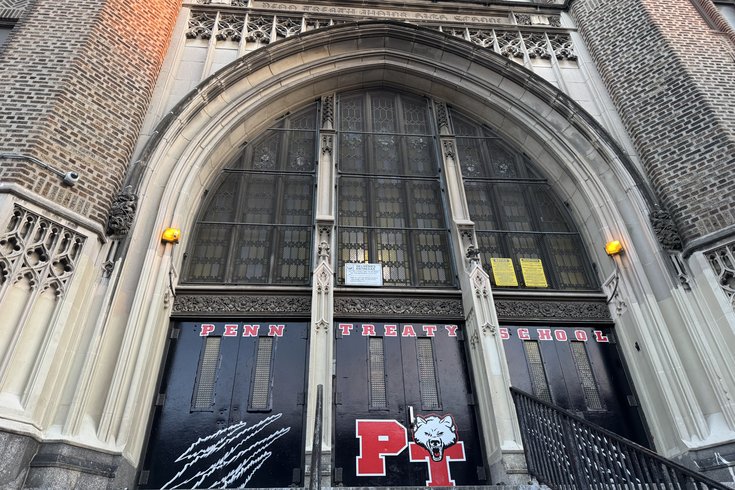 Molly McVety/PhillyVoice
The School District of Philadelphia proposes closing 20 schools by 2027, raising fears of repeating problems from 2013 when closures left buildings vacant and hurt academic performance. Penn Treaty School in Fishtown is one of the schools the district plans to phase out as part of its $2.8 billion facilities master plan.
When the School District of Philadelphia closed two dozen schools as a cost-cutting measure in 2013, it resulted in thousands of students being displaced, academic performance worsening around the city and buildings being left vacant for over a decade. Last month, the city proposed shuttering another 20 schools starting in 2027-2028, leaving some teachers, elected officials and community members fearful that another wave of closures will have similar ramifications.
But district officials insist the 10-year, $2.8 billion facilities master plan, which was released last month after a three-year evaluation process, has safeguards to prevent a repeat of those negative outcomes. The proposal will be presented to the city's school board on Thursday.
MORE: New Jersey sues Trump administration over cuts to energy affordability projects
"When you think about what happened years ago, we are still impacted by those decisions today," Councilmember Isaiah Thomas, who chairs the Education Committee, said during a council hearing last week.
The district's 307 buildings are, on average, 73 years old, and about a third of them are underutilized as more families opt to enroll their children in cyber charter schools, according to Board of Education President Reginald Streater.
School district data released last April showed that 14,252 city students attended in cyber charter schools, and the number of students enrolled in these online programs had increased more than 2,500% between 2014-2015 and 2024-2025. Additionally, nearly 64,000 students are enrolled in brick-and-mortar charter schools, but that number has remained relatively flat durng the last 10 years.
Six middle schools are being targeted among the 20 proposed closures, with the plan calling for most of those students to be relocated to elementary schools that will expand to include grades 5-8.
In addition to the closures, the outline also recommends 159 facilities be modernized and six be co-located in an effort to improve the distribution of resources as enrollment continues to dwindle. District officials say these changes will allow it to increase the availability of algebra 1 for middle school students, which is currently only offered at roughly one-quarter of public middle schools; as well as complete dozens of accessibility improvements in its older buildings.
Nearly 8,000 students would be directly affected by these changes, Chalkbeat Philadelphia, an online publication that covers the Philadelphia school district, reported in January, but district officials say almost all of them would be reassigned to schools with comparable or better academic scores.
Still, some City Council members have raised alarms about schools in their neighborhoods closing, with Council President Kenyatta Johnson (D-2nd) telling the Inquirer that he would be open to holding up funding if their concerns are not met.
Back in 2013, the school district was facing a budget deficit of more than $1 billion and closed over 10% of its facilities. The changes affected more than 10,000 students, a majority of whom were Black or low-income.
"The District learned important lessons from the 2012-13 school closures," said Monique Braxton, deputy chief of communications with the School District of Philadelphia. "Most critically, we learned that school closures have profound academic, social and community impacts and must not be approached lightly. At that time, we saw declines in student achievement at some impacted schools, and several closed buildings remained vacant for extended periods."
The district said it has solicited feedback through public listening sessions, data gathering with principals and district-wide surveys as it seeks to assure the mistakes from 2013 are not repeated this time around.
Some of the schools that were shut down in 2013 were converted into residential complexes, consolidated with neighboring schools or, in the case of Bok Technical High School, transformed into mixed-use workspaces, restaurants and rooftop bar.
But Fairhill Elementary in North Philadelphia and Pepper Middle School in Eastwick remain vacant over a decade later. Meanwhile, Germantown High School became a public nuisance, racking up property tax and vacancy violations and was repeatedly put up for sale before it was transformed into an apartment building.
Vacant schools decrease surrounding property values and pose a public safety risk by attracting crime and vandalism. Last year, Kada Scott, 23, was killed and her body was found near the abandoned Ada H.H. Lewis Middle School in East Germantown, which closed in 2008.
To prevent shuttered schools from turning into abandoned lots, Braxton said there will be a "clear and intentional" plan to utilize every space.
"Our goal is to retain as many buildings as possible for district use by repurposing them for new educational or operational needs," she said. "For any properties the district does not retain, we plan to transfer them to the city so they can be reused for community-serving purposes, including affordable housing and workforce development, rather than remaining vacant."
Ten schools, including Robert Morris Elementary in Brewerytown and John Welsh Elementary in North Philly, are recommended to be repurposed and remain in control of the district; and seven others, including John Rudolph Blankenburg School in Mill Creek and Lankenau High School in Roxborough, will either be conveyed to the city or sold.
Stand Up for Philly Schools, a coalition of parents, teachers and community members who oppose the district's plan, said the closures would take away neighborhood anchors. Instead, the group recommends an adaptive reuse approach that rents out certain spaces within the buildings to workforce development programs, nonprofits or other public partners.
"You have to ask yourself, if the district is going to use space in these buildings that are underutilized, why don't they just keep the building open?" said Elaine Simon, an advocate with the group who's a former professor of urban studies at the University of Pennsylvania. "There are so many things that you could do with these amazing buildings, and nothing is ever going to be built to that level of quality again. … It's not just closing schools, it's having impacts on all of these families whose kids are going to be moving."
In 2019, two Penn professors published a study in the Economics of Education Review that analyzed the impact of the 2013 closures. They found the students who were forced to change schools were more likely to be absent and receive out-of-school suspensions the following year, and the likelihood of them missing class rose as the distance they traveled to school increased.
Displaced students weren't the only ones negatively affected by the district's reorganization. Even the students who returned to the schools that welcomed new enrollees experienced a decline in academic achievement, the researchers said, and that trend persisted for two years after the closures.
The district is aware of the challenges that come with a major shakeup like the one it's proposing, saying it will invest in a full planning year for staff members and establish "transition teams" to assist students, families and staff with the moves.
Details about these teams – including specifics on what they will do, who will be on them and how much will be invested into them – are still in the works. Braxton said they will "work closely with school communities and staff to ensure a thoughtful, transparent and supportive transition at each impacted school."
The district remains steadfast that its plan is fluid and the feedback from dozens of public meetings leading up to Thursday's presentation is being taken into consideration. Still, it appears to be facing an uphill battle to win over the support of educators, elected officials and the overall community.
"What is happening to the current Penn Treaty students?" teacher Lauren Douie asked during a community meeting earlier this month at the Fishtown school. "What message is being sent to them? They watch as their school diminishes around them … then the building is going to be invested in. Where is the investment in our current students?"
The district is recommending that Penn Treaty, which serves grades 6-12, closes and Bodine High, a magnet school in Northern Liberties, eventually moves into the building. The current Penn Treaty students would transfer to either Kensington High School or John Moffet Elementary School, which would become a middle school. The building that houses Bodine High would become Constitution High, which now rents a space in Center City.
"As it stands now, it looks like the district … is trying to please a certain type of neighborhood here in Fishtown," said Tanya Ross, a school psychologist at Penn Treaty. "It seems like Penn Treaty is being pissed on but being told that it's raining."