





April 15, 2026

 National Cancer Institute/UNSPLASH.COM
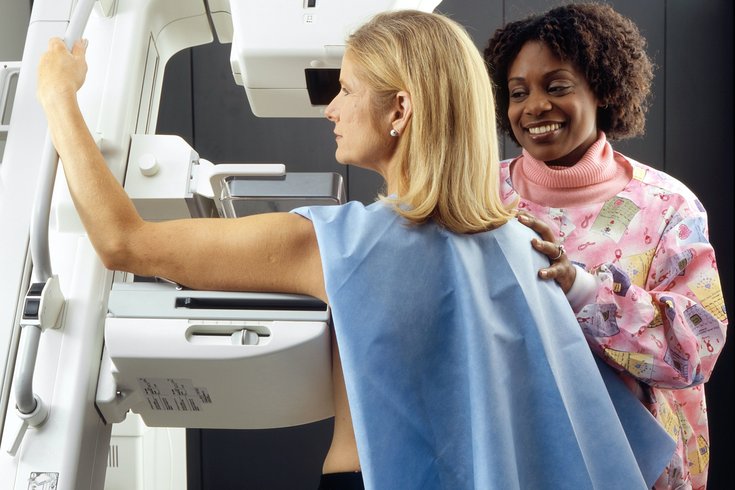
Women 35 and older should have access to a new AI tool that reads mammograms and assesses their risk of developing breast cancer within five years, new NCCN guidelines say.
A medical tool that reads mammograms and assesses a woman's risk of developing breast cancer within five years should be an option beginning at age 35, new screening guidelines state.
The tool developed by the medical technology company, Clairity, has received federal approval and is available commercially. The technology was trained on millions of images from five U.S. cancer centers that cover a diverse population.
MORE: Young cancer survivors have double the risk of getting cancer later in life, study finds
"Traditional screening asks a simple question: 'Do you have breast cancer right now?'" Dorraya El-Ashry, the chief scientific officer of the Breast Cancer Research Foundation, told Oprah Daily on Tuesday. "The new AI-based approach asks something far more powerful: 'What is your risk of breast cancer in the next five years?'"
With the exception of skin cancer, breast cancer is the most common type of cancer and the second leading cause of cancer death in women. It accounts for 1 in 3 new cancer diagnoses in women each year, and women have a 1 in 8 chance of being diagnosed with breast cancer during their lifetimes, the American Cancer Society says.
But breast cancer screening guidelines can be confusing for women and lead to false positives and false negatives. Mammograms are hard to read for women with dense breast tissue, which affects 40% of women. Also, most women diagnosed with breast cancer have no family history or known genetic mutation for the disease.
With flaws in the current methods of screening for breast cancer, "AI-based analysis of mammograms represents an important new direction to overcome these limitations, and hopefully move toward more precise and individualized risk assessment," said Robert Smith, director of the American Cancer Society Center for Early Cancer Detection.
The National Comprehensive Cancer Network – a nonprofit organization of 34 cancer centers that helps advise screening recommendations – has updated its guidelines to recommend use of AI breast cancer assessment for women at age 35.
"It's encouraging to see advances in breast cancer risk assessment beginning to reach clinical care, including AI-based approaches that may help identify higher-risk women earlier — particularly those under 50 who might otherwise go unflagged," said Dr. Judy Garber, scientific director of the Breast Cancer Research Foundation. "While continued research and real-world evaluation are essential, these tools represent a meaningful step toward more personalized screening and prevention.
Current guidelines from the American Cancer Society recommend women start annual mammograms to screen for breast cancer starting at age 40 and have them yearly from ages 45 to 54. Women 55 and older may opt to have mammograms every other year and continue to have them for as long as they are in good health and expected to live for another decade.