



May 25, 2026
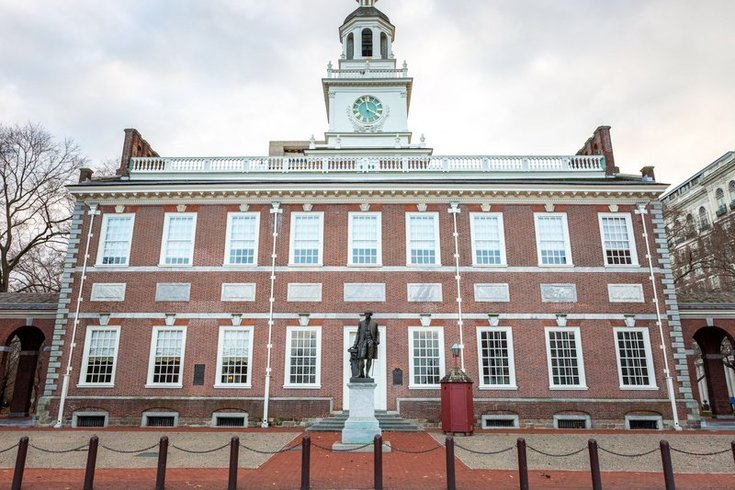 Thom Carroll/For PhillyVoice
Philadelphia will celebrate the 250th anniversary of the signing of the Declaration of Independence this summer. Here's a look back on 1776 Philadelphia and how the document came to be.
This summer, thousands of visitors will descend upon Philadelphia, a prominent site in American history, to honor the 250th anniversary of the signing of the Declaration of Independence.
Known as the semiquincentennial, the celebration includes fireworks, walking tours, block parties and a slew of Liberty Bell replicas to honor the city's past. But the Philadelphia of 1776 was much more than the famous document it produced. It was a growing international trade hub, center of a political movement and just down the river from a noteworthy Revolutionary War battle.
Ahead of the commemoration of the Founding Fathers' formal announcement of the country's separation from Great Britain, here's a history brush-up of what life was like in the country's informal capital that year.
In 1776, Philadelphia was the largest city in the British-occupied portion of North America, larger than Charleston, Boston and New York City with a population just above 30,000 people. Residents primarily resided in small rowhomes – Christ Church was the tallest building at the time – huddled around the Delaware River, says Tyler Putman, a senior manager at the Museum of the American Revolution. The Pennsylvania State House, now known as Independence Hall, was the western edge of the city save for a few scattered homes around Pennsylvania Hospital, which was built in 1751 at Eighth and Spruce streets.
Its place as a central hub was largely due to the fact that it was the largest port among the colonies, said David Brigham, CEO of the Pennsylvania Historical Society. More immigrants were coming to Philadelphia than any other city, making its residents a diverse group which included Native Americans and a number of different religious organizations.
"It would have felt really worldly and they're getting trade goods from around the world, so they're getting Chinese porcelain and French silks and tea from Asia," Putman said. "They're getting news from England really quickly, within four to six weeks you could get the fresh London newspapers, so fashions in the city are changing really rapidly."
The population also included enslaved African Americans, as the Act for the Gradual Abolition of Slavery wouldn't pass in the Pennsylvania Assembly until 1780. Some, including George Washington, continued to illegally import slaves into Pennsylvania through the 1780s and 1790s. There was also a burgeoning community of free Black residents, which would grow to over 1,000 people by the end of the American Revolution.
A map shows the spread of Philadelphia in 1776. Provided Image/Courtesy of the Free Library of Philadelphia, Map Collection
At the time, print culture was extremely important, Brigham said, and a large number of newspapers were published in the city. Political perspectives began circulating in the form of pamphlets and broadsides, single sheets hung in taverns and public places, from prominent figures such as Thomas Jefferson, John Adams, Alexander Hamilton and James Wilson.
"This implies a largely literate population, and that would have been true for at least some basic level of literacy from skilled craftspeople all the way up through the economic and political elite," Brigham said.
One 47-page pamphlet, Thomas Paine's "Common Sense," published in January from an Old City printer, promoted the idea of independence. The document was hugely influential among the public across the 13 colonies, and an estimated 75,000 copies were distributed within a year, the New York Times reported.
At the start of 1776, the first shot of the Revolutionary War, famously known as the shot heard 'round the world, would have been fired a little less than a year ago at the Battle of Lexington and Concord on April 19, 1775. By the summer, British troops left Boston and moved up to Canada to regroup, before staging a massive invasion of New York City in August, defeating General George Washington's army in the Battle of Long Island.
"The summer 1776, when the Declaration of Independence happens, is kind of this brief eye of the storm in the military activity of the war," Putman said.
Though it was fought on American soil, the Revolutionary War was a world conflict, Brigham said. Britain would hire German troops to fight the colonists, and Spain and France became allies with the United States to fight their common enemy: England. The Netherlands also joined in the cause, with merchants providing military supplies before Britain officially declared war on the country in 1780.
In the fall, the Patriots retreat back to the Philadelphia area to plan their next move. The year caps off with Washington's famed crossing of the Delaware River. After a few weeks of camping around a farm house in Bucks County, thousands of troops moved across the icy river under the cover of nightfall on Christmas Eve, battling both snow and sleet. Despite the fact that two supporting brigades were unable to make the crossing, Washington's army defeated the Hessians, the German soldiers, in Trenton.
That victory was thought to turn the tide of the Revolutionary War, although the conflict wouldn't end for several more years.
Depictions of colonial Philadelphia, including illustrations of the port (top), the battery and the Pennsylvania State House (bottom right) and a map of the city. Sourced image/Library of Congress
Brigham noted many colonists weren't in favor of independence in the 1760s, but that mindset began to change beginning in the 1770s. The Boston Tea Party, when revolutionaries dumped hundreds of chests of tea into the sea to protest taxation in 1773, was one of the catalysts that forced collective action from the colonies.
Still, in December of 1775, many Philadelphians thought some form of reconciliation was feasible, Putman said, be it a restructuring of parliament or developing a new commonwealth system. That idea starts to change with the publication of "Common Sense," and the idea of independence starts to trickle in and grow throughout 1776.
In May 1776, delegates from all 13 colonies met in Philadelphia for the Second Continental Congress to determine the country's future and make a plan for the war effort. Each colony got one vote on the question of independence, no matter the number of delegates. Thus, the first half of the year was spent with a backdoor effort from leaders such as Benjamin Rush (pro) and John Dickinson (against) to sway Pennsylvania Assembly leaders.
Pennsylvania ultimately went against independence but was outvoted by the other colonies, and Thomas Jefferson was selected to write the first draft of the Declaration of Independence. After some editing by leaders including Benjamin Franklin and John Adams, the document was approved on July 2 and then signed on July 4.
When the document was read outside the Pennsylvania State House, there was a massive crowd and cheering, Putman said. British coats of arm were torn off buildings and many staged bonfires. Others were horrified by the political decision, and some people began to leave the city in protest.
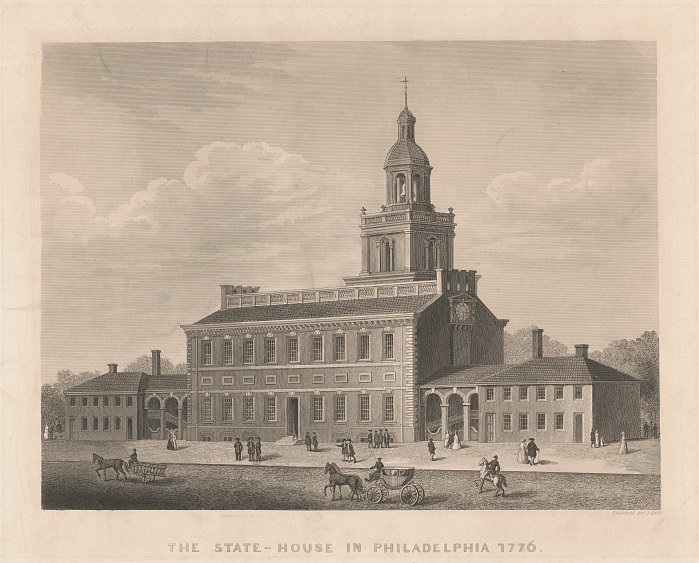
An 1800s image of Independence Hall, formerly known as the Pennsylvania State House, in 1776.
But independence was still a fragile concept. While there's much enthusiasm during the summer, Washington's defeat in New York City that fall brought low morale. Wealthy merchants, in particular, were uncomfortable with the idea of independence, Brigham said, because much of their commerce was connected to the British-Atlantic trade.
"So Congress and the United States and George Washington are trying to prevent any effort to reverse independence," Putman said. "It's still really actively under threat, not just from the war, but also because people might abandon it as an idea."
Enslaved people also would be declared free if they fought for the British army, per a 1775 proclamation from Virginia's governor, so nearly 3,000 enlisted on the British side, according to the Northeast Slavery Records Index. Similar measures were passed in the Continental Army by 1778, and an estimated 5,000 Black soldiers fought for the Patriot cause, though some were enlisted on behalf of their enslavers.
Slavery was also a large portion of the political language at the time, as many in favor of independence in the early 1770s made claims that the American people were being treated like slaves. But that rhetoric was laced in hypocrisy, Brigham said.
"Many of the people who were writing these heated pamphlets and diatribes were themselves enslavers, so that is an important part of the story," Brigham said.
Despite the strong end to 1776, Philadelphia was heading into tougher times. In September 1776, the British invaded the city and would occupy it for nine months, using Independence Hall to hold prisoners of war.
Troops abandoned the city in June 1778, but the conflict went on for several more years. Fighting largely ended with the Battle of Yorktown in 1781, although the war wasn't officially over until September 1783, when John Adams, Benjamin Franklin and John Jay signed the Treaty of Paris.
While the Declaration of Independence was published in 1776, an official plan for government wouldn't come for some time. The Continental Congress adopted the Articles of Confederation in November 1777, and the document was ratified by the states in 1781. That framework called for stronger state power and a weaker federal one, opting for an agreement to work together known a league of friendship as opposed to a formal centralized government. Among other provisions, that document said all 13 states had to approve any new amendments, so none were ever ratified.
In the spring of 1787, 55 men gathered at the Pennsylvania State House for the Constitutional Convention to address some of the mistakes made in the Articles and create a new form of government. After spending the summer debating its contents, the Constitution was signed on Sept. 17, 1787, and ratified by the states in 1788.