




May 22, 2026

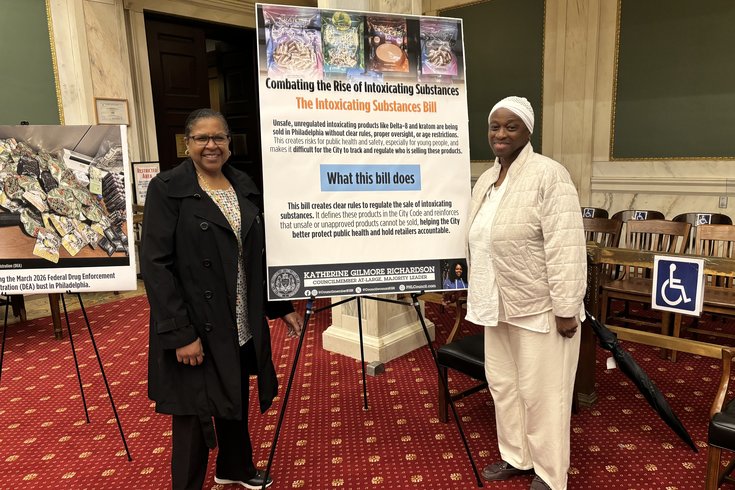 Courtenay Harris Bond/PhillyVoice
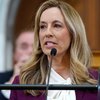
Crystal Morris and Bonita Cummings, who representative neighborhood organizations in Philadelphia, testified before a City Council committee hearing Thursday in favor of legislation that would ban the sale of most kratom and hemp-derived products and penalize landlords for renting to smoke shops that fail to follow new restrictions.
Philadelphia is considering a crackdown on smoke shops and the sale of so-called "gas station heroin" and other unregulated kratom and hemp-derived products. The proposal spurred more than three hours of intense testimony at a City Council committee hearing Thursday.
Kratom, an herbal supplement that appears in many forms, including as the potent 7-hydroxymitragynine, or 7-OH, sold in vape shops, convenience stores and online, is unregulated at the federal level and in Pennsylvania — even though the U.S. Drug Enforcement Administration has listed it as a "drug and chemical of concern" due to its potential for addiction. Synthetic products derived from hemp, such as Delta-8, can be highly-concentrated and intoxicating.
MORE: Jefferson Einstein Hospital nurses protest system's cuts to pediatric care
A bill introduced by Majority Leader Katherine Gilmore Richardson would classify these products as "intoxicating substances." Only FDA-approved products could be sold — and only to people 21 and older. Businesses also would need a special license to sell them. A second bill would authorize the city to take enforcement actions against landlords renting to smoke shops that do not have necessary licensing.
The committee approved the legislation, which now heads to the full council for a vote.
At Thursday's meeting, Gilmore Richardson said she sponsored the legislation because of the dangers 7-OH, Delta-8 and other kratom and hemp-derived products pose to children. Unlicensed stores selling them are fueling crime and hurting the quality of life in Philadelphia, she said.
Dr. Kevin Osterhoudt, of the Children's Hospital of Philadelphia, testified in support of the legislation. He told of a young patient who bought what she thought was a crispy treat on the way home from school and wound up on life support, because it contained high-potency cannabinoids.
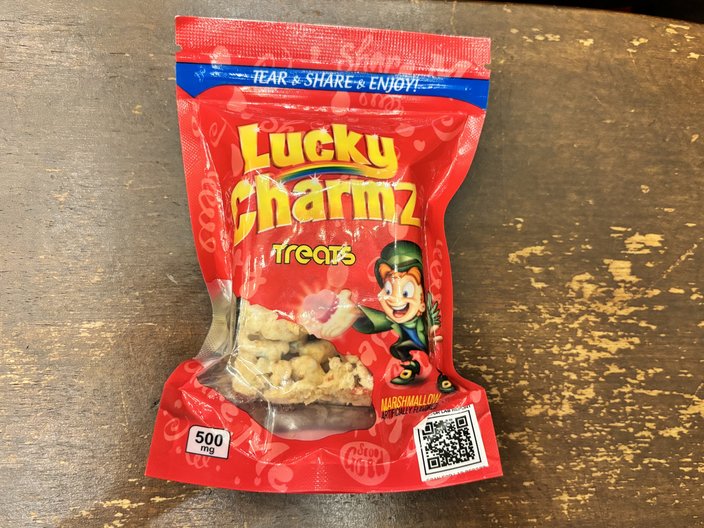
Dr. Kevin Osterhoudt, of the Children's Hospital of Philadelphia, supports legislation that would crack down on the sale of unregulated kratom and hemp-derived products, such as this crispy treat he said he bought at the King of Prussia Mall. The mall is in Montgomery County and would not be subject to the legislation.
"When people buy these products, they have no way of knowing what's really in them, or if the dose is right or true, or if there are other harmful contaminants," said Osterhoudt, a toxicologist and emergency medicine physician. "They may not be packaged safely, and they're too accessible to curious young children and to experimenting teenagers."
Bonita Cummings, who leads a Strawberry Mansion neighborhood organization, said the legislation was not just about "products or storefronts."
"We cannot continue sending mixed messages to our youth by normalizing intoxicating substances in the name of raising tax revenue while avoiding honest conversations about addiction, mental health, trauma, healing and the long-term impact these substances have on them and their communities," Cummings said.
Dr. Bella Kalayilparampil, a Penn Medicine addiction specialist, testified about the "potential public health risk posed by unregulated kratom products." She said she has treated patients experiencing opioid-like addiction to kratom, which can cause intense withdrawal symptoms.
Daniel Rosenberg said he was 14 years into recovery for opioid use disorder when he bought a kratom product from a vape shop during the COVID-19 pandemic to try to ease his anxiety.
Kratom gave him a "euphoric feeling" and "triggered something in my brain that said, 'Oh, hello friend,'" Rosenberg said.
Detoxing from kratom was "10-times worse" than detoxing from oxycontin, Rosenberg said.
"This stuff should not be on the shelves," he said.
Highly-potent, synthetic forms of kratom, like 7-OH, need regulation, said Adam Sulb. But he said natural kratom leaf products helped him get into recovery for opioid use disorder.
"I tried over and over to get clean," Sulb said. "You name it, I tried it. It just didn't really stick for me. Then somebody introduced me to kratom. Since that day, I haven't had a single drink or drug."
What frustrates him, Sulb said, is that the legislation lumps natural kratom with synthetic products. Some industry advocates and business owners who testified agreed.
"Are we going to create thoughtful regulation, or are we just going to completely destroy the market?" said Jake Sitler, speaking on behalf of the Pennsylvania Hemp and Cannabis Guild.
Representatives from the Philadelphia Department of Public Health said they would continue to work with City Council on the legislation.