





February 19, 2026
 Michaela Althouse/PhillyVoice
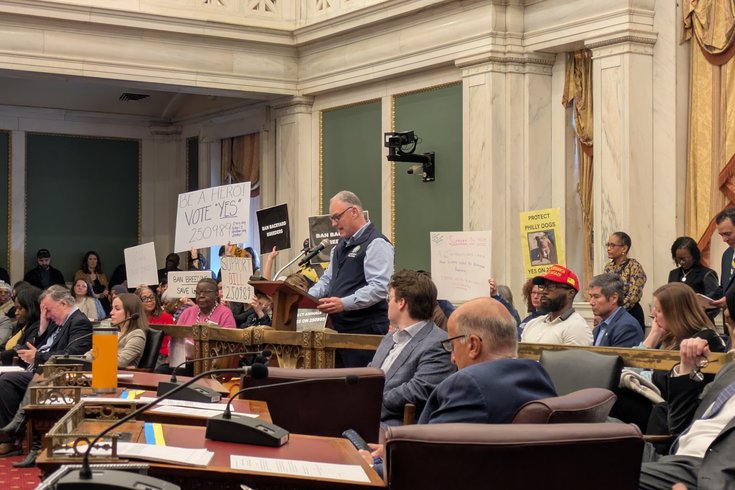
Charles Hall of the American Kennel Club speaks against a newly approved three-year ban on unlicensed dog breeding in Philadelphia.
In three months, the Animal Care and Control Team of Philadelphia will start enforcing a newly approved three-year ban on unregulated dog breeding in the city.
The legislation, which City Council passed unanimously Thursday, makes it illegal to breed and sell puppies without a valid kennel license, with offenders facing fines up to $2,000. Prospective sellers could also face daily fines for publishing ads that don't include kennel numbers and the ZIP code of the dog's location.
MORE: President's House slavery exhibits restored after judge imposes deadline
Nonprofit shelters and rescues are exempt from the ban, and sales can still take place for dogs used for law enforcement, search and rescue, and research programming. One-time sales of puppies born outside the city who have had the same owner for at least 30 days and are being offered a new home without reimbursement beyond veterinary care can also still take place.
The bill was introduced by Councilmember Cindy Bass (D-8th). While ACCT Philly will be responsible for targeting illegal breeding, Bass' office also urged residents to make the agency aware of bad actors.
"The key is educating the community first," said Teresa Lundy, a spokesperson for Bass. "ACCT is relying on the public to report these breeders and then they will go, investigate and issue a violation."
The ordinance will take effect in 90 days and remain in place for 36 months. City Council can renew it based on shelter capacity, enforcement data and the public health impact of the legislation. It now awaits the mayor's signature.
The legislation is meant to prevent overcrowding in shelters and irresponsible breeding, which can lead to health issues in some dogs. But critics say the measure will harm small, responsible breeders.
Charles Hall, an outreach coordinator at the American Kennel Club, spoke against the bill during Thursday's public comment session. He said that small breeders wouldn't meet the threshold to maintain a state license and that Philadelphia zoning laws don't permit kennels in residences. He also claimed that a similar ban in Los Angeles hasn't reduced the number of dogs in shelters.
"Working together, we can stop the flow from ill-responsible breeders and improve animal welfare and have fewer dogs in Philadelphia shelters," Hall said. "The question is how to achieve that goal in a way that is effective, fair and legally sound? Philadelphia deserves solutions that work in practice, not on paper."
However, Penny Ellison, a professor of animal law and ethics at the University of Pennsylvania, said that the Bureau of Dog Law Enforcement frequently licenses home-based kennels. She also said breeders who sell a certain number of dogs per year are already required to have a zoning variance that classifies them as a kennel.
"Whether your property use conforms to zoning depends on the nature of the use, not whether you have a license," Ellison said. "Under the ordinance, a kennel if any property where 13 or more dogs pass through in a year, so if you meet that threshold, you already need a zoning variance, the license doesn't create the problem."