





January 12, 2026

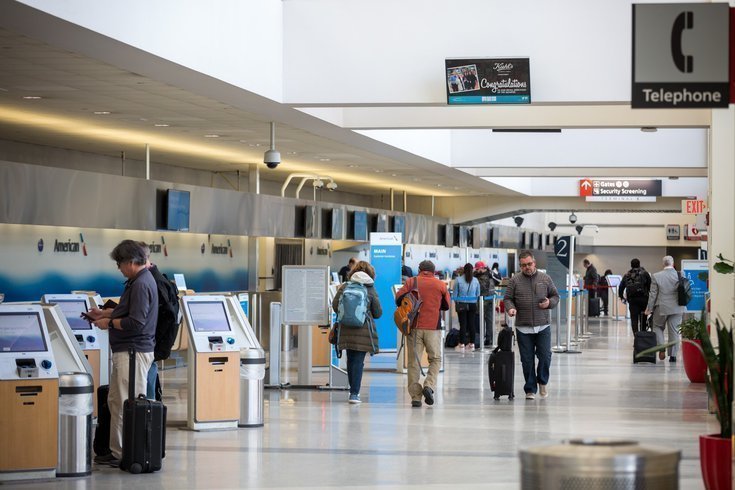 Thom Carroll/For PhillyVoice
A traveler passing through Philadelphia International Airport, shown in file photo above, and 30th Street Station on Jan. 7 may have exposed others to measles, health officials say.
Potential measles exposures occurred at Philadelphia International Airport and 30th Street Station earlier this month, city health officials warned Monday.
A person with measles passed through those locations Wednesday, Jan. 7, before taking an Amtrak train traveling toward Washington's Union Station, the Philadelphia Department of Public Health said. The traveler departed the train at the station for BWI Marshall Airport in Maryland, and rode shuttles to and from the airport's drop-off locations, the Maryland Department of Health said.
MORE: SEPTA is running trolleys to Center City again after completing wire repairs in tunnel
Measles spreads through the air when an infectious person breathes, coughs or sneezes. It is so contagious that airborne viral particles can infect people for up to two hours after an infected person has left the room. Two doses of the measles, mumps and rubella vaccine provide 97% protection , but declining vaccination rates in the U.S. have left more people vulnerable to the virus.
People who were in the following locations Jan. 7-8 may have been exposed to measles, the health departments said:
• Philadelphia International Airport, Terminal A East on from 7:50 p.m. to 11 p.m. Wednesday, Jan. 7.
• 30th Street Station on from 8:15 p.m. to 11:25 p.m. Wednesday, Jan. 7.
• Amtrak Northeast Regional Train No. 175 from Philadelphia's 30th Street Station to Washington's Union Station between 9 p.m. and 11:30 p.m. Wednesday, Jan. 7. The train ran from Boston to Washington.
• Amtrak BWI shuttle to and from the BWI train station and the drop-off points outside of the lower level of BWI Marshall Airport between 10:45 p.m. Wednesday, Jan. 7, and 1:30 a.m. Thursday, Jan. 8.
• BWI Airport parking shuttle to and from the lower level of BWI Airport and the BWI Airport's long-term parking lots between 11 p.m. Wednesday, Jan. 7, and 2 a.m. Thursday, Jan. 8.
There were no exposures identified inside the terminals of BWI Airport, health officials said.
People who are considered immune to measles do not need to take any action, health officials said. This includes people who have had two doses of the MMR vaccine, have had measles or were born before 1957. People can request their health records online if they are unsure whether they have been vaccinated.
People who are not protected against measles and were potentially exposed are advised to contact their health care providers about receiving an MMR vaccine as soon as possible, Philly health officials said. Infants under 12 months, pregnant women who are not immune and people with weakened immune systems are at greater risk of complications and may require other treatments.
Exposed people who are not immune also are advised to wear masks in indoor spaces and around unvaccinated people until three weeks after the exposure, because they may have contracted measles but not yet be showing symptoms. People who develop measles symptoms are advised to contact a doctor immediately.
Early symptoms include a fever of more than 101 degrees, runny nose, cough and red, watery eyes. A red rash typically appears on the face and body 1-4 days after symptoms begin. People become contagious four days before the rash appears and can continue spreading germs for four days after it appears.
Measles, caused by the rubeola virus, is particularly dangerous for children under 5, adults older than 20, pregnant women and people with weakened immune systems. They are more likely to develop complications, including pneumonia and encephalitis. About 1 in 5 unvaccinated people who get measles is hospitalized. The virus can be deadly.
Symptomatic individuals are advised to stay home and wear masks indoors to prevent infecting others. They should contact their health provider before entering a waiting room or emergency department, health officials said.
"We encourage people who were possibly exposed to take action if they are not protected against measles," Philadelphia Health Commissioner Dr. Palak Raval-Nelson said. "... We strongly encourage parents to get their children fully vaccinated as soon as they are able. People planning to travel outside the United States should speak with their doctor about their travel plans and vaccinations needed."
Raval-Nelson said the possible exposure does not pose a health threat to the general public. That's because vaccination rates in most communities remain high, though they have been falling.
To achieve "herd immunity," the threshold that prevents measles from spreading easily, about 95% of community must be fully vaccinated, health experts say. U.S. health officials recommend children receive their first MMR shot at 12-15 months and a second dose between ages 4-6.
Before the COVID-19 pandemic, about half of the counties in the United States had kindergarten vaccination rates high enough to prevent measles outbreaks. Now, only about 1 in 4 U.S. counties have herd immunity, the Washington Post reported, using data from the 2018-19 and 2024-25 school years.
Pennsylvania's vaccination rate fell from 96% to 92% during that period. The state allows people to cite personal and religious exemptions from vaccines. Philadelphia's vaccination rate fell from 95% to 94.65%.
New Jersey, which allows religious exemptions, saw its measles vaccination rate fall from 95% to 93%.
James Colgrove, a professor at Columbia University Mailman School of Public Health, said the trend represents a dangerous precedent that could put the American public at grave risk.
"The most dangerous deadly diseases will come back, and it won't only be kids who suffer," he told the Post. "It'll be adults in the community who are immune-compromised, who are elderly. It'll be infants."
Mandated vaccinations have been scrutinized by high-ranking members of President Donald Trump's administration. Last week, the Department of Health and Human Services lowered the number of recommended vaccines for children from 17 to 11, a move the American Medical Association called "dangerous and unnecessary." It also "blindsided" vaccine experts at the Centers for Disease Control and Prevention, the Post reported. The new guidelines do not include changes to the recommended doses for the MMR vaccine.
The Philadelphia health department offers free MMR vaccines from 9 a.m. to 1 p.m. Mondays through Fridays at these locations:
• Health Center 3, 555 S. 43rd St.
• Health Center 4, 4400 Haverford Ave.
• Health Center 5 Annex, 2001 W. Berks St.
• Mattie L. Humphrey Health Center, 131 E. Chelten Ave.
• Strawberry Mansion Health Center, 2840 W. Dauphin St.