




April 27, 2026
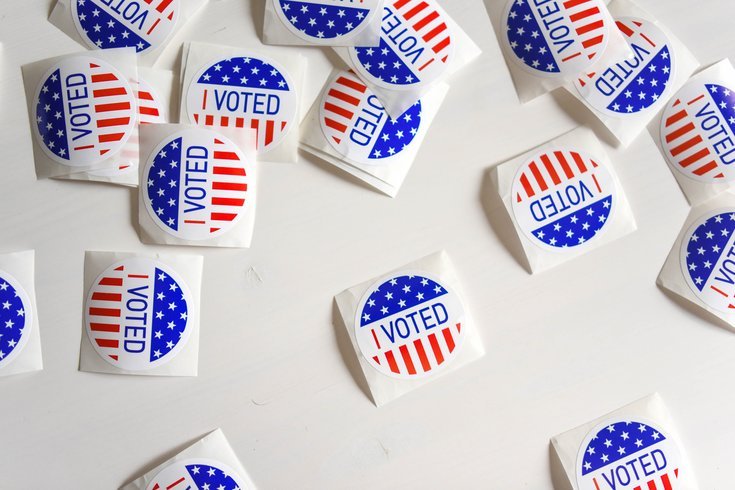 Elements Digital/Unsplash
Pennsylvania's 2026 primary elections will be held Tuesday, May 19. The voter registration deadline is May 4, and the deadline to apply for mail-in or absentee ballots is May 12.
The voter registration deadline for Pennsylvania's May 19 primary election is quickly approaching and several compelling races — including a tight Democratic contest in the Third Congressional District — will be on the ballot.
This year's voter registration deadline is May 4. Applications can be completed on the Department of State's website. They also can be taken or mailed to your county voter registration office. Pennsylvania has closed primaries, so only registered Democrats and Republicans can cast ballots for their parties' races.
Pennsylvania Gov. Josh Shapiro (D) and his Republican challenger, State Treasurer Stacy Garrity, are running unopposed in their primaries as they prepare for the November general election. Lt. Gov. Austin Davis (D) also is running uncontested, but two Republicans are battling for a place on the ballot with Garrity in November.
Below is a rundown of key information for the Pennsylvania primary election.
Registered voters who wish to use a mail-in or absentee ballot must submit applications by 5 p.m. May 12. Applications can be completed online, by mail or by visiting your county election office. There, they can receive and submit their ballots in one visit.
County election offices must receive mail-in and absentee ballots by the time polls close at 8 p.m. May 19. Ballots that are received after that time will not be counted, even if they are postmarked by 8 p.m. on Election Day.
Voters in Philadelphia can access a range of voter services, including mail-in and absentee ballots, at one of 10 satellite election offices in the city. The offices operate Mondays through Fridays from 9 a.m. to 5 p.m.
Voters who wish to cast a ballot in person can look up their polling places on the Department of State website.
All voters who arrive at their polling place and are in line by 8 p.m. will be able to cast a ballot.
Pennsylvania's primary election sets the stage for the races in November that impact the composition of the state legislature in Harrisburg and the balance of power in Congress.
All 203 seats in the Pennsylvania House of Representatives are up for election in 2026. Democrats hold a slim majority with 102 seats to 99 for Republicans. There is a vacant seat in the 12th District (Allegheny and Westmoreland counties). In the 22nd District (Lehigh County), state Rep. Ana Tiburcio (D) will face a primary challenge after she won a special election for the seat in February.
In the Pennsylvania Senate, where Republicans hold a 27-23 majority, there are 25 seats up for election in 2026.
Nationally, Republicans control both chambers of Congress ahead of the midterm elections. In the Senate, Republicans hold a 53-47 majority over Democrats, who have two independents caucusing with them. Democrats need to gain a net of four seats to win a majority in the Senate. Republicans can lose no more than two seats to keep a majority.
In the U.S. House of Representatives, Republicans hold a 220-215 majority. Democrats need to gain a net of three districts to win a majority in the House. Republicans can lose no more than two districts to retain their majority.
In Philadelphia, the Democratic primary for the Third Congressional District is among the races to monitor. Dwight Evans is retiring at the end of his fifth term, opening the door for new leadership in one of the nation's most heavily Democratic districts. The Third District covers most of Center City, Fairmount, Northwest Philly and large parts of South and West Philly.
The Democrats in the primary include Dr. Ala Stanford, state Sen. Sharif Street and state Rep. Chris Rabb. State rep. Morgan Cephas and physician David Oxman have dropped out of the race. Software engineer Cole Carter and tax attorney Shaun Griffith also will be on the ballot. There are no Republican challengers.
In the state Senate, incumbent Democrat Art Haywood faces a primary challenge from union leader and community organizer Mike Cogbill in the Fourth District. Todd Johnson, pastor of First Immanuel Baptist Church, is running uncontested in the Republican primary. The district covers parts of Philadelphia and Montgomery County.
In the Eighth District, covering parts of Philadelphia and Delaware County, seven-term incumbent Anthony Hardy Williams faces a primary challenge from realtor David Goldsmith Jr. There are no Republicans on the primary ballot.
In the state House's 185th District, which covers the Navy Yard and neighborhoods in Southwest Philly, incumbent Democrat Regina Young is being challenged by immigrant advocate and Liberian refugee Joe Sackor. In West Philly's 188th District, incumbent Democrat Rick Krajewski is being challenged by Tony Dphax King.
Another contested state House district is West Philly's 192nd District, where incumbent Democrat Morgan Cephas is running against nonprofit executive D'Angelo Virgo. In the 195th District, covering Fairmount and surrounding neighborhoods, incumbent Democrat Keith Harris is being challenged by public school advocate Kenneth T. Walker Jr. and social worker Sierra McNeil. The 200th District, represented by Democrat Chris Rabb in Northwest Philly, features a primary contest between Chris Johnson, Qasim Rashad and Deshawnda Williams.
There also are several competitive state House primary races in the Philly suburbs.
In the 148th District, covering parts of Montgomery County, incumbent Democrat Mary Jo Daley is retiring and four Democrats are running in the primary. The 166th District, spanning communities in Delaware and Montgomery counties, has a primary contest between incumbent Democrat Gregory Vitali and challenger Judy Trombetta. In the 159th District, which covers Chester and other parts of Delaware County, incumbent Democrat Carol Kazeem is being challenged by Brian Kirkland, who represented the district for three terms before his defeat in 2022.
Philadelphia voters will be presented two ballot questions in the primary election. All voters in the city are able to vote on these questions, even if they don't have a party affiliation.
The first ballot question asks whether the city's Home Rule Charter should be amended to create a Philadelphia Retirement Savings Board to oversee a defined contribution retirement program for the benefit of eligible private-sector workers. City Council would determine the composition, powers and duties of the board. The retirement plans would be for workers who cannot contribute to an employer-administered plan.
If the question is approved, Philadelphia would become the first city in the country to offer its own retirement plan.
The second ballot question asks if the city's Home Rule Charter should be amended to create an Office of the Youth Ombudsman to improve the safety and quality of services for youth placed in juvenile justice, child welfare and behavioral health residential care facilities. City Council would determine the office's powers and duties.
Former Mayor Jim Kenney created the independent Office of the Youth Ombudsman in 2022 to act as a monitor of the safety and quality of youth services. The office was created by executive order. If the ballot question is approved by voters, the office would become permanent.