



June 04, 2026
 Michael Tanenbaum/PhillyVoice
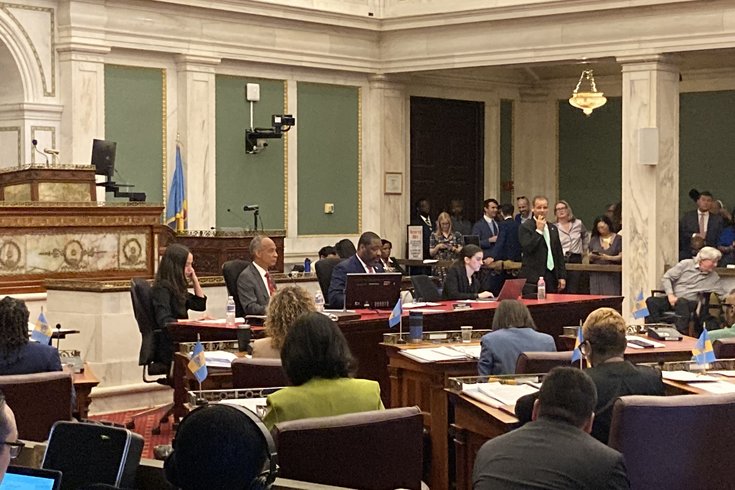
City Council passed a preliminary $7.1 billion budget on Thursday that removed Mayor Cherelle Parker's proposals to increase taxes on ride-shares, short-term rentals and hotels. Council's budget carves out $48 million in one-time funding for the School District of Philadelphia in the new fiscal year.
Mayor Cherelle Parker's push to tax Big Tech companies to raise revenue for the School District of Philadelphia and homeless programs was rejected Thursday in the preliminary budget passed by City Council.
The mayor's $7.1 million budget proposal for the fiscal year starting in July had included a $1-per-ride tax on Uber and other ride-share services in Philly and a 6% increase in the tax rate on short-term rentals like Airbnb and Vrbo. Including state taxes, the rate for short-term rentals would have jumped to 21.5%. Taxes on hotels also would have climbed from 15.5% to 16.1% under Parker's plan.
Uber, Airbnb and tourism groups waged aggressive lobbying and ad campaigns against Parker's tax increases in recent weeks. The mayor initially had proposed raising the city's tax rate by 2% for hotels and Airbnbs, but then changed course last week with a steep tax hike proposed for short-term rentals and a more modest bump for hotels.
City Council's Committee of the Whole scrapped most of Parker's proposed tax increases, holding firm in negotiations with the administration, and looked elsewhere to find a short-term solution for school district funding in the coming fiscal year.
City Council Majority Leader Katherine Gilmore Richardson (D) said the budget amendments were made to limit financial burdens on residents.
“We heard loud and clear from Philadelphians that raising taxes is not an option right now," Gilmore Richardson said in a statement. "Residents are concerned about the cost of living and with good reason. Many Philadelphians are struggling financially, and as a body, we could not in good (conscience) move forward with the proposed taxes."
A spokesperson for City Council President Kenyatta Johnson said both of Parker's major tax proposals lacked support from a majority of council members. The $1 ride-share tax was viewed as a sharp and sudden increase that would need more time for future consideration. The short-term rental and hotel taxes would have required enabling legislation from the state that appeared unlikely to gain support in Harrisburg, even if City Council had gotten behind the measure.
Parker pitched the ride-share tax as a way to address the School District's $300 million structural deficit, which widened with the lapse of federal support from the COVID-19 pandemic. The administration projected the ride-share tax would have generated $48 million in annual revenue for the district.
Last week, the school district passed a $4.6 billion budget with about $225 million in spending cuts, including the elimination of 340 school-based staff positions.
"We thank City Council for rejecting the Mayor's proposed $1 rideshare tax and standing up for affordability for the hundres of thousands of Philadelphia riders and drivers who spoke out against it," Jazmin Kay, Uber's head of public affairs in Pennsylvania, said Thursday. "More than 90,000 letters were submitted in opposition to the tax, sending a clear message that Philadelphians want affordable transportation options and oppose higher costs on working families."
Airbnb, which ran ads against Parker's tax plan and collected letters from owners of short-term rentals, did not immediately respond to a request for comment.
In the preliminary budget passed Thursday, City Council carved out $48 million in one-time school district funding for the new fiscal year. That commitment is partially offset by spending reductions across a variety of city departments, including a $10 million cut in vendor contracts for the Department of Commerce, $9 million in debt service savings and $1 million cut for warehouse rentals. City Council also projects $5 million in new interest earnings.
Parker said the preliminary budget includes most of her priorities for affordability, housing, public safety, education and workforce development. She called the one-time allocation City Council created for the school district a "band-aid" and said she would not give up on the tax initiatives she proposed. The budget also also does not include the mayor's proposed 25-cent fee on retail deliveries to pay for a dedicated pothole repair squad.
“While this budget contains meaningful investments, it does not include several proposals my administration put forward to make our city more affordable, generate predictable recurring funding for our schools, help end street homelessness, and improve neighborhood roads and infrastructure," Parker said at a press conference Thursday afternoon. "...The people of Philadelphia did not elect me to accept the status quo," Parker said Thursday afternoon. "They elected me to tackle the challenges that make it harder for families to get ahead and to create pathways to economic opportunity in every neighborhood of our city."
The School District of Philadelphia did not immediately respond to questions about how the one-time $48 million increase in spending — bringing the budget allocation to $332 million this fiscal year — will create flexibility to roll back some of the cuts approved in the district's budget.
Arthur Steinberg, chair of the Philadelphia Federation of Teachers, urged City Council to find more sustainable funding solutions. The teacher's union was recognized with a resolution honoring its 80th anniversary during Thursday's council meeting.
"The district needs new recurring revenue sources to address the structural deficit," Steinberg said. "Not providing this will accelerate the exodus of teachers and exacerbate the shortage. One-time fixes will not cut it."
Johnson introduced a resolution for City Council to conduct hearings that will evaluate new revenue proposals to address the school district's underfunding.
"We recognize we must address the deep, systemic, and long-standing issues with the School District of Philadelphia and its structural deficit," Gilmore Richardson said.
City Council will need to pass the final budget for the coming fiscal year by June 11.