





May 11, 2026

 Christopher Millette/Imagn Images
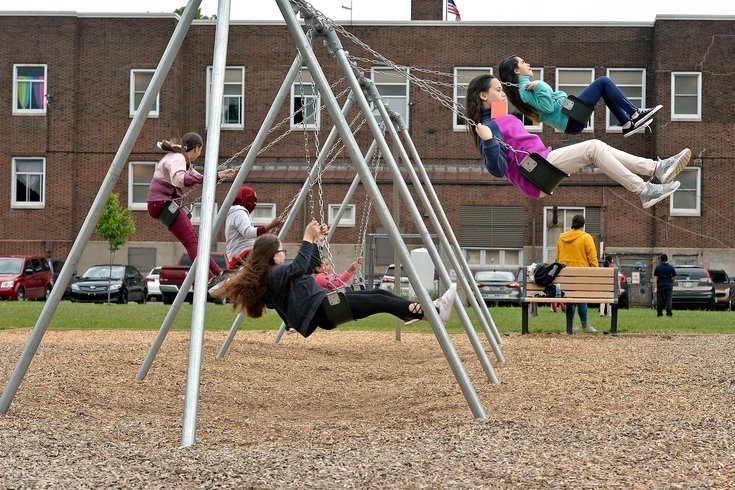
Recess is crucial for children's academic success and social development, new guidance from the American Academy of Pediatrics says. Despite this, many schools have reduced the amount of time students get for unstructured play. Above, a file photo of students at Edison Elementary School in Erie.
Though many schools have cut back on recess, these periods of free play are crucial for children's health and academic success, new guidance from the American Academy of Pediatrics says.
The recommendation, the first the AAP has issued on recess in 13 years, says physical activity is key for socializing, creativity and learning. It comes just two months after the School District of Philadelphia implemented a new wellness policy that guarantees daily recess and movement breaks.
MORE: Half of American adults get health info from social media influencers — yet few trust them
"A quality recess will reestablish mental equilibrium and focus, a need of every student, kindergarten through 12th grade, every day," the guidance says. "As such, recess should be a protected block in the daily schedule and be considered a student's personal time."
The guidance doubles down on the AAP's 2013 recommendation that recess is a necessary break for children. Despite this, many schools have lessened recess time in favor of academic activity. Weekly recess time has declined by 60 minutes on average in the U.S. between 2001 and 2019, according to the education consulting firm EAB.
Schools with larger percentages of marginalized and minority students tend to have less recess time, the AAP says. The COVID-19 pandemic, which drastically altered the daily routines when students had to participate in virtual schooling, also disrupted mandated recess for students.
Recess allows opportunities for students to navigate activities with their peers. This helps children develop skills that can be applied to learning in the classroom, such as self-control, perseverance, communication and conflict resolution, the guidelines say. Recess also helps kids manage stress, and may help prevent poor mental health and substance abuse. When students have unstructured play, it boosts creativity, because they develop activities for themselves.
At recess, students also partake in physical activities simply for fun. This encourages lifelong movement and helps prevent obesity in children and teens, the AAP says.
Recess also is essential for "wakeful rest," often described as daydreaming or mind wandering, which is critical for storing information learned in the classroom, the AAP says. Physical activity helps with brain function, improving information processing, attention and long-term memory.
Pennsylvania does not require schools to provide recess, but Gov. Josh Shapiro called for the state's Board of Education to develop recess recommendations in his 2026 budget address. New Jersey requires at least 20 minutes of recess for all public school students from kindergarten through fifth grade.
The School District of Philadelphia moved to protect recess by adopting a new wellness policy in March. The policy guarantees the district's 115,000 students get a daily recess and mandates that elementary school students receive movement breaks after 90 minutes of seated time.
The policy also prevents schools from punishing students by denying or shortening recess. The parent group Lift Every Voice Philly, which advocated for the policy said denying recess makes children feel "unsafe, unwanted and unseen."