



May 28, 2026
 KATE FRESE/for PhillyVoice
Heavy traffic at the Sports Complex in South Philadelphia has long been sports fans' biggest complaint about driving to and from games. Pennsylvania Gov. Josh Shapiro said Thursday the state will invest $30 million to improve congestion in and around the Sports Complex. Above, Lincoln Financial Field.
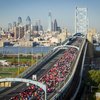
A $30 million investment is planned to improve traffic congestion surrounding the Sports Complex in South Philadelphia, including the installation of AI-powered traffic signals and the construction of a new ramp that will feed into Interstate 76, Gov. Josh Shapiro said Thursday.
The projects are the culmination of more than two decades of traffic studies seeking ways to ease gridlock before and after major sporting events and concerts. The Sports Complex hosted 378 events last year, bringing more than 8 million people to an economic hub that also generates heavy local traffic from the Port of Philadelphia and the Navy Yard.
"We are kickstarting multiple infrastructure projects that will tackle the biggest pain points causing congestion for traffic moving through the complex to roadways like (Interstate) 76 and I-95," Shapiro said. "... It is important that we get this right, and after a whole lot of years of this not being right, now is the time to fix it."
The investment comes as the Sixers and Flyers prepare to build a new arena — slated to open in spring 2030 — that will be constructed at the site of the former Spectrum and also serve as home to Philadelphia's new WNBA team. The Eagles are in the early stages of developing a plan for a new stadium and the Phillies are undertaking a multimillion dollar renovation at Citizens Bank Park, where the team has a lease through 2041.
"This remains the number one frustration I hear from residents, fans and team executives," Phillies managing partner John Middleton said. "Materially improving traffic flow, transportation infrastructure, and overall accessibility is essential to the continued success, growth and long-term future of the Lower South region."
The first of the improvement projects was already completed in recent months when PennDOT created a second left turn lane from Front Street onto I-95 North.
"Because of this $3 million investment, about 500 more vehicles per hour can now access I-95 compared with the previous lane arrangement," PennDOT Secretary Mike Carroll said. "That's over a 50% improvement."
The most significant project is a $15 million plan to build a new westbound entrance ramp to I-76 coming from Seventh Street. The only entrance ramp to the highway currently is from Broad Street. Land for the new ramp has been transferred to the state by the Delaware River Port Authority. The project will get underway in the coming months and is expected to be finished in 2028, serving about 800 vehicles per hour that would otherwise use existing routes.
Another $6.5 million grant will soon add 19 new traffic signals at the clogged intersections surrounding the stadiums. The signals will use artificial intelligence to improve the timing of traffic flow before and after events. Shapiro said police have long complained that the existing signals seem to lack rhyme or reason.
"Nothing was tuned up together, nothing was coordinated, and a big reason for some of the traffic as you're leaving or coming in is because those signals were off," Shapiro said. "AI is going to help fix that in a huge way, have those signals coordinated, have the traffic flowing, and use technology as an enhancement to move people along."
Philly sports fans are too often left with the difficult choice of leaving games early to beat traffic, the governor said. He recalled Eagles fans missing Donovan McNabb's storied 4th-and-26 completion to Freddie Mitchell while trailing the Green Bay Packers late in the fourth quarter of a playoff game in 2004. Some may have left to beat traffic. Others might have just given up on the comeback.
"I think there were a bunch of folks who regretted having to listen to Merrill Reese on the radio and not stay there and be there in person," Shapiro said. "People shouldn't have to go through that. ... They should be able to walk to their cars and peacefully get on their way and get home in an efficient way."
Carroll said funding is in place for several more traffic studies, including one that will assess improvement options at 26th Street and Penrose Avenue and another that will look at South Broad Street through the Sports Complex. Traffic along Pattison Avenue — one of the most congested streets on game days — will also be evaluated in the studies to find solutions.
"The totality of what we are currently doing and the results of the study will speak to that exact issue," Carroll said.
Some future projects will build capacity for the burgeoning Bellwether District, an industrial hub forming at the site of the former Philadelphia Energy Solutions refinery, and support a surge in new manufacturing ventures at the Navy Yard.
"This will help determine routes between PhilaPort and the Bellwether District while exploring viable marine and rail connectivity," Carroll said.
The state's investment also comes as the Sports Complex gets ready to host World Cup matches and the MLB All-Star Game this summer. College basketball's March Madness was in town earlier this year and other marquee events, including WrestleMania, have been held in South Philly in recent years.
"We're attracting a whole lot of attention to South Philly, and it's important that we get traffic and infrastructure right, not just for us here, but for the millions of Philadelphians and visitors who move through this stretch every day who deserve traffic that flows and flows safely," Shapiro said.