




April 20, 2026
 Michael Tanenbaum/PhillyVoice
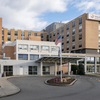
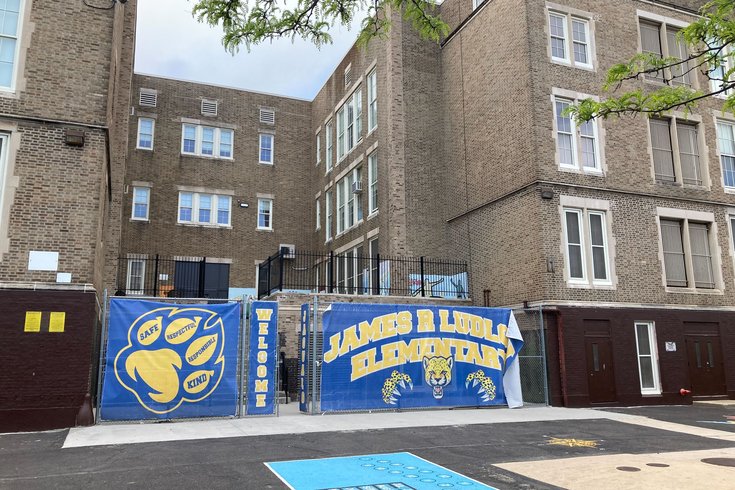
James R. Ludlow Elementary School, above, is no longer recommended for closure after the School District of Philadelphia amended its 10-year facilities plan, but 17 schools are slated to be shuttered. The school board will vote on the plan on Thursday.
The School District of Philadelphia is no longer recommending James R. Ludlow Elementary School for closure, lowering the number of buildings it seeks to shutter to 17. That change is among the most notable in the latest iteration of the district's 10-year facilities plan, released Monday.
The plan also withdraws a proposal to cede seven buildings to the city and adds more than a dozen new modernization projects, raising its total cost from $2.8 billion to $3 billion, district officials said. The district will pay for $1 billion of the plan's total cost, and seek another $2 billion from state funding and philanthropists, Superintendent Tony Watlington said.
MORE: Soccer fans can ride SEPTA home for free after Philly's World Cup matches
The school board will vote on the facilities plan during its Thursday afternoon meeting.
Watlington called latest revisions the "final, final" version of the district's plan to better use its building space and resources. It comes as the district also seeks to close a $300 million budget deficit. Initially, 20 schools were slated for closure, but district officials submitted a revised proposal to the school board in February that only recommended 18 be closed. Now, that number is down to 17.
Watlington said community feedback shaped the most recent recommendations, including the decision to keep Ludlow open. But he conceded that more work needs to be done to implement the "living plan."
"We heard the people," he said. "... No facilities plan is perfect. We think the way forward with these recommendations is such that we won't make good the enemy of perfect, and I'm pleased with the work the team has done."
The district no longer is recommending that seven schools slated for closure be conveyed to the city for reuse, because this will give the school board more time to "consider legal and policy considerations," Watlington said.
"We're continuing to review what makes sense for the seven buildings now," Watlington said. "We'll have more to share about that at a later date. We may very well come back at a later date and put a recommendation for conveyance back on the table, but we've withdrawn the recommendation at this time."
The intentional reuse of closed schools initially was framed as central to the district's strategy to prevent buildings from becoming abandoned, a major ramification of the the district's 2012-2013 closures.
School board President Reginald Streater said Monday that he remains "bullish" the board will not allow school buildings to sit in languish, but he wanted board members to focus on the crux of the plan rather than how the shuttered buildings will be reused.
"The efficacy of the plan is not dependent upon how any of the facilities are disposed of," he said. "I do believe this board understands that this is emergent enough that at some point after this meeting that may have to come up. … But I think for this week, the board is focused on the thing that supports our 'why.'"
If the board approves the revised plan, additional policy revisions, public hearings and legally-mandated processes will need to be undertaken before schools can be closed, Streater said.
The revised plan also calls for turning Moffet Elementary School in South Kensington into a K-4 school instead of a K-5 school. Upon reaching fifth grade, Moffet students would head to Ludlow Elementary, a K-8 school. Moffet currently feeds into Penn Treaty School in Fishtown, which is slated for closure. The district initially had sought to turn Moffet into a middle school and move its current students to Horatio B. Hackett Elementary in Kensington. Hackett is slated to become a K-8 school.
The district also intends to retain ownership of the Lankenau High School and Paul Robeson High School properties. Both schools are slated for closure. The Lankenau building in Roxborough will be used as an environmental education center for district students, and future community discussions will help determine the use of the Robeson campus in University City, Watlington said.
The revised plan's higher cost is mostly due to adding modernization projects at 10 sites, bringing the total number of buildings to be renovated to 169.
The plan allocates $126 million for 13 renovation projects at Anderson Elementary, Bryant Elementary, Mitchell Elementary and Motivation High School, which are all within Councilmember Jamie Gauthier's district in West Philadelphia. Gauthier has strongly opposed the district's proposal to close schools, but said Monday that the funding will make a "significant impact."
"I'm deeply grateful to Superintendent Dr. Watlington for amending the School District's facilities master plan to give the 3rd Council District its fair share of facilities funding," Gauthier said in a statement. "I am also grateful the School District will preserve Robeson High's building for future public use — but let me be clear: land is not enough. Robeson must remain its own, independent school in University City."
Another $31 million is allocated to the North Philadelphia Promise Zone, an initiative that aims to open two more "choice schools" in North Philly. On Monday, Watlington said the district was not prepared to provide more details about the program.