



November 16, 2026
 Michael Tanenbaum/PhillyVoice
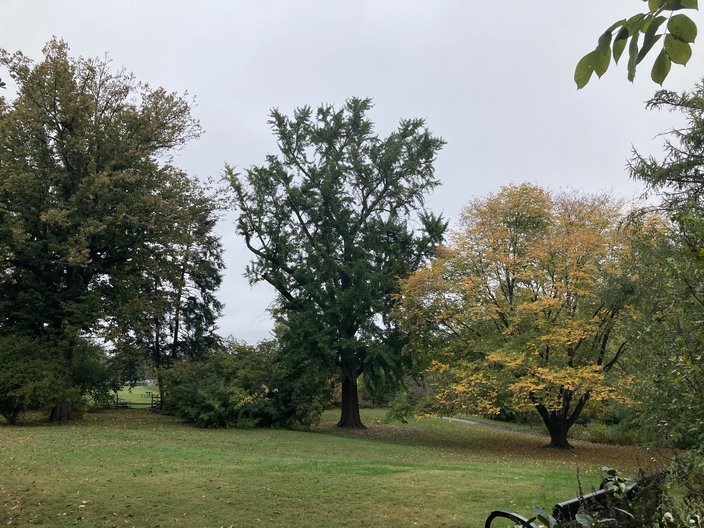
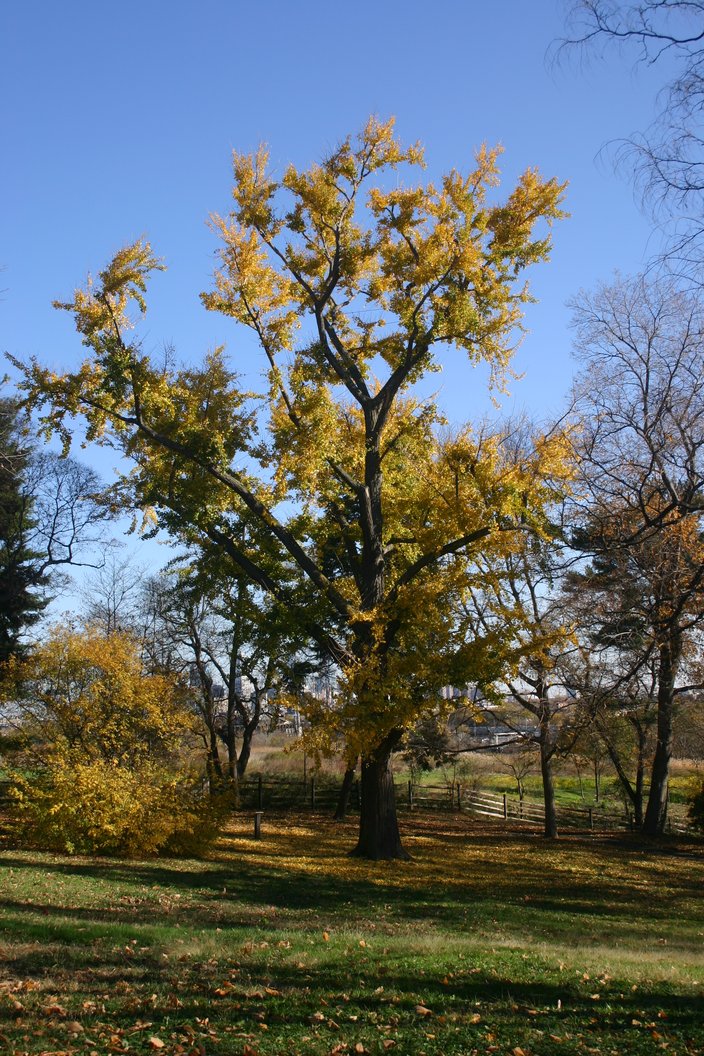
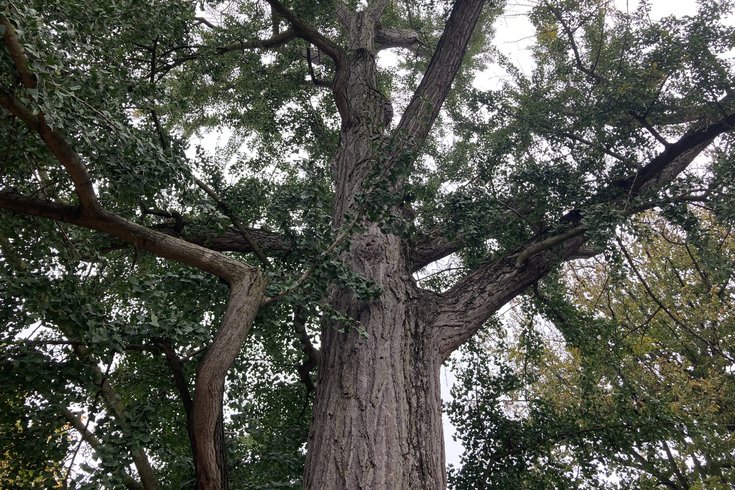
Bartram's Gingko has stood at the public botanical garden in Southwest Philly since 1785. It's one of the first of the ancient Chinese trees planted in North America. The tree is shown above in October, ahead of its peak foliage in November.
The opening of the long-awaited Schuylkill Crossing Swing Bridge came at an opportune time for admirers of fall foliage to venture into Bartram's Garden. Crowds of pedestrians and cyclists on the Schuylkill River Trail are expected to cross the new span in Southwest Philly in the weeks to come, offering a chance to behold one of the city's oldest trees at the peak of its autumn turn.
Bartram's Garden spans 45 acres of public land originally owned by world-renowned botanist John Bartram, a naturalist and Quaker farmer who settled on a large tract along the Schuylkill River in 1728. Bartram used a portion of his property for early experiments in hybridization, and he also maintained a worldwide seed network to collect and export North America flora.
But the Bartram family's most enduring specimen in Philadelphia is a non-native gingko bilboa tree recognized as one of the first three planted on the continent 241 years ago. William Bartram, John's son, was a close friend and collaborator with neighbor William Hamilton, who owned the nearby Woodlands Mansion property that's now a cemetery.
"The two were equally mad for plants — lived for plants — and collected every plant they could," said Mandy Katz, the director of horticulture and lead gardener at Bartram's Garden. "They had a constant correspondence and exchange to trade plants and information, helping each other understand how to grow."
Hamilton got his hands on three gingkos, the ancient species whose lineage traces back more than 200 million years in East Asia. The three trees, two females and a male, were obtained from London during a tour of lavish European gardens. Hamilton gave the pollinating male to Bartram and planted the two naked seed-bearing females at his own estate. Only the male tree remains, standing well over 100 feet tall on the east side of the historic John Bartram house.
Bartram's Gingko is shown above in October.
"This is a living fossil," Katz said during a visit in October. "It was here at the same time as the dinosaurs, and it's the only genus left of its family. They are long-lived plants associated with elders and long life."
Some gingko trees have been known to live a few thousand years, since they have no genetic clock that triggers natural aging as they mature. Hundreds in Japan survived the blast of the atomic bomb dropped on Hiroshima, drawing from their resilient underground root systems and protective outer bark. Males and females both have exceptional longevity, but the females are considered less desirable. Their naked seeds, which resemble apricots, reek when they drop during the fall months.
"The most apt description is human vomit," Katz said. "It is nasty."
Though most of the Philly area's trees hit peak foliage in late October and early November this year, the leaves of gingko trees are known to change color and shed in mid- to late November. The leaves turn a bright, golden-yellow color as their chlorophyll fades. They remain attached to branches for a few weeks and then drop all at once after the season's first hard frost, usually in a single day or overnight.
"That's how you know the season is over for gardeners," Katz said. "It'll make a halo of gold around it."
Bartram's Ginkgo is shown above during a fall season in the past.
Whenever concerns arise with Bartram's Ginkgo, Katz brings in an arborist to assess problems and troubleshoot. The Gingko had a cable system installed in 1995 for structural support and protection against lightning.
"A big part of taking care of an aging collection of woody trees is planning years into the future," Katz said.
Managing the hundreds of trees across the garden is a delicate balance of budgeting and responding to emergencies. Human activity, new pests and diseases, severe weather and a changing climate all pose threats to the survival of significant trees.
"There is so much tremendous pressure on almost all of our major canopy trees," Katz said.
The opening of the swing bridge is expected to be a boon for visitation at Bartram's Garden now that there is a continuous trail that stretches 4.7 miles through the east and west sections of Schuylkill Banks. Bartram's Mile, which is part of the Schuylkill River Trail, runs through the garden on the west bank of the river. Katz encourages people to spend time admiring Bartram's Gingko and other majestic trees at the garden, including two American yellowwoods planted more than 200 years ago and Bartram's Oak planted in 1939.
Katz, who's been at Bartram's Garden for 21 years, said she feels a deep connection to the trees.
"Humans can have a really good relationship with plants and help them a lot," Katz said. "This is what we're thinking about. How can we be really welcoming to all of the different communities that love this place — because they're why we're here — and also take good care of these really important pieces of history. It's a living library."