






June 24, 2026

 Provided Image/Janaylon Wright
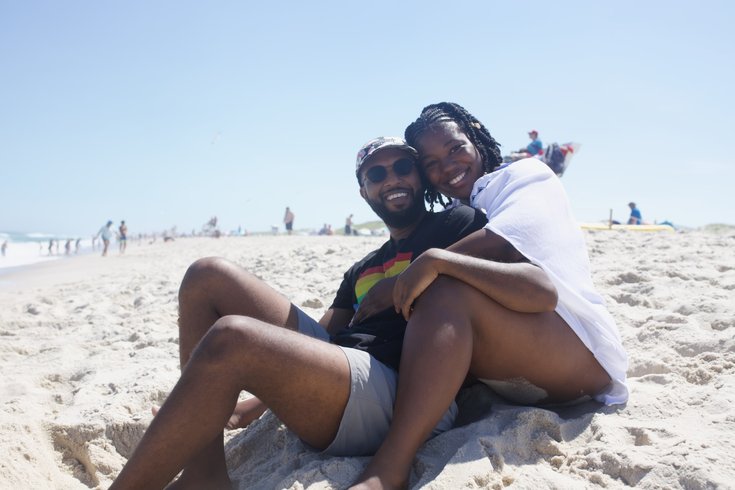
Janaylon Wright, right, was diagnosed with colorectal cancer at 29, after months of pain and being misdiagnosed. She is now cancer free. Above, Wright is pictured with her husband, Michaul Williams.
In 2022, when Janaylon Wright was 29, she started having severe abdominal pain that kept getting worse. A supervisor at the Philadelphia Department of Public Health, Wright said she would find herself doubled over in pain.
A first visit to a hospital emergency room left Wright with no answers.
"They told me they were not sure what the problem was and that if it persists to come back," Wright said.
The pain persisted, so she went to a different emergency department where she was told that her suffering was probably due to a ruptured ovarian cyst and that "there was nothing they could really do about it," Wright said.
After another visit to an urgent care clinic and a third emergency department, Wright was told she had fibroids and that constipation was causing her pain. She was sent home to self-treat with laxatives and enemas.
But the pain still did not go away.
"Nothing was working," Wright said. "And then at this point, I started to get sick. I would start to vomit. I wasn't able to keep food down."
Finally, after further tests at yet another hospital, doctors diagnosed Wright with colorectal cancer. A tumor biopsy found that it was stage III, meaning the cancer had spread to nearby tissues and possibly lymph nodes. Wright underwent extensive chemotherapy to prevent the cancer from spreading further.
Today, Wright, 33, is cancer free. But she said she believes that being a young, Black woman may have contributed to the delayed diagnosis of her disease.
"For women in general, our pain is often just pushed off and not paid as much attention to," Wright said.
She added that women of color are at higher risk of misdiagnosis "because of the way medical science has just depicted African American women as we can tolerate so much more, and it is untrue. Our voices need to be heard and represented in the same way (as other people's)."
Wright's experience is not unique. Colorectal cancer has been on the rise among young adults, with 1 in 5 people with colorectal cancer now under 55. Black people have the highest colorectal cancer rates in the United States and are about 20% more likely to get colorectal cancer and 40% more likely to die from it compared to other racial and ethnic groups, the American Cancer Society says.
A new report from the American Association for Cancer Research shows that there have been gains in reducing cancer disparities. For instance, the overall cancer mortality was 9% higher for Black people than white people in 2024, compared to a 34% difference in 1991. Similarly, disparity in lung cancer mortality fell from 23% in 1991 to 4% in 2024.
The report, published Wednesday, also shows that disparities in cervical cancer mortality rates between Hispanic women and white women narrowed from being 70% higher among Hispanic women in 1991 to being 10% higher in 2024.
But overall cancer mortality rates are still higher among Black and indigenous people compared to the rest of the U.S. population. And deaths from stomach cancer, liver cancer and gallbladder cancer remain significantly higher among Black people, Asian Americans, Pacific Islanders and indigenous people, according to the report – which also found disparities in cancer incidence and mortality rates among low-income populations and lesbian women.
"Decades of research have significantly increased our understanding of the causes of cancer, how to detect it early, and how to treat it more effectively," cancer researcher Mariana Stern, who helped compile the 2026 AACR cancer disparities report, said in a news release. "Unfortunately, these advances have not reached all populations equally."
Disparities in cancer incidence and outcomes stem from a history of racism that has been embedded in the health system and has led to unequal access to quality health care. Other structural, social, biological and environmental factors are involved in creating disparities. In 2023, for example, breast, cervical and colorectal cancer screenings were lower in people who did not have recent well visits or a usual source of health care and who faced barriers to health care, the report found.
Wright did not specifically name structural racism as an obstacle to being diagnosed earlier. But she noted that when providers at the third hospital identified that she had fibroids, they were "instantly like, 'Oh. OK. Here's this young African American girl with this known thing. This has to be the issue,' and didn't pay attention to anything else and were trying to, with no offense, rush me out just so (they could) continue to see more patients."
Wright also feels that "women are often overlooked for their pain, for their tolerance, and people brush it off to, 'Oh, well, this just must be a woman problem,' instead of taking the extra steps.'"
Wright is doing well now, and is married to the boyfriend who was with her through her cancer treatment. Wright is also pregnant – something she wasn't sure would happen due to chemotherapy, which can affect fertility. And Wright's experience with misdiagnosis has made her an advocate.
"If you feel like something is desperately wrong, don't think that it's a burden to say something is desperately wrong," she said. "Have them run every test possible, figure out what is going on with you, because you could be saving your own life or somebody else's."