






February 06, 2026

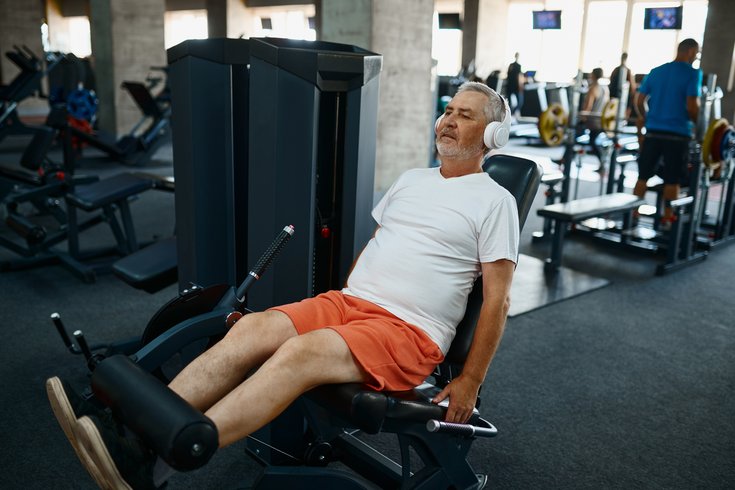 Source/Image licensed from Ingram Image
Increasing daily physical activity by just a few minutes can reduce your risk of death, new research finds. Another study shows that weightlifting of any kind leads to added muscle mass and strength.
In case you missed it, Jan. 9, the second Friday of the year, was 'Quitters Day,' the point by which we're likely to have ceased efforts on our New Year's resolutions.
No surprise. Research from Ohio State University suggests that 23% of people quit their resolutions by the first week, and 43% give up by the end of January. Only 9% of Americans who make New Year's resolutions complete them.
If you're among the quitters, and your resolutions included exercise, two new studies will encourage you to try again.
A study published last month in The Lancet found that just a small increase in physical activity can significantly impact health and longevity, and lower the risk of death. Extending moderate-intensity physical activity, like a daily walk, by five minutes may lower the risk of death by up to 10% among adults that average 17 minutes of moderate-intensity physical activity. The least active adults in the study, who averaged 2 minutes a day of moderate-intensity activity, saw a 6% reduction in risk of death.
Longer extensions produced greater benefits. A 10-minute increase in moderate-intensity activity was linked to a 15% reduction in all deaths and a 9% reduction among the least active adults. On top of this, a reduction in sedentary time also generated benefits. A one-hour reduction was found to reduce death risk by 13% in most adults and 6% among those least active.
The findings were derived from an analysis of multiple studies that included 135,000 adults from the United Kingdom, United States, Norway and Sweden. Tracking devices were used to measure movement and sedentary time. Noting that physical inactivity is estimated to cause as much as 7-9% of global mortality, researchers said the study shows how even small lifestyle changes can make a measurable difference to health and lifespan, and that physical activity doesn't have to be intense or time-consuming to generate benefits.
That seems like a very modest investment of time for a significant return, and the No. 1 reason to refresh your commitment to exercise.
A second study that might motivate you found that weightlifting (also known as resistance training) of almost any kind leads to increased muscle and strength. Whether the participants lifted heavy weights or engaged in extended repetitions with lighter weights, the results were the same — increased muscle and strength. The researchers suggested there is mounting evidence that heavy weights are overrated, challenging a central tenant of gym culture.
The results were based on 20 healthy, young men who were not active weightlifters. Researchers randomly assigned heavy or light weightlifting to each of their limbs. For instance, some lifted heavy weights with their left arms and lighter weights with their right arms. Researchers then did the same with their legs. Over a 10-week period, both arms and legs were equally buff, with some men getting stronger and others getting bigger. Researchers attributed this to individual genetics.
The study also involved gym machines, and senior author Stuart Phillips, a professor of kinesiology at McCaster University in Ontario, Canada, said the results likely would be the same with body weight exercises like squats or deadlifts.
Phillips, 60, acknowledged the limitations of a study that involved only young men, but he said the findings would be similar for women (he has a similar study underway), and older individuals. He is an advocate for such studies, and like most exercise experts, Phillips stressed the need for consistency.
So, with the knowledge that you need not be intimidated by the grunting hulks pumping the heavy weights, and that lighter weights with more reps will serve you just fine, here's what the experts say about the value proposition of resistance training for older guys. Hint, it's really good.
Resistance training provides many benefits as we age. Besides building strength and muscle mass, it can slow the aging of your brain, blood vessels and bones. The Mayo Clinic cites research concluding that "resistance training could slow and, in many cases, reverse the changes in muscle fibers associated with aging" and further notes that this held true even for people that didn't start resistance training until after age 70.
"Depending on your previous activity levels, you can continue to build muscle into your 80s and beyond," Andrew R. Jagim, the Mayo Clinic's director of sports medicine research, said in 2024.
He added that "it doesn't matter what type of weight you use or how the resistance is applied as long as the intended movement patterns are done correctly and the right muscles are activated."
Finally, the Mayo Clinic's value proposition really takes hold in the litany of benefits attributed to resistance training. Besides building bigger muscles, resistance training can slow the aging process by reducing the risk of diabetes, improving cognitive function, building stronger bones and lowering blood pressure, all of which can result in a longer life.
That's a return on your investment that will beat Wall Street any day of the week.
There you have it. Two new studies showing that even the smallest increase in physical activity can reduce your risk of death, and that no matter your choice of heavy or lighter weights, you can get similar results with a consistent commitment to resistance training.
So, if you are a casualty of Quitters Day 2026, don't be deterred. Even us older guys have a chance to get back in the saddle and give it another try if we consider the benefits to us and, perhaps even more importantly, your loved ones.
Yes, it is not easy. No, you're not going to lock into a routine without a lot of trial and error. Still, when you consider the benefits of resistance training alone, that's a powerful case to stick it out. Bottom line, get it going, increase your activity little by little, and leverage the multiplier we see in the first new study.
You're not a quitter. There are just too many reasons to press on. Get to it.
Louis Bezich, chief of staff to the co-CEOs at Cooper University Health Care, is author of Saving Men From Themselves: 20 Proven Tactics with a New Approach to Healthy Living for Men Over 50," and "Crack The Code: 10 Proven Secrets that Motivate Healthy Behavior and Inspire Fulfillment in Men Over 50." Read more from Louis on his website.