



June 18, 2026

 Ken Ruinard/USA TODAY Network via Reuters Connect
Two Delaware County wastewater samples tested positive for measles last week, there have been no reported cases of human infection in the county. Health officials advise people to get vaccinated against measles.
Delaware County officials have detected measles in two wastewater samples but have not identified any confirmed cases of the disease.
The wastewater samples came from the DELCORA Western Regional Treatment Plant in Chester, which serves roughly 500,000 people in the greater Philadelphia region. The first positive sample was collected June 9 and the second on June 11, according to an alert the Delaware County Health Department released Wednesday.
MORE: More teens are getting hospitalized for trying to get high on Benadryl, poison control warns
But officials are not sure whether the positive samples were from someone who lives in Delaware County or from someone who may have been traveling through the area, the Inquirer reported.
The Delaware County Health Department is collaborating with the state health officials and local health providers in tracking and preparing for measles. DELCORA participates in a wastewater surveillance program based at Stanford University and in collaboration with Emory University. Such programs, which monitor for traces of various infectious diseases, help health officials prepare for potential increases in people seeking treatment.
Measles, a highly contagious virus, spreads through the air, infecting people who come into contact with droplets from coughs or sneezes of infected people. It also spreads from contact with contaminated surfaces. Measles can remain in the air for up to two hours after an infected person leaves. As many as 1 in 9 people not vaccinated against the disease or otherwise immune can become infected, the Centers for Disease Control and Prevention.
There have been 67 measles cases in Pennsylvania this year, including 32 in Lancaster County and 30 in Lebanon County, according to the state health department. These numbers are up from 16 cases last year, and cases continue to rise across the country.
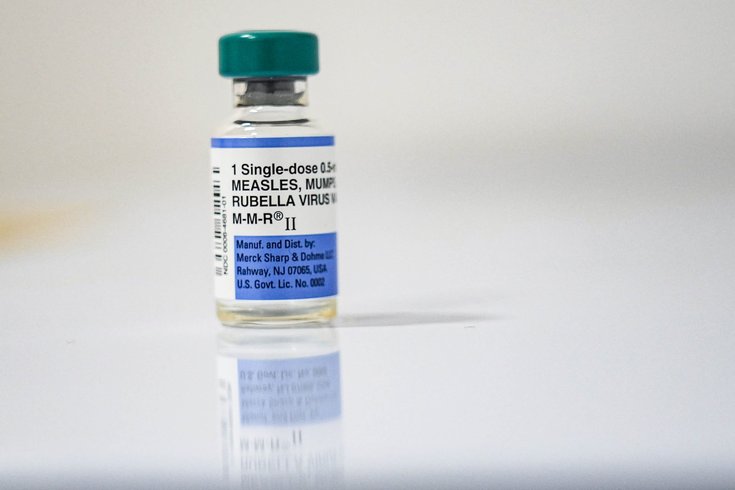
"The best protection against measles is to get vaccinated," Pennsylvania Secretary of Health Dr. Debra Bogen said in a statement last week. "Two measles, mumps, and rubella (MMR) vaccine doses protect you from measles and from spreading it to your family and community."
The MMR vaccine, given in two doses – the first at 12 to 15 months and the second at 4 to 6 years – protects against all three diseases and is 97% effective.