


August 27, 2026

 Courtenay Harris Bond/PhillyVoice
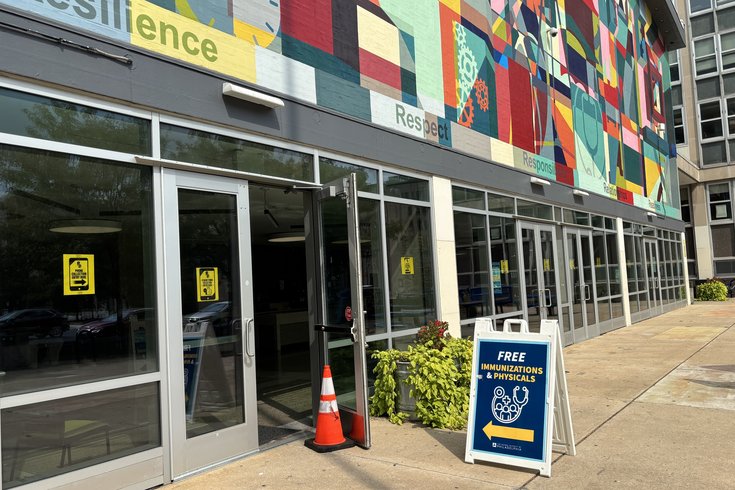
The School District of Philadelphia has been holding free community vaccine clinics, like this one at Benjamin Franklin High School, in an effort to improve childhood vaccination rates amid Pennsylvania's measles outbreak.
Amidst declining vaccination rates, record-level requests for childhood vaccine exemptions and an ongoing measles outbreak in Pennsylvania, Philadelphia health officials are partnering with the school district to get as many children vaccinated as possible.
Two measles-related deaths were reported this week in Lancaster County, one of which was a newborn. They are the first measles deaths in the state in 35 years. Lancaster County has had roughly half of the 424 confirmed measles cases in Pennsylvania in 2026. Just in this last week, there have been 94 new cases. All of the people who have contracted measles have been unvaccinated, according to the Pennsylvania Department of Health.
MORE: Breakthrough pancreatic cancer drug approved by the FDA
As of Friday, there were 2,777 confirmed measles cases in the United States. That's the highest level in 35 years, and more cases than in any year since the United States reached hit elimination status in 2000. Children account for more than 70% of those cases, according to the New York Times.
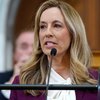
"We are seeing in real time the tragic consequences of children and adolescents not getting vaccinated," Dr. Kendra McDow, a school system medical officer with the School District of Philadelphia, said at a news conference Thursday.
McDow was at Benjamin Franklin High School with representatives from the Black Doctors Consortium, the Children's Hospital of Philadelphia and the Philadelphia Department of Public Health to highlight how they are working to reduce barriers and improve vaccination rates by hosting clinics at schools and health centers throughout the city. For the past two weeks, for instance, Philadelphia families registering children for school have been able to get their students needed vaccines, as well as physicals, eye exams and mental health screenings at the same time.
An Inquirer analysis of newly released data shows that roughly 40% of kindergarten classes at Philadelphia public schools last year had measles vaccination rates below 95%. That's the level needed to establish "herd immunity" — when enough people in a community are vaccinated to keep communicable diseases from spreading easily.
"Things don't magically go away when we hit 95.001%," said James Garrow, deputy commissioner of the Philadelphia Department of Public Health. "Our goal is to vaccinate as many people as possible."
Overall, Pennsylvania has about a 93% measles vaccine coverage rate, and not one county in the Philadelphia region is at 95%, said Dr. Ala Stanford, founder of the Black Doctors Consortium and Center for Health Equity.
"A child does not receive their first measles shot until they are 12 months old, so every infant in this city in a stroller, in a car seat at the family reunion has no protection of their own. We are their protection," Stanford said.
Measles is contagious four days before its signature rash appears, and the virus hangs in the air for two hours. Measles is "one of, if not the most contagious pathogen to man," said Dr. Ericka Hayes, an infectious disease specialist and the senior medical director of infection prevention at CHOP.
"By the time you know you have it, everyone around you has already been exposed, and not just the children — it's the teacher, the lunchroom lady, the man who sweeps the floor, the security officer at the door," Stanford said. "You do not know who they go home to at night. You do not know who is on chemotherapy, who has had a transplant, who is caring for a newborn."
Garrow said the city health department is working with the school district and partners in the medical community to identify schools where vaccination rates are lowest and set up temporary clinics where students, with parental consent, can get the measles, mumps and rubella vaccine and other shots for free.
Those targeted vaccine efforts in specific schools will begin in late September or early October, after the city and school district have fully analyzed vaccine data, McDow said.
Making vaccines as accessible as possible through community and school clinics is key to increasing vaccination rates. And so is getting evidence-based scientific information about vaccines to people from trusted messengers, Hayes said.
"There are a lot of parents out there who are trying to do the right thing and make the best medical decisions for their children, and they just don't know," Hayes said. "They are hearing very scary things in the media and from sources that are not vetted, and so is it any wonder that they would have some doubt around vaccines?"
"I think there's a huge opportunity for us to really help approach that group, without judgment, and to provide information to them from a trusted source to help them make the decision that we want them to make, which is what they need to do to make their kids safe," Hayes added. "Pediatricians and parents, we all have the same goal which is that kids are healthy, and we know one of the ways to do that is vaccinations. So how can we cut through that noise so that key and important information and data gets to our families so they can make the right decision?"