





May 14, 2026
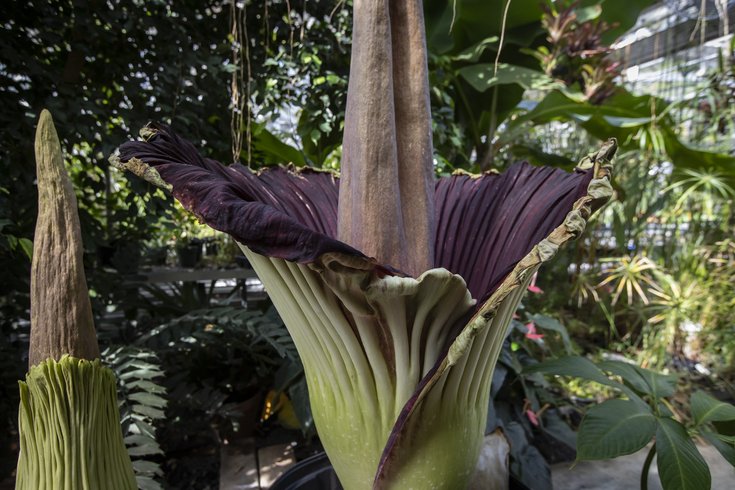 Betsy Manning/Temple University
A corpse flower, an unusual species that blossoms every 3-7 years, is blooming at Temple University's Ambler campus. Above, the plant is shown in full bloom in 2021.
A rare corpse flower, a plant that produces a scent that has been likened to the smell of rotting flesh, is in bloom at Temple University's Ambler campus.
Corpse flowers are a rainforest species that use their unusual smell to attract pollinators like flies and beetles, even if they're a long distance away. The plants only bloom for 24 to 36 hours every few years, so it can be difficult to catch one in action. This one, on display at the Tyler School of Art and Architecture Greenhouse, began opening around 1 p.m. Thursday.
MORE: Brandywine Conservancy & Museum of Art plans $100 million expansion with 325-acre nature preserve
The plants can grow up to 9 feet tall in a greenhouse, but this one, named Little Stinker, stands just over 4 feet. The stench can travel up to a half mile and is strongest at night, said Ben Snyder, Temple Ambler's greenhouse education and research complex manager. Right now, it can be smelled even outside the building, but he expects it to be the strongest around 7 or 8 p.m. Thursday.
The Tyler School of Art's greenhouse is not the only one in the area with a corpse flower — Longwood Gardens and Swarthmore College also have them. But Snyder said visitors can get particularly close to this flower.
"You can stick your head basically inside the flower and get a very one-on-one time with the corpse flower," Snyder said.
Little Stinker is one of 12 corpse flowers at the Tyler School of Art and Architecture Greenhouse at Temple Ambler. It last flowered in 2021. The plants usually take anywhere from 7-10 years to bloom initially, and then will flower again every 3-7 years.
Because Temple has so many corpse flowers, though, it more frequently has one in bloom. Big Stinker blossomed alongside Little Stinker in 2021 and then again in 2024, and another plant named One Big Diva flowered in 2023.
Corpse flowers take so long to blossom, because their blooms are held in a long, underground stem called a corm. Energy is gathered and stored in the corms in-between flowerings, and it will only blossom when enough has accumulated, the U.S. Botanical Gardens says. To thrive, the plant needs specific conditions, including high humidity levels and warm temperatures throughout the day and night. They also can produce their own heat to raise their core temperatures up to 75 to 80 degrees, allowing their scent to travel further, Snyder said.
Corpse flowers are native to Sumatra, Indonesia and can grow up to 12 feet tall in the wild. They're considered an endangered species, with less than 1,000 left in their natural habitats, the conservation organization IUCN says. Their population has declined by an estimated 50% over the last 150 years due to logging and palm oil farming.
However, Temple's greenhouse is considered a genetic bank of the species, Snyder said, so it can help restore the plant if its numbers in the wild continue to decline. He said the blooms also tend to bring a lot of visitors, which helps spread the word about the plant.
"It brings people up close and personal to the plant, and opens that door for that conversation and conservation," Snyder said. "People won't protect what they don't know exists."
Temple Ambler's corpse flower is expected to bloom through Friday night. The greenhouse is open all day Friday. Admission is $10 for adults of $5 for students and alumni.
For those that can't make it out in-person, the school also is running a livestream of the plant as it blooms.