



June 24, 2026

 Courtenay Harris Bond/Philly Voice
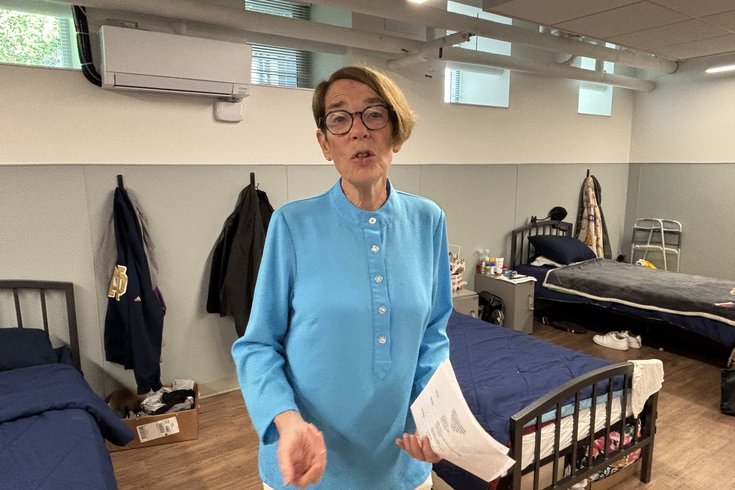
Project HOME's new Hawthorne House is an effort to bridge the gap between hospitalization and stable housing for people experiencing homelessness and addiction. Above, Project HOME co-found Sister Mary Scullion talks about the importance of its respite beds in the men's dorm.
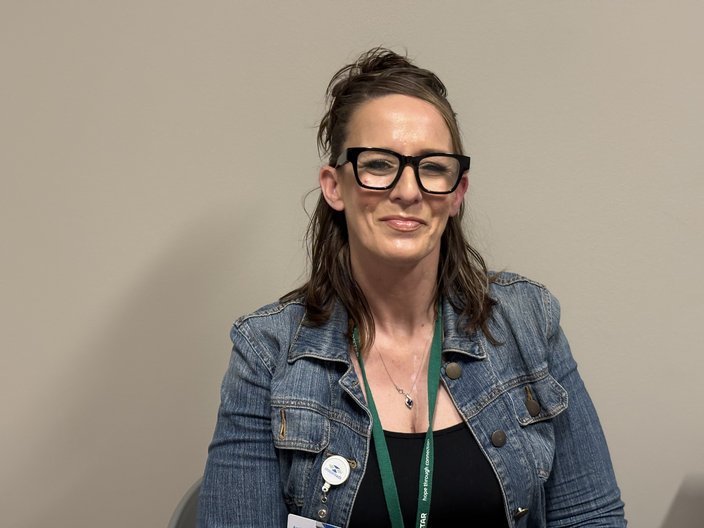
When Amber Moon woke up from a coma at the Hospital of the University of Pennsylvania two years ago, she had no idea what had happened. Moon had been homeless, was deep in addiction and had had untreated medical complications.
"Finally, I guess I collapsed," Moon said. "A stranger brought me to the hospital. I would love to thank that person, because whoever it was saved my life."
MORE: Having survived colorectal cancer, this Philly woman is now speaking out against cancer disparities
Moon had to have two surgeries to repair a damaged heart valve and a third surgery to remove a cyst from her spine. Now, Moon is healthy and in long-term recovery. She has two jobs working as a certified recovery specialist and as a peer recovery specialist and is about to move into her own apartment.
Moon largely credits her progress to the help of a respite bed that was waiting for her at Project HOME's Sacred Heart Recovery Residence in Hunting Park when she was discharged from the hospital. There, Moon received ongoing medical care and transportation to follow-up appointments, as well as case management for housing, employment and other resources. Perhaps, most importantly, she found stability and community.
"Once you get in, it's like a family," Moon said about Sacred Heart. "Everybody cares about each other. Nobody goes without."
Moon was an early beneficiary of the Project HOME Collaborative between Temple Health, Penn Medicine, Jefferson Health and Prevention Point Philadelphia. It's a partnership of health care and housing providers that follows patients from hospitalization onward. It started with a handful of respite beds at Sacred Heart.
"We learned a lot about how treatment doesn't stop with medical care," said Steven Carson, senior vice president of population health for Temple University Health System, who helped start the collaborative in 2020. "It has become the need to have holistic support, … and one of those ingredients is stable housing. Housing permits the environment of healing. It lets you heal."
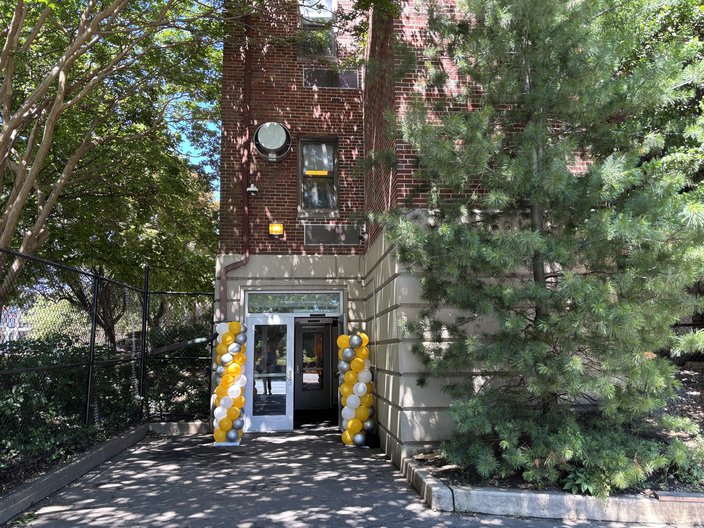
He spoke Wednesday at the opening of a new Project HOME respite center, called Hawthorne House, with its own entrance on the newly-renovated ground floor of the Sacred Heart building. The $3.4 million center— $2.3 million of which came from fundraising — adds 20 beds for people who are homeless and coming out of the hospital, bringing Project HOME's total respite bed capacity to 30.
These respite beds bridge the gap between hospitalization and safe housing and give people wraparound care and dignity as they rebuild their lives, said Donna Bullock, Project HOME president and chief executive officer.
"Oftentimes, folks are maybe going to a hospital because they had a fall, or there's some other illness – but they also have a substance use disorder in addition to the other complex medical needs," Bullock said. "A doctor's prescription at the end of their hospital stay may be to go home and rest, go home and eat well, go home and put your feet up. But if you're homeless, and you're on the street, there is no home to do the rest."
Hawthorne House is in the same building as Project HOME's Sacred Heart Recovery Residence in Hunting Park. It adds 20 respite beds for people experiencing homelessness and addiction.
The city's 2025 point-in-time count identified 1,178 people living on the street and another 4,338 people living in various types of shelters. Mayor Cherelle Parker pledged last year to add 1,000 long-term shelter beds to bring total capacity of public and private shelter beds to 4,000. As part of that promise, the city opened a 92-bed shelter in April in conjunction with the Salvation Army at the former Hahnemann University Hospital site.
Another city shelter, Philly Home at Girard, has 180 spaces for people who are homeless and who have substance use disorders. People referred there by street outreach teams receive some addiction and medical services and referrals to outside resources. The city's Riverview Wellness Village, a large complex of recovery housing with medical care and other services in Holmesburg, has more than 300 beds for people to stabilize their lives after inpatient or intensive outpatient addiction treatment.
PHMC Health recently opened a 20-bed medical respite to give people who are homeless a place to recover after hospitalization. But there are not enough respite beds in the city for people, such as Moon, who are homeless and have complex behavioral health and medical challenges, when they are being discharged from a hospital. Hawthorne House is now also trying to fill this vast need.
Amber Moon was able to get into long-term recovery, permanent housing and work through a medical respite program at Project HOME.
Health care providers involved in the Project HOME Collaborative refer patients to Hawthorne House. Residents see the same physicians and nurses during their stays, receive on-site primary and wound care, and get transportation to outside appointments. Case managers help residents access needed paperwork and documents, and find housing and jobs.
"To have not only a safe, dignified place, but to have the health care services integrated into the housing, gives a person a real opportunity to move forward, also taking the time they need to do it on an individual basis," said Sister Mary Scullion, Project HOME's co-founder.
The length of people's stays at Hawthorne House is decided on an individual basis "that also enables a person to get the tools and the resources they need to move into a more permanent place, a home that's going to last and not be a revolving door that leads nowhere," Scullion said.
People who have to be readmitted to a hospital, or those who may relapse and need inpatient treatment, can come back to their beds at Hawthorne House, Bullock said.
For Moon, knowing that her respite bed at Project HOME would be waiting for her when she had to go back to the hospital for another surgery was key for her own recovery.
"We live a life on the streets of uncertainty, but when you come here, you have that chance to actually get to know yourself," Moon said. "You have a chance to slow down and actually get to know who the real you is. That's something I got to do. I'm grateful for the time here that I've had."