






November 14, 2025

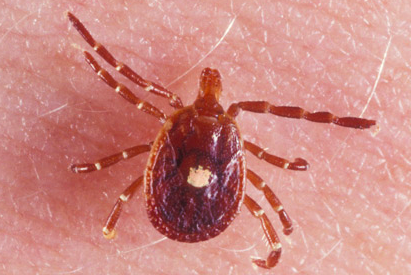 Source/University of Florida
A New Jersey man became the first known person to die of an anaphylactic reaction to alpha-gal syndrome, the red meat allergy connected to lone star ticks. The ticks, shown above, have increased in population over the last couple decades.
A 47-year-old New Jersey man is the first known person to die from an allergy to red meat caused by alpha-gal syndrome, a disease transmitted by various ticks.
A study published Wednesday in the Journal of Allergy and Clinical Immunology documented the man's death and the increasing population of lone star ticks in the Northeast. The species is the most common carrier of alpha-gal syndrome, though deer ticks — the carriers of Lyme disease — also can carry it.
MORE: Nurse who beat hard-to-treat cancer says she stayed strong by thinking of herself as a 'survivor'
These developments warrant a "major need" for public education about alpha-gal syndrome, including its cause and symptoms, researchers wrote.
Here's what to know about lone star ticks and alpha-gal syndrome, including how the allergy is treated and prevented.
Alpha-gal syndrome, or AGS, also is known as the red meat allergy or the tick bite meat allergy. It is caused by alpha gal, a sugar molecule found in the tissues of most mammals. The molecule is not naturally found in humans, but it can be passed to them through the tick's saliva.
When a tick carrying this sugar molecule bites a person, it may be transferred into the bloodstream. This triggers an immune response, because the immune system recognizes it as a foreign substance and perceives it as a threat. When the person then consumes red meat or animal products containing the sugar molecules, the immune system may go into overdrive two or more hours afterward.
Symptoms of this allergic reaction may include hives, swelling, abdominal pain and nausea. Some people may go into anaphylactic shock.
The allergy's severity can increase with additional tick bites or exposure to foods with the sugar molecule. Not everyone who is bitten by a lone star tick will develop AGS or have consistent reactions.
The man, whose name and hometown were not disclosed in the study, became ill after a family camping trip last summer. After eating a dinner of beef steak, he awoke in the middle of the night and experienced severe abdominal pain, diarrhea and vomiting.
The pain was so severe that the man told his son he thought he would die from it, but his condition gradually improved. Two weeks later, he ate a hamburger at a barbecue with his wife. Hours afterward, the man's son found him unconscious on the bathroom floor and surrounded by vomit. He was pronounced dead that night, with the autopsy ruling the cause as a "sudden unexplained death."
But the man's wife pressed for answers, and a postmortem blood sample showed more than 2,000 nanograms per milliliter of tryptase, an enzyme that is released during an allergic reaction. She informed a medical team that her husband had had 12 or 13 chigger bites, which researchers said likely were the larvae of lone star ticks.
The man's death is the first documented anaphylactic death tied to AGS in which symptoms started several hours after meat was consumed.
There were 110,000 suspected cases of alpha-gal syndrome identified in the United States between 2010 and 2022, the Centers for Disease Control and Prevention reported in 2023. But as many as 450,000 people may have been impacted by AGS.
That's because many people may not seek testing due to the ambiguity of the syndrome's symptoms, and many medical professionals are unfamiliar with AGS or do not know how to diagnose it, the CDC found.
Some people may have AGS without realizing it, the Mayo Clinic says.
To be diagnosed with AGS, people must undergo a physical examination and discuss their symptoms and medical history with a medical provider. A blood test may be ordered to confirm the presence of alpha-gal antibodies in the blood, but the Mayo Clinic notes that it's possible to have the antibodies without developing AGS.
The only way to treat alpha-gal syndrome is to avoid eating red meat and other animal products that may trigger reactions, the Mayo Clinic says. Some studies have indicated that AGS reactions wane as people avoid additional tick bites and make dietary changes.
Allergy medications may help calm mild allergic reactions, the Mayo Clinic says. An anaphylactic response may require epinephrine and treatment in an emergency department.
Preventing tick bites is the easiest way to avoid AGS.
Ticks typically thrive in grassy, wooded areas and often on animals. When outdoors, avoid densely wooded areas, and walk in the center of trails. Treating clothes and boots with permethrin also can help.
Conduct tick checks after being outdoors. Look for them on your body, clothes and pets. Showering shortly after coming inside can wash off unattached ticks.
At home, treat outdoor areas with pesticides and remove leaf litter. Clear away tall grasses and brush, and mow the yard frequently.
Lone star ticks are native to the southeast, but they have been spreading north and west over the last two decades. They were first observed in Pennsylvania in 2017, and now are widely distributed across the Northeast, South and Midwest.
The increased prevalence of ticks, including deer ticks, has been partially attributed to rising deer populations, which are common hosts for ticks. Ticks are commonly found in forests but also live in yards and urban parks.
Lone star ticks are larger and have longer limbs than deer ticks, also known as black-legged ticks. They are comparable in size to dog ticks, but have shorter limbs. Female lone star ticks have a white spot on their backs, which gives the species its name. But both male and females can transmit alpha-gal syndrome.