



July 31, 2026
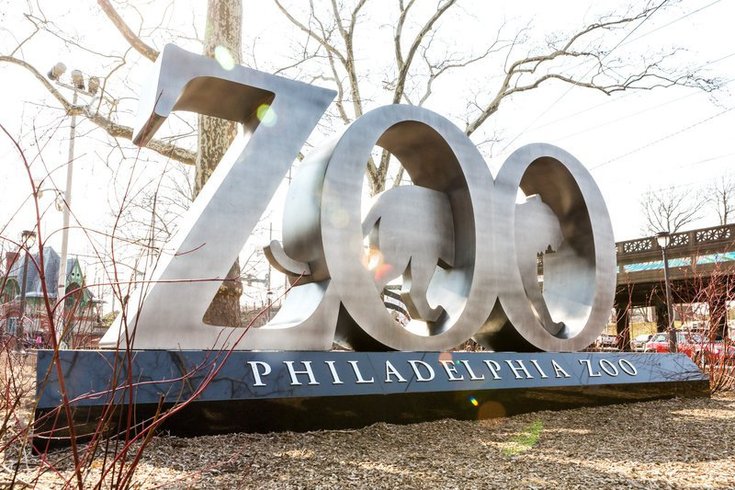 Thom Carroll/For PhillyVoice
The Philadelphia Zoo was chartered in 1859, but the Civil War caused it to delay its opening until 1874.
Dr. William Camac spearheaded the signing of the Zoological Society of Philadelphia's charter in 1859, marking the first dedicated collection of exotic wildlife in America, but the Civil War delayed the opening of the 33-acre site by 15 years.
By the time Philadelphia welcomed guests to its new attraction in 1874, three other zoos had opened around the country in New York City, Chicago and Rhode Island. However, Philadelphia’s zoo is still considered the first in the country and has racked up several other pioneering moments in its 152 year history — from being the first to open exhibits dedicated to children to administering historic animal births and revolutionizing wildlife care.
Thousands of people attended the grand opening of the Zoological Garden in West Fairmount Park, where they were exposed to around 300 species of animals — many that were previously were only accessible via traveling circuses.
In the 19th century, the Philadelphia Zoo featured hoofstock like horses, donkeys and goats; a collection of reptiles and amphibians; a few larger animals like bears and lions; and exotic birds, which were considered a symbol of high societal status at the time.
"The earliest zoos, their primary goal was not only to conserve and help the species, but to make sure that people could see them and experience them," said Dani Hogan, the current director of mission integration at the Philadelphia Zoo. "That might mean that the naturalistic habitats that we have today, which are far more important for the well-being of the animals, didn't really exist in the same way."
On July 1, 1874, the zoo's opening day, thousands shelled out the $0.25 for admission ($0.10 for children under 10). Within its first eight months in operation, 227,557 visitors made the journey to the zoo by foot, carriage, steamboat or passenger train. In turn, the Zoological Society began expanding and added tigers, Tasmanian devils, elephants, greyhound dogs and Guinea pigs to its collection.
"The zoo in 1874 was a very different place," Hogan said. "The zoo of the past was less emphasis on buildings and indoor spaces and more emphasis on animals that could live outdoors year-round. That being said, animals didn't have as much space as they do today."
A Philadelphia Times reporter described the scene at the zoo on June 22, 1875, as a "Noah’s Ark," with "homely and untamable" hyenas, "magnificent" leopards, and a female African lion who was perceived as "sulky and restless as a lady who has a picnic engagement on a showery day."
"Smaller animals, too numerous to mention, occupied cages scattered about the grounds and the monkey house, as usual, was thronged with ladies, who always betray a particular fondness for these disgusting little Simians," the Philadelphia Times wrote. “The grounds are kept in admirable order and the vivid hues of the flowers contrast admirably with the bright, virent foliage of the umbrageous trees. Quite a large number of persons visit the gardens every day, picnic parties being very much in vogue."
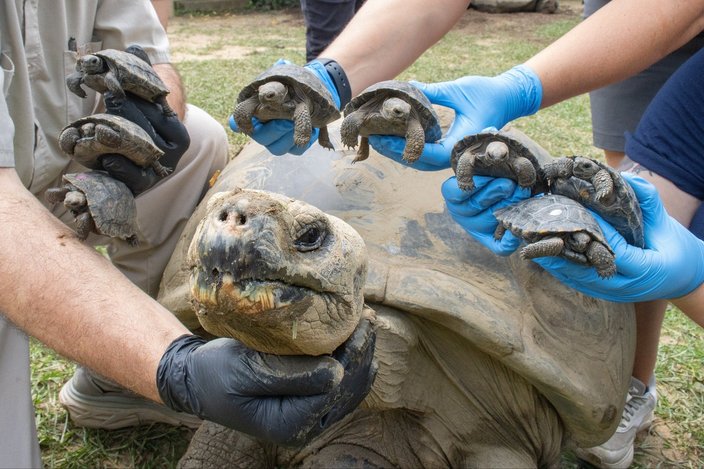
Mommy, a nearly 100 year-old Western Santa Cruz Galapagos tortoise at the Philadelphia Zoo, became the oldest known first-time parent of her species.
In 1901, the zoo made history again when it opened the Penrose Research Laboratory, the first animal health lab of its kind in the world. Scientists made breakthroughs in combating animal disease and creating balanced diets for zoo animals. The facility earned a Gold Medal from the Royal Zoological Society of Belgium in 1969 — the first American institution to receive the award.
Over the decades to come, the Philadelphia Zoo delivered the first successful births of orangutans and chimpanzees in the U.S., the first births of giant river otters in North America, established the first children's zoo on the continent and developed the first formulated food for zoo animals. Last summer at the zoo, Mommy, a nearly 100 year-old Western Santa Cruz Galapagos tortoise, became the oldest known first-time mom of her species after delivering 16 babies.
"We invented and created so many different innovative ways to care for animals when it comes to things like tuberculosis testing for primates, diets for flamingos and so many different things in between," Hogan said. "The stories of how successful we have been with providing animals with a stable and safe enough space for them to feel comfortable breeding, that's really something that we have excelled at over the past 160-plus years."
The Philadelphia Zoo is one of five firsts being celebrated this month as part of the Philadelphia Historic District 250th Committee's yearlong "52 Weeks of Firsts" program.
Every Saturday, a different person, invention or significant contribution with roots in the city is being honored with its own "Firstival" from 11 a.m. to 1 p.m. Each event includes family activities, giveaways, live music, entertainment and stories told by Once Upon A Nation actors.
The Philadelphia Zoo will host a firstival on Saturday, Aug. 8, that allows guests to enter the zoo for free, learn about the site's history and come face-to-face with some of its animals.
Here are the other firsts being celebrated this month:
• First Scientific Society of Natural History (1812): What started as an informal meeting between seven men with interests in the sciences became one of the world's premier institutions of its kind, becoming the first place the public could see a mounted dinosaur on display. A celebration will be held at the Academy of Natural Sciences on 19th Street and Benjamin Franklin Parkway on Saturday, Aug. 1.
• First U.S. Mint (1792): After the Revolutionary War, the nation's then-capital became the sole home of coin production in the country, and the U.S. Mint was the first federal building to be erected under the Constitution. Learn more about its significance during a firstival on Saturday, Aug. 15, at the U.S. Mint on 151 N. Independence Mall East.
• First selfie (1839): Local innovator Robert Cornelius sat still for five minutes straight in his photography studio on 8th and Market streets to capture his own likeness using his homemade camera, marking one of the first pieces of photography taken in the United States. The first selfie will be celebrated on Saturday, Aug. 22, at Franklin Square at 200 N. 6th Street.
• First Slinky (1945): Richard James invented the Slinky by accident while trying to invent springs that could keep sensitive ship equipment steady at sea. He and his wife, Betty, instead turned the rough draft into one of the most iconic toys of all time. James' relatives will make an appearance at the "firstival" for the Slinky on Saturday, Aug. 29, at the American Philosophical Society on 104 S. 5th Street.
A full list of the 52 weeks of firsts can be found on Visit Philadelphia’s website.