





May 04, 2026
 Oswald Yaw El-Saboath/Pexels.com
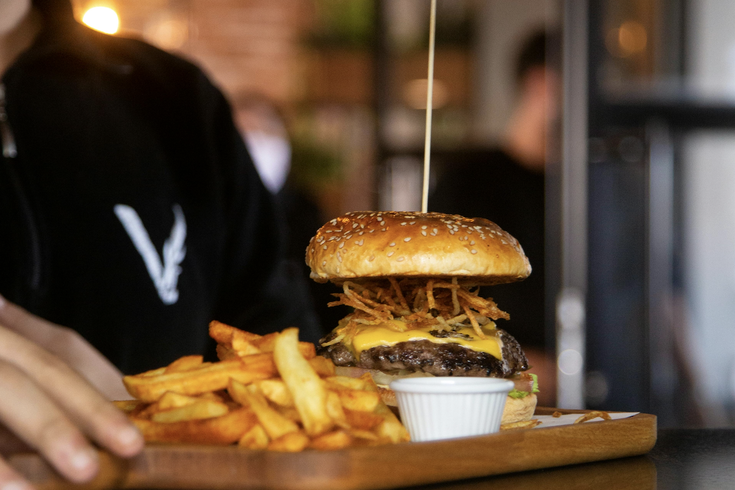
The Pennsylvania Restaurant & Lodging Association is recommending that some businesses in Philadelphia charge a 20% service fee during the World Cup instead of relying on tips for staff. Tourists from some cultures are unfamiliar with tipping in the United States, raising questions that highlight challenges for businesses, workers and consumers in the United States. Above, a stock photo from a restaurant.
When the World Cup comes to Philadelphia in June, bringing an estimated 500,000 visitors to the city, some restaurants may institute a 20% service charge to account for customers who come from cultures that don't tip.
The Pennsylvania Restaurant & Lodging Association, which represents the state's hospitality industry, met with World Cup organizers and business owners last week to discuss implementing the change for the duration of the 39-day soccer tournament.
"We don't want the servers or bartenders or the tipped employees to have to explain what the tipping custom is," said Ben Fileccia, PRLA's senior vice president of strategy and engagement. "It protects the tipped employees and it makes for a much smoother transaction and no awkward conversations."
Restaurant owners already have the freedom to include service charges and auto-gratuities on customers' bills, a move many made when the COVID-19 pandemic upended the dining and bar industry. Some restaurants have kept those charges alongside the expectation that guests tip their servers the customary 15-25%, which can lead to miscommunication with customers.
"Transparency is key here," Fileccia said.
For tipped workers, business owners and consumers, adopting a 20% service charge stirs a touchy equation that strikes at the dilemma of how the restaurant industry operates in the United States.
"It exposes the limitations of the broader tipping wage system and some of the challenges that we need to address as a commonwealth," said Felicity A. Williams, executive director of the Pennsylvania Policy Center. "The question is really whether the people doing that work are actually sharing in the economic benefits."
The food and services sector in Philadelphia employed just under 60,000 workers in 2024 with an average annual wage of $33,560, according to data from the policy center. The state's minimum wage of $7.25 an hour — also the federal minimum — impacts tipped workers in an unusual way compared to most professions.
Many Pennsylvania restaurants pay tipped workers a base cash wage of $2.83 an hour, using a "tip credit" to ensure that they earn at least the minimum wage, with the ability to make significantly more in tips. In practice, the range of pay varies widely based on the type of restaurant and fluctuations in business.
Fileccia, who worked as a general manager at Philly restaurants for years before joining PRLA, said servers often average between $20 to $40 an hour, including tips. At high-end restaurants, many earn much more and feel the tipping system works to their advantage.
"A lot of the servers that worked for me when I was operating restaurants probably wouldn't have gotten out of bed for less than $30 an hour," Fileccia said.
The World Cup poses a challenge to industry norms at a time when many restaurants will look to capitalize by expanding hours and asking more of their employees. Compared to conventional tourists, whom Philly also expects this summer for the nation's 250th anniversary, sports-driven tourists may be less inclined to learn about or embrace tipping service workers.
"If FIFA were in a different city or a different country, they would be there," said Jonathan Deutsch, director of the Drexel Food Lab. "They don't have a real connection, many of them, to the food culture of the city. Whenever we talk about a problem in guest services, in hospitality, it's always a difference between expectations and what happens."
Deutsch believes applying a 20% service charge will be a sensible approach for some businesses, putting aside whether the tipping system is a good practice for the industry and consumers in general. He noted that PRLA's guidance stresses full transparency, including due diligence by restaurant owners to communicate clearly with their customers.
"It shouldn't be a subtle little line on the bill and then people tip their normal percentage on top of it," Deutsch said. "It should be made clear on the website and when reservations are made, and it should be verbally communicated by the server. I've had servers circle the service charge, which actually encourages me to tip more on top of that, because I appreciate the honesty and transparency."
The World Cup comes at a moment when lawmakers in Harrisburg are making headway on yearslong efforts to raise the state's minimum wage. A bill that passed the state House of Representatives in March would incrementally increase the minimum wage to $15 an hour by 2029, similar to a Senate bill still under consideration.
However, Republican leaders in the Senate have blocked similar efforts in recent years and continue to have concerns about the impacts minimum wage increases would have on small businesses and consumer prices.
Both bills include a provision to increase the state's tip credit, which impacts the difference restaurant owners need to pay their service workers above base wages if their earnings fall short of the mandated minimum wage. The legislation would raise the tip credit to 60% of the minimum wage, requiring business owners to gradually increase base pay for service staff to $9 an hour by 2029.
Many tipped service workers still would earn above the minimum wage, Fileccia said, but some business owners would need to cut back on staff. He called the tip credit a bigger concern for restaurant owners and their staffs than raising the minimum wage itself. That's because many tipped service workers already make more than $15 an hour, he said.
"Year after year, we bring servers and bartenders to Harrisburg to tell their stories — because they're the ones who are saying, 'Listen, keep things how they are,'" Fileccia said.
Williams contends the data is clear that too many service workers in Philadelphia and the rest of the state struggle to earn a living wage. They often juggle multiple jobs to afford groceries, rent, utilities and healthcare.
"I definitely want to be fair about the realities that restaurants face," Williams said. "Most restaurants or food industry businesses operate on tight margins — especially smaller, independent businesses. But we have to ask why the burden of making the math work so often falls on workers instead of being addressed through broader labor standards and economic policy."
PRLA's suggestion of a 20% service charge is among other tweaks planned in the hospitality industry this summer, including the option for Philly bars to extend their hours from 2 a.m. to 4 a.m. during the World Cup.
Fileccia said businesses that operate with consistency and clarity are likely to be the biggest winners this summer.
For restaurants that want to charge a 20% service fee, PRLA strongly recommends making the decision before the World Cup and getting the message out to everyone who will be impacted.
Business owners are advised to conduct research and educate their staffs about the tax and payroll implications compared to typical tips. Last year's federal spending bill gave tipped workers the ability to deduct up to $25,000 in tipped earnings, depending on their incomes. Many service workers earning cash tips historically have not reported that income, but a growing share of tips are now paid using credit cards and included on income statements.
"Gratuities and service charges are really two different animals, and they affect payroll differently," Fileccia said. "They affect taxes differently. So it's something where if a business wants to go down this route, they should really consult the people that support them in each of these different services."
Williams said the balance between businesses, workers and consumers is nuanced. A World Cup service charge can be a good short-term solution for businesses worried about international travelers who don't tip, she said, but it raises concerns about precedent-setting.
"I think there's a question here about whether this is really temporary, because oftentimes temporary fees become normalized over time," Williams said. "That's a fair question I'm sure consumers are asking as well."
Deutsch noted that many restaurants already include service charges for larger parties, special events and holidays like Mother's Day and Valentines Day. For consumers, the adjustment needs to be baked into decisions about where they dine.
"It's not like this is a new concept for Philadelphia, and since most folks already tip 18-25%, my personal opinion is, if you can't afford the tip, you can't afford the restaurant," Deutsch said. "It shouldn't really affect people's bottom line in terms of what you're spending on a meal, unless it's not communicated well."
Experimentation can and likely will lead some businesses to shift their models beyond the World Cup. During the pandemic, Deutsch said, he often spoke with restaurant owners who debated keeping or removing service charges. Their primary concerns tended to be how customers were responding and whether the models were equitable to staff.
"This is a much more positive time with the semiquincentennial and FIFA and everything else, but in some ways, it's another example of a major moment in Philadelphia hospitality where folks are facing something new and figuring things out," Deutsch said.