



May 12, 2026
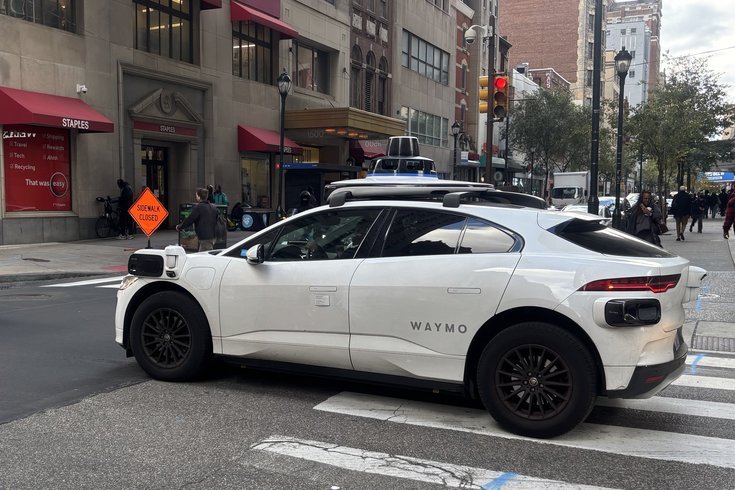 John Kopp/PhillyVoice
Waymo has been testing its autonomous vehicles in Philadelphia and mapping the city's streets since July. A City Council hearing on Tuesday sought to address the safety concerns and economic impact of Waymo's rollout, but the company failed to show up.
City Council has a long list of questions to ask Waymo about the robotaxis the company has been testing and training on Philadelphia's streets since July.
But at a hearing Tuesday to address the city's concerns, Waymo representatives were nowhere to be found. The company submitted written testimony only, offering city officials little clarity about Waymo's plans and safeguards for its self-driving vehicles.
"Waymo was invited to this joint committee hearing to come and explain itself to us, and did not show up, and because of that, we're left with a lot of questions that are unanswered," City Councilmember Rue Landau (D-At-Large) said during the hearing. "We gave them a request, and they did exactly what they are doing. They hide behind the non-human response."
For months, Waymo's vehicles have been out on Philly's streets using advanced cameras and laser pulsing to generate 3D maps of the city. The robotaxi service still has human drivers inside its cars and will need additional permits from the state to move to driverless testing and eventually commercial deployment. That is not expected to happen before this fall, at the earliest.
City officials feel they've been left in the dark about autonomous vehicles, which they expect will have serious impacts on road safety and the livelihoods of drivers for ride-hailing services.
"While innovation and technology can bring opportunities, we also have a responsibility to ensure these advancements are implemented safely and in a way that protects workers and the public alike," said Councilmember Jim Harrity (D-At-Large).
Philadelphia's ability to intervene and shape policy around autonomous vehicles is limited by state law. PennDOT is designated as the sole regulatory authority over the technology, preempting the legal standing of municipalities, and the Philadelphia Parking Authority manages local rules for ride-hailing services. Although PennDOT maintains and manages hundreds of miles of roadway in Philadelphia, it does not handle questions of safety and law enforcement on local roads.
Waymo spokesperson Ethan Teicher said the company works closely with PennDOT and believes written testimony is sufficient communication with the city at this stage. He said the state's move to grant regulatory power to PennDOT provides a clear roadmap for the company to roll out its technology in Philly and Pittsburgh.
"Relitigating this decision in the City Council ignores the law," Teicher said.
PennDOT spokesperson Alexis Campbell said the agency is coordinating with the city's Office of Transportation and Infrastructure Systems (OTIS) to help Philly adapt to the presence of autonomous vehicles. But once the state certifies Waymo to operate driverless cars in the city, the company won't need to provide much advance notice to city officials.
"If a certificate is granted, they are required by law to notify the governing body of the municipality where they intend to operate at least 10 days before operations begin," Campbell said.
Ahead of Tuesday's hearing, labor leaders and members of City Council spoke out against Waymo's growing presence in the city and the deployment of other autonomous tech, including Uber's food delivery robots.
"If we have self-driving cars on our streets and delivery bots on our sidewalks working to displace real humans, we cannot take that lightly. Everything these tech companies do is about scale," said Councilmember Nicolas O'Rourke (D-At-Large). "They don't just want to displace drivers. They want to learn from the process of displacing drivers — of putting someone out of a job — so as to do it faster, so as to do it more permanently. They, like every Big Tech venture that's changed our lives, are trying to outpace policymakers."
One driver from a ride-hailing service warned that autonomous vehicles will gradually remove a vital and flexible source of income for families in Philadelphia. About 60,000 gig workers in the city are contractors for companies like Uber and Lyft.
"We need to keep the money in the city instead of giving it to a robot that can't even spend it here," said Stephan Hernandez, a 21-year-old Uber driver and member of 32BJ, the Northeast affiliate of the Service Employees International Union. "I understand they want to introduce new things, but it needs to take into consideration that the money they're taking away for a robot is money that families need."
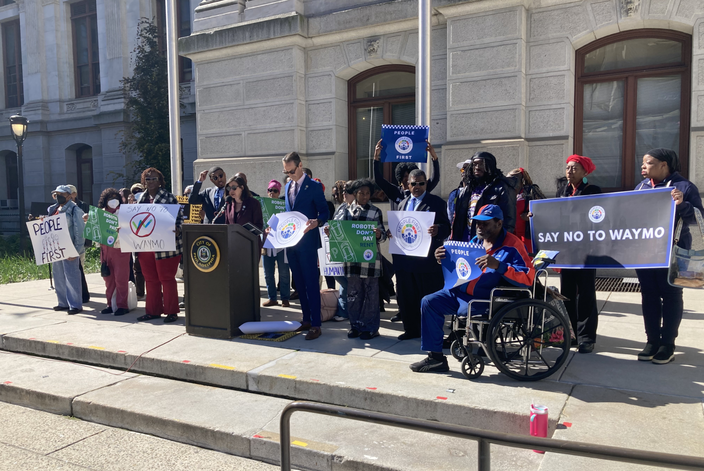
Members of City Council were joined by labor leaders and others opposed to the rollout of Waymo's self-driving cars in Philadelphia ahead of a hearing at City Hall on Tuesday.
Anna Kelly, senior policy adviser for electric vehicles at OTIS, testified Tuesday that many questions about safety training for Waymo vehicles remain to be answered by PennDOT. Kelly said the city has concerns about how Waymo's vehicles will interact with ambulances and other emergency response procedures.
"Our first working group is scheduled for later this month," Kelly said. "... Our plan is to discuss with the first response agencies what kinds of trainings would be helpful for their staff and to talk about scheduling those trainings."
Waymo's robotaxies are now commercially available in 11 metro areas in the U.S., mostly on the West Coast and in the South, and the company hopes to expand to more than 20 cities in the coming years.
First responders in San Francisco and Austin have complained about the company's vehicles increasingly interfering with operations, including blocking fire stations and ambulances. In December, the school district in Austin asked Waymo to pause its operations during school bus drop-offs and pickups after observing that the company's driverless cars were passing stopped buses on their routes.
Council members brought up a range of other concerns, including how Waymo's mapping technology collects data, how the company's cars will be ticketed and whether Waymo's remote assistance operations are secure. Waymo has full-time workers in the U.S. and the Philippines who are available to intervene and manually take control of the company's cars when necessary.
"I don't believe that it would require actually serious cyber capabilities in order to hack into them," Matthew Stanley, a Drexel University professor and expert in electrical and computer engineering, testified Tuesday. "... Perhaps (Waymo has) protections in place to keep that from happening. But again, they're not here to answer those questions."
Waymo has pointed to studies suggesting autonomous cars have a better safety record than human drivers and will result in fewer crashes with serious injuries. The company says its safety profile has been validated by independent audits and reviews of Waymo's remote assistance program.
Instead of displacing jobs, Teicher claims Waymo has brought new jobs to the cities where it operates and often hires workers from ride-hailing companies.
"We invest in a critical workforce that includes vehicle and fleet technicians, skilled trades professionals, vehicle cleaning and readiness specialists, depot and fleet managers, and other personnel to staff the infrastructure," Teicher said.
Waymo's push into the Northeast has faced recent hurdles. In New York City, the company's testing permits expired in April and have not been renewed. State lawmakers and city officials in New York have sought stronger safety, regulatory and worker protections before allowing Waymo to resume testing.
In Philadelphia, Waymo has said its next milestone will be operating its vehicles on city streets with an employee in the passenger's seat instead of the driver's seat.
As council members peppered Kelly with questions about OTIS's preparedness for Waymo's rollout, Harrity intervened out of frustration.
"There's not enough information. You haven't answered one question yet — no disrespect," Harrity said. "The fact of the matter is these things are driving on our streets and we have no say."
During the public comment period, labor leaders were joined by advocates with local organizations opposed to Waymo's arrival in Philly.
"We are using public streets and public resources to help usher in another job-stealing tech corporation that gives nothing back to the communities they profit from," said Madison Nardy, executive director of the 215 People's Alliance in Northeast Philadelphia. "What real economic benefit does this bring to our city when the long-term outcome is job loss, reduced tax revenue and more strain on already underfunded public services?"