

June 01, 2026
 Thom Carroll/for PhillyVoice
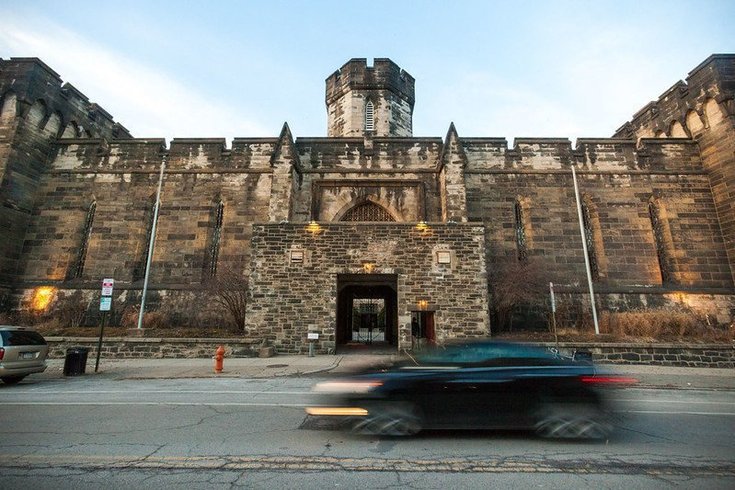
The Eastern State Penitentiary operated as a prison from 1829 to 1971and now functions as a museum that focuses its programming around criminal justice reform.
Philadelphia is bracing for a surge in tourism this summer with dozens of events directly or indirectly associated with the 250th anniversary of the signing of the Declaration of Independence.
Translation: Expect long lines at the Pat's and Geno's, the Rocky statue and anywhere else that could be viewed as quintessentially Philly by anyone from outside the Delaware Valley.
To help expand out-of-towners' appreciation of what's authentic to the area, we've compiled lists of alternatives to 10 tourist hot spots in the city. (We apologize if we're blowing up your favorite neighborhood spot.)
For this collection of staff picks, we've recommended some substitutes for visiting the Liberty Bell. Every year, more than 1 million people flock to see one of the country's most recognizable symbols of freedom, so you'd expect a lot of people's party plans for America's 250th birthday to include a stop by the Center City site. But as the nation's primary capital during the American Revolution, this city has no shortage of landmarks.
So to appreciate American history, check out these museums instead:
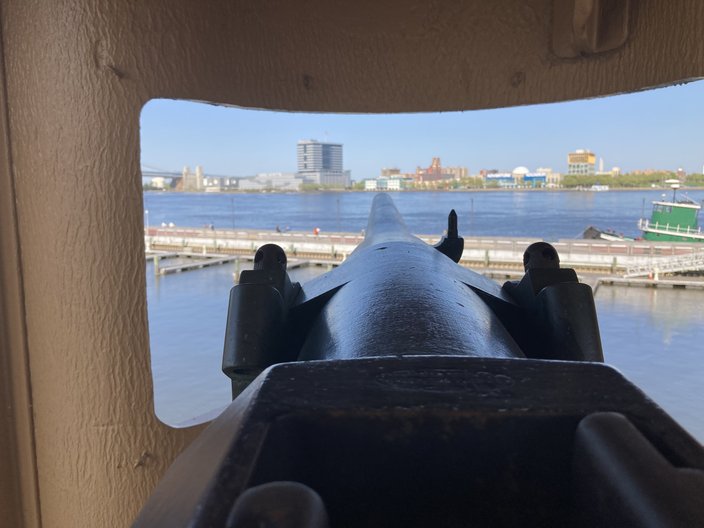
The USS Olympia is the oldest floating steel warship in the world and one of the last to survive from World War I. The vessel, kept in Philadelphia for more than a century, has been an exhibit at the Independence Seaport Museum since 1957. Above, a turret on the ship points toward Camden across the Delaware River.
211 S. Christopher Columbus Blvd.
From the mid-19th century through World War II, Philadelphia was the shipbuilding capital of the United States. Most of that activity was centered in neighborhoods along the Delaware River, where the Independence Seaport Museum houses some of the nation's most compelling maritime exhibits.
Displays trace early navigation methods, the Revolutionary era, the founding of the U.S. Navy and the lives of enslaved Africans seeking emancipation. Highlights include hands-on access to preserved vessels and replicas. Inside the museum is a life-size replica of the schooner Diligence, a 1797 vessel built in Philadelphia and used to defend American merchant ships. Outside on the river, visitors can tour the USS Olympia, which served in the Spanish-American War and World War I, and get aboard the World War II-era submarine Becuna. With great views of the river and nearby access to Penn's Landing, this is easily one of the city's most memorable and informative museum experiences. - Michael Tanenbaum
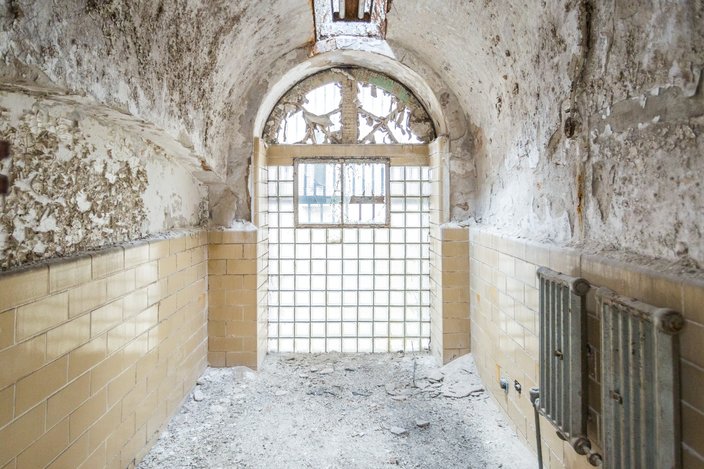
The medical wing of Eastern State Penitentiary was located in Cellblock 3.
2027 Fairmount Ave.
This former prison is, in the most literal sense, the complete opposite of the Liberty Bell. One is a symbol of liberty, the other a glaring reminder of oppression. But the Eastern State Penitentiary is increasingly about social, not punitive, justice.
The museum has strived in recent years to focus its programming around criminal justice reform through reentry simulations and talks and shows led by formerly incarcerated people. Eastern State emphasizes its former inmates' humanity and ingenuity through grabby exhibits, like a recent spring break series on creative jailbreaks. Visitors will also learn about Al Capone's stint behind Philly bars and the penitentiary's famous canine felon. (Pep the dog was accused of murdering a cat and yes, he has a mug shot.) Did I mention the audio tour is voiced by Steve Buscemi? - Kristin Hunt
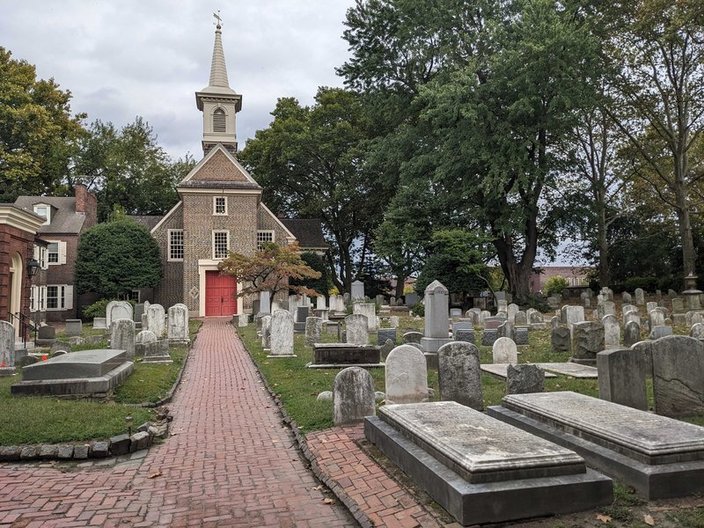
Gloria Dei Episcopal Church is one of the oldest structures in Philadelphia.
916 S. Swanson St.
I’ll start off with a disclaimer: everyone around here knows to skip going inside the Liberty Bell center and just take a look from the outside. But I actually do think that Independence Hall and the nearby President’s House site are worth seeing — not every city has the building where the Declaration of Independence was signed and the Constitution was created. And the unique President’s House exhibit adds important context to some of that history with the stories of the nine people enslaved by George Washington.
But if you’re determined to go off the beaten path, another favorite of mine is the Gloria Dei (Old Swedes') Episcopal Church and cemetery. Although the current structure was built in the late 1600s (and once had lightening rods installed by Ben Franklin), the lush four-acre site predates Philadelphia, making it one of the oldest places around. During the day, you can do a guided walking tour on an app that details graves in its cemetery that go as far back as 1677. The church's original bell was allegedly one of many that rang out after the Declaration of Independence was read to the public for the first time on July 8, 1776. - Michaela Althouse
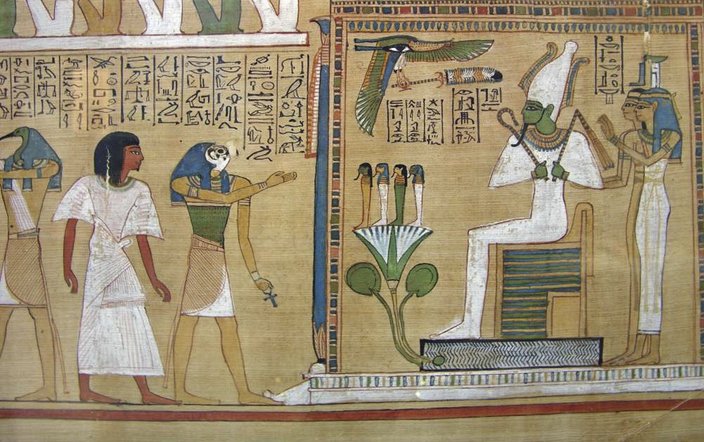
The University of Pennsylvania Museum of Archaeology and Anthropology, otherwise known as Penn Museum, has one of the largest sphinx exhibits in the country.
The University of Pennsylvania Museum of Archaeology and Anthropology, otherwise known as Penn Museum, is arguably one of the more underrated places for a history buff to visit in the city. It has over a million artifacts from around the world, one of those being a 12.5-ton monument of Sphinx of Pharaoh Ramesses II, which is the largest Egyptian sphinx in North America. If that’s not enough, its building and garden are a marvel on their own. - Molly McVety
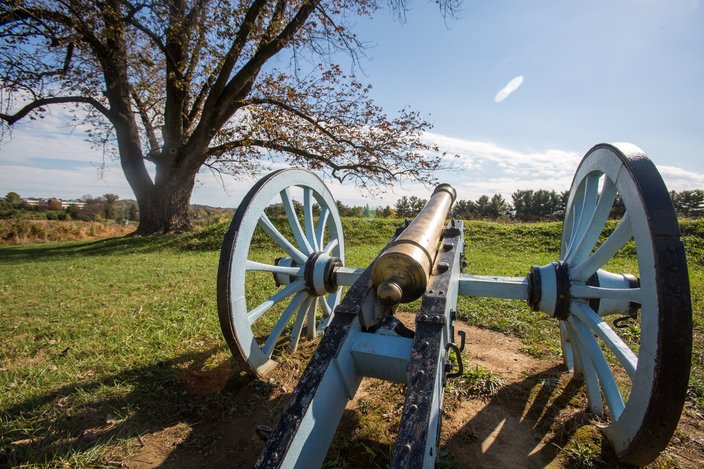
Valley Forge National Historical Park, the site of the Continental Army's encampment during the winter of 1777 to 1778, includes 3,500 acres of meadows and woodlands.
1400 N. Outer Line Dr., King of Prussia
A 45-minute drive from Center City, Valley Forge is where George Washington and the Continental Army camped during the winter of 1777 to 1778, training under Friedrich Wilhelm Baron von Steuben while the British occupied Philadelphia. The park contains an abundance of historical structures and monuments, including the 18th-century house Washington used as his headquarters during the encampment. The 3,500 acres of meadows and woodlands are quite pleasant during the warmer months. - John Kopp