




September 04, 2026
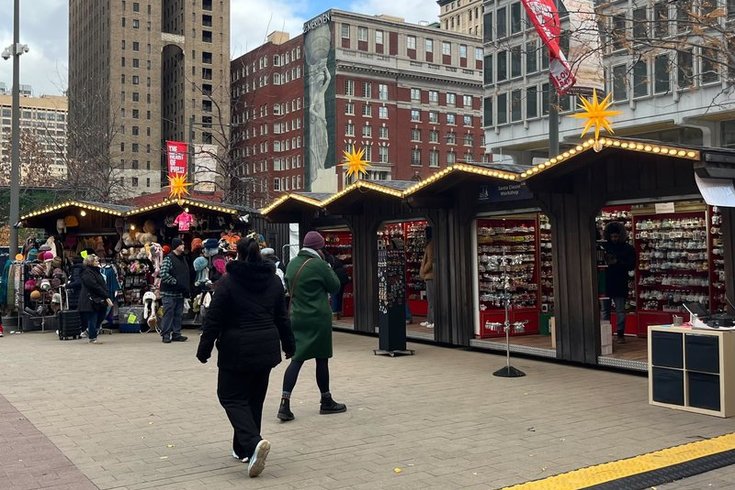 Franki Rudnesky/For PhillyVoice
At the Christmas Village and Made in Philadelphia markets this year, shoppers will not be able to walk inside booths. Instead, vendors will have to sell items over a counter. The change is being made to ensure the event is compliant with the Americans with Disabilities Act. The photo above shows Christmas Village in 2024.
Vendors at the Christmas Village and Made in Philadelphia markets in Center City will not be permitted to allow shoppers to step inside their booths this holiday season.
Instead, sales counters and other barriers will be added to most booths, making them inaccessible to shoppers and requiring sellers to help customers select merchandise, according to an email that the event organizer, German American Marketing, sent to vendors earlier this week. The change is necessary to ensure the monthlong holiday event at Dilworth and LOVE parks is compliant with the Americans with Disability Act.
For shoppers to enter the booths, each booth would need an 8-foot-long ramp, Thomas Bauer, CEO of German American Marketing, wrote in the email, which was shared with PhillyVoice. That only would work for some of the wider booths, and the "only option left" is to add the sales counters, Bauer wrote.
"We tried all reasonable solutions to avoid this step and in having to put you and our staff through executing access support assistance," Bauer wrote. "But at the end of the day, we can't avoid it. Simply put, we have to make the booths inaccessible — as we have observed at other Holiday Markets in New York City and Denver."
A few booths along City Hall "might" be able to utilize the 8-foot-long ramps to allow shoppers inside, Bauer wrote.
Bauer told vendors that German American Marketing is "not thrilled" with the change, saying it spent 32 months working with legal experts, the city and disability rights advocates ahead of this decision. At the 2025 market, vendors and Christmas Village staff had temporary ramps that they could place out to accommodate shoppers who used wheelchairs or walkers.
"Well, it was a great approach, but a very small group of people do not like that they need assistance to enter booths which able bodied don't need to ask for," Bauer wrote.
Vendors pay $8,500 to $16,500 for their booths, according to a Reddit post about fees, and Bauer's email notes that small business owners likely will have to consider adding additional staffers or anticipate lower sales. But vendor contracts for this year's market already have been signed and many already have paid the fee for the year, vendors say.
In an Instagram video, Lindsay Gradel, who sells children's clothing through her business Sew Much Cooler, said that adding the counter changes the whole layout for vendors and likely will deter sales. Many sellers, she said, won't have the chance to back out and work at another Christmas market either, because applications for most markets have closed.
"Somebody who thought, 'I'm going to make $50,000 for my family this year at the Christmas Village,' is no longer going to make that money," she said in the video. "Maybe they'll make $30,000, who knows, but it's so rotten of these people to do this so late in the game when you've already made your deposits, already got your booth, already done this, that and the third, and they've known about this."
Last October, City Council held a hearing on ways to increase accessibility for people with disabilities at city events, with an eye toward Philly's busy 2026 events schedule. At the hearing, Vicki Landers, founder of the advocacy group Disability Pride Pennsylvania, said Christmas Village is a prime example of the need for better accessibility at events.
Landers said the ground is uneven, the booths are either too high or too cramped for wheelchair users, there is a lack of navigation resources for the visually impaired and there are no accessible restrooms.
About 17% of residents in the city have some form of disability, according to city data. At the hearing, Landers said the lack of accessibility isn't the fault of individual organizers, but blamed the city for not making accessibility part of the event application and approval processes.
"These are not minor oversights, these are barriers, literal and figurative, that prevent people with disabilities from participating fully in city life," Landers said. "This is not just about one event, this is about the city's systematic failure to enforce its own disability policies."
A representative for the city did not immediately return a request for comment.