






August 12, 2026

 Provided Image/Campbell's Company
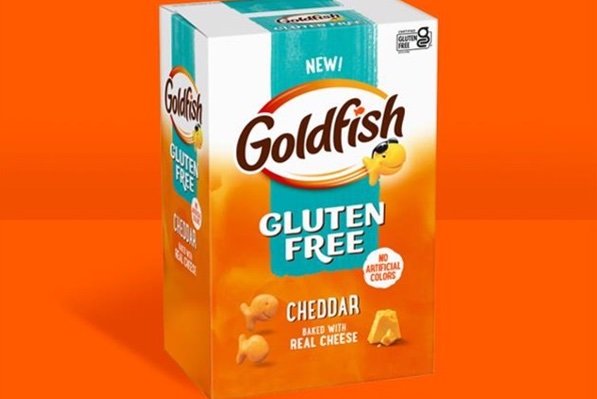
The Campbell's Company is coming out with gluten-free Goldfish Crackers in response to more Americans choosing to eat gluten-free products.
The Campbell's Company is introducing gluten-free Goldfish Crackers in November in response to requests from consumers.
"We've heard from many families who love Goldfish but haven't always been able to enjoy them together, and that feedback stayed with us," Tiphanie Maronta, senior vice president of Goldfish Crackers, said in a news release. Pepperidge Farm makes Goldfish as a subdivision of the Camden-based Campbell's.
Gluten is a naturally-occurring protein present in wheat and certain other grains, and it also can be extracted and concentrated as an ingredient in processed food products. In response to rising awareness about health issues exacerbated by gluten allergies and intolerance, more gluten-free foods have come to market.
Grocery stores offer a wider selection of items marketed as being gluten-free, including breads, pastas and snacks. Brands like Oreos, Snyder's of Hanover and Cheez-Its are among those that offer gluten-free varieties of popular products.
About 30% of people in the United States are choosing gluten-free products due to medical conditions and a growing preference for healthier foods, according to a 2026 report from the market research company, Market Research Future. Campbell's referenced this data in announcing its rollout of gluten-free Goldfish Crackers.
The industry for gluten-free food is expected to reach $14.12 billion by 2033, the trade journal Food Manufacturing reports, noting that many Americans view gluten-free products as healthier, regardless of their medical needs.
So what is gluten, and who should avoid eating it?
Gluten is present in most grains, including wheat, rye, barley, rye and sometimes oats. Processed gluten is also added to some products for texture and taste, and sometimes as a binding agent. Pizza, breads, pasta, cereals, bakery items and other common foods frequently contain gluten, unless otherwise specified.
Many people do not have issues digesting gluten. But some people's bodies have trouble breaking down gluten, and this can cause damage to the small intestine and inflammation, according to Johns Hopkins Medicine.
In people with celiac disease, gluten triggers an autoimmune reaction that damages the intestine and prevents the body from absorbing nutrients in foods. Symptoms of celiac disease may include chronic diarrhea, anemia, low vitamin levels, joint pain, seizures and infertility.
Other people have gluten sensitivity, also called gluten intolerance, which is different from celiac disease.
"We don't have a clear definition for gluten intolerance or a clear way to explain it," Dr. Selvi Rajagopal, a specialist in internal medicine and obesity at Johns Hopkins Medicine, said in a health system post on gluten-free diets. "We know that some people eat something that contains gluten and then they don't feel well."
People with non-celiac gluten sensitivity may experience constipation or diarrhea, bloating, gas, fatigue and stomach pain when consuming foods that contain gluten.
Some people with eosinophilic esophagitis, an immune system disease that causes inflammation in the esophagus, are allergic to gluten.
Foods containing gluten also may be problematic for people with wheat allergies, but not because of gluten specifically. In these cases, wheat — not gluten — causes an inflammatory response, triggering headache, sneezing, skin rash and other symptoms, according to Johns Hopkins.
But for people without a known medical condition that requires a gluten-free diet, avoiding gluten may not always be wise. Gluten-free products are often pricer than options containing gluten. They may have more sugar and fat and less fiber. And they may be less fortified with folic acid, iron and other important vitamins and minerals, Harvard Health warns.
"There is no compelling evidence that a gluten-free diet will improve health or prevent disease if you don't have celiac disease and can eat gluten without trouble," Harvard Health states. "Of course, future research could change this. We may someday learn that at least some people without celiac disease or symptoms of intestinal disease are better off avoiding gluten."
For people with celiac disease, eosinophilic esophagitis, wheat allergies or gluten sensitivity, Healthline offers ideas for healthy gluten-free foods. They range from turkey-wrapped cheese sticks and cucumber-hummus sandwiches to vegetable soup and rice cakes with peanut butter and banana.