





February 18, 2026

 Molly McVety/PhillyVoice
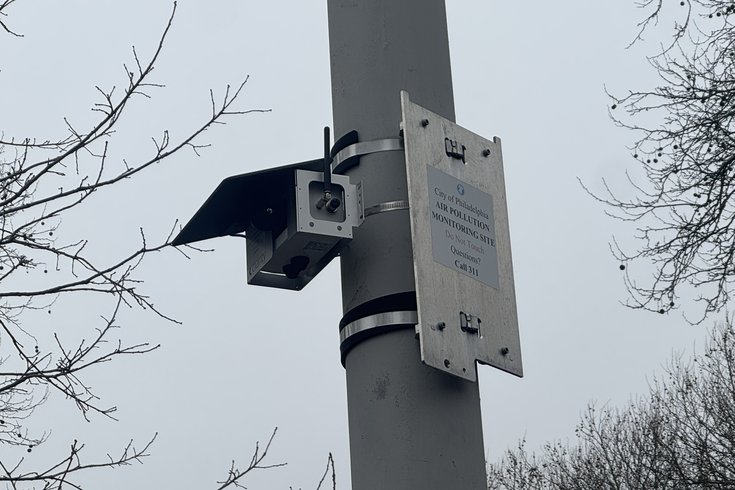
Philadelphia has installed 76 air quality monitors, including the one above, to measure levels of particulate matter and nitrogen dioxide in every neighborhood. Those pollutants can aggravate asthma and other health conditions.
Philadelphia residents now can monitor the air quality in their neighborhoods in real time by checking a website that pulls in data from 76 air quality sensors installed throughout the city in recent weeks.
The Breathe Philly website shows exact air quality measurements, including the primary pollutant and hourly fluctuations, for specific locations throughout the city. It also lists any health recommendations for each area. People can sign up to receive alerts when conditions change.
MORE: SEPTA to scrap mobile Key Tix option for single fares in March
"For too long, too many communities, especially those historically affected by environmental challenges, have lacked access to timely neighborhood-level, air quality data," Mayor Cherelle Parker said at a press conference Wednesday. "This data won't just serve residents, it'll serve the city by helping guide public health responses to inform emergency management and to shape smarter environmental policies moving forward."
The air quality monitors, purchased from the environmental technology firm Clarity Movement Company, are spaced no more than 1.5 miles apart from one another and currently track levels of particulate matter and nitrogen dioxide.
Particulate matter is a mixture of solid particles and liquid droplets found in the air, including dust, dirt and smoke. Some only can be detected by using an electron microscope, the Environmental Protection Agency says. Most particulate matter forms in the atmosphere through a complex reaction of chemicals like sulfur dioxide and nitrogen oxides — pollutants emitted from power plants, industries and automobiles. Others stem from construction sites, unpaved roads, fields and fires.
Small particles cause the greatest health risk, because they can get deep into the lungs and possibly enter the bloodstream, the EPA says. They have been linked to nonfatal heart attacks, irregular heart beats, aggravated asthma, decreased lung function, increased respiratory symptoms and premature death in people with lung or heart disease.
Nitrogen dioxide is produced by burning fuel. Exposure to high concentrations of nitrogen dioxide can aggravate asthma and other respiratory conditions, leading to emergency department visits and hospital admissions, the EPA says. Prolonged exposure may contribute to the development of asthma and increase the risk of respiratory infections.
An estimated 127,000 adults and 32,000 children in Philadelphia have asthma, the American Lung Association says. Last year, the Asthma and Allergy Foundation America found the city to be the fourth-most challenging city in the United States for people with asthma to live in.
For each monitor, the Breathe Philly website displays a color-coded map based on the Air Quality Index, a measurement the EPA uses to determine the aggregate impact of pollutants on air quality. Green signifies the air quality is satisfactory. Yellow means there is risk to people who are unusually sensitive to air pollution. Orange, red, purple and maroon carry increasingly stronger health recommendations.
Sean Wihera, Clarity's vice president of business development and partnerships, said the company's technology eventually will have the capacity to track additional toxins like ozone, a gas tied to asthma attacks, increased risk of respiratory infections and greater vulnerability to pulmonary inflammation.
"This is step one," Wihera said. "We learn what we can learn, and we can add the pollutants we need (to track) as it relates to the sources and health concerns we're experiencing. It's a data-driven process."
The cost for the program is $90,000 per year, officials said. That includes any repairs or replacements the system may need.
The program was announced at Stinger Square Park in Grays Ferry — a neighborhood where residents have raised concerns about air pollution due to its close proximity to industrial sites like the shuttered Philadelphia Energy Solutions refinery.
Last week, Grays Ferry residents were advised to stay home after a trash fire was thought to have potentially emitted harmful contaminants. Protestors in the area also were arrested earlier this month for disrupting construction of a six-story parking garage that residents have worried will worsen air quality.
Palak Raval-Nelson, commissioner of the Department of Public Health, said Breathe Philly can be used by residents to advocate for the health and safety of neighborhoods like Grays Ferry. Persistent concerns about air quality can be reported to the city's environmental justice complaint line by calling (215) 685-9433 or by emailing EJcomplaints@phila.gov.
"We're excited to use the 'Breathe Philly' network in our work to improve air quality," Raval-Nelson said. "But we're just as excited to see how residents use it — whether you're a citizen scientist, the parent of a child with asthma or just enjoying the outdoors."