




October 12, 2026

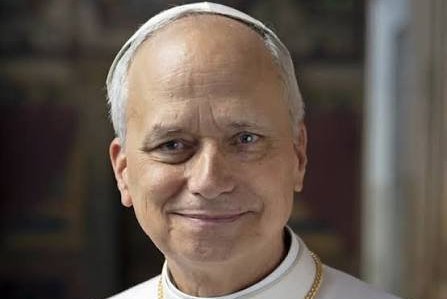 Provided Image/National Constitution Center
Pope Leo XIV will have surgery Tuesday to remove a lung nodule detected during a routine exam.
Pope Leo XIV will undergo surgery to remove a nodule detected on his lung at a hospital in Rome on Tuesday.
The pope, 71, was not very specific about his condition Sunday when he announced his impending surgery during an appearance at the Vatican.
He said "doctors found a circumscribed nodule" in his lung during some checkups. The pope added that the nodule "was found in a very initial phase and well localized" and that "doctors think it is opportune to intervene."
The pope will be admitted to Gemelli Hospital in Rome to have the lump removed, the Vatican News reported. He is expected to be hospitalized for about one week.
The surgery means he will not present a medal in his name, established last year by his alma mater, Villanova University, to honor outstanding leadership in sustainability, ethics and integral human development. He was due to present the award at an international conference Tuesday in Rome, the Inquirer reported.
Dr. Samuel Kim, a professor of surgery at Northwestern Medicine in Chicago, told ABC News that the pontiff was "in very good health and active. The pope should be able to have the operation pretty well and recover. So, I'm very optimistic about the prognosis for our pope."
The American Lung Association describes a lung nodule as a "small mass of dense tissue on the lung" that looks like a white spot on a chest X-ray or CT scan.
They are detected in one third of chest CT scans. Usually, they are not cancerous, the Cleveland Clinic says.
Nodules can be caused by scar tissue, air pollution and other lung irritants, current or past infections of tuberculosis and other illnesses, and inflammation relating to rheumatoid arthritis and other diseases, the American Lung Association says.
Nodules that press on airways or are cancerous may cause symptoms, including chest pain, shortness of breath and wheezing, hoarseness, chronic cough, bronchitis, pneumonia and unexplained weight loss, the Cleveland Clinic says. People also may cough up blood.
Diagnosis may include additional scans and blood and sputum tests to check for infections. Infections causing nodules may be treated with antibiotics and other medications. Diagnosis and treatment also may involve a tissue biopsy to check for cancer or removal of the entire lump.
A non-cancerous nodule may be monitored over time with further scans to check for changes. Benign nodules tend to be small and slow growing. They also are smooth, round and solid. Malignant nodules tend to be larger and fast growing, bumpy or spikey, and only partially solid or non-solid, the American Lung Association says.