




July 16, 2026

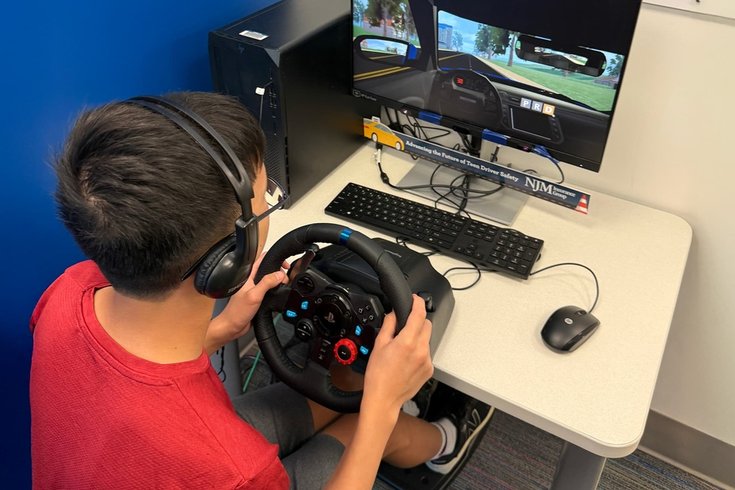 Provided Image/Children's Hospital of Philadelphia
CHOP has resources for teen drivers, including a virtual driving assessment that gives adolescents and their caregivers feedback about their readiness to drive.
Getting a driver's license is a rite of passage for many teens — a step closer to adulthood and greater independence.
But a study conducted by researchers at the Children's Hospital of Philadelphia has identified a gap between the number of teens who want to learn to drive and the number who actually secure a license. The gap is especially prevalent among older teens in lower-opportunity neighborhoods.
The disparities could impact children's development and access to education and job opportunities, the researchers said. Potential barriers to getting licensed also could affect driver safety down the line.
"I think driving is really interesting as a health behavior, because it's got kind of two sides to it," said Stephanie Mayne, a CHOP epidemiologist and the study's first author. "So motor vehicle crashes are one of the leading causes of death in teens, but then also driving can open up opportunities to access jobs, education, social interactions. So it's really got these positive and negative consequences."
Prior research had shown that teens from lower-income communities might delay getting their license.
"But it wasn't really known: 'Is that a difference in intention, or are there barriers?'" Mayne said. "'Is it just that teens in lower income communities might be in more urban areas that are walkable or have public transit and don't want to drive, or are there barriers that might be preventing them?' And our data seem to suggest, at least locally, among our CHOP teens, it is the latter.'"
For the study, published Monday in JAMA Pediatrics, researchers analyzed electronic health record data for more than 6,000 teens ages 15 to 18 at 31 CHOP primary care sites in Southeastern Pennsylvania and New Jersey between 2022 and 2025. The teens filled out questionnaires and had individual assessments at age 15 and again at age 17 or 18. The researchers also used a national index that measures neighborhood opportunities relating to health, education and environment.
The findings showed that the vast majority of 15-year-olds in different communities planned to become drivers: 80% of 15-year-olds in "very low-opportunity neighborhoods," compared to 89% in "very high-opportunity neighborhoods."
But by ages 17 and 18, the disparities in outcomes between the two groups had widened. Just over 31% of teens in low-opportunity neighborhoods had drivers' permits or licenses, compared to about 91% in high-opportunity neighborhoods.
"The fact that we're seeing this sort of gap between intention and actual licensure suggests that something's getting lost in that process," Mayne said. "There are some barriers – probably a multitude of barriers – that could be getting in the way."
Both Pennsylvania and New Jersey have Graduated Driver Licensing requirements, steps that teens and their caregivers need to take to obtain a license. To give teens experience behind the wheel, the requirements include a minimum number of supervised driving hours and restricted driving in lower-risk conditions.
Many teens do not have access to vehicles to practice driving or people to supervise their learning hours. Permitting and license fees, as well as confusion about the regulations, may be other barriers, Mayne said.
Teens who wait until 18 to apply for a license have fewer requirements. But they are "then reducing the ability to be protected by those (Graduated Driver License) policies," increasing safety risks, Mayne said.
Driving "can also be related to kind of a growing sense of independence," Mayne said. "Not everyone needs to drive, but that is a benefit that can come along with driving. If teens want that and are facing barriers in getting that, that could be something that could be lost out on in addition to the access to the amenities that driving can get you to, especially in areas where the infrastructure to get around in other ways may be a little bit less."
CHOP offers a variety of tools to young drivers, including virtual driving assessments, safety resources and licensing information.