






August 22, 2025

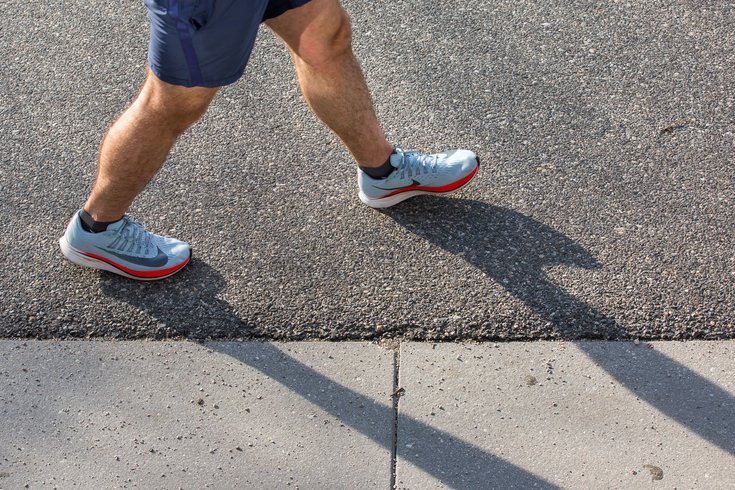 Thom Carroll/For PhillyVoice
Walking is the ultimate value proposition. It can lower your risk of disease, offer a social forum to build relationships, and even help you drop a few pounds.
Want to reduce your risk of death? Cut your chances of dementia? How about lowering your odds for heart disease or cancer?
According to a new study published in The Lancet Public Health Journal, 7,000 steps a day should do it.
While 10,000 steps per day represented a long-standing benchmark, researchers said 7,000 steps per day is "associated with clinically meaningful improvements in health outcomes and might be a more realistic and achievable target for some." Though 10,000 daily steps are associated with substantially lower risks for all-cause mortality, cardiovascular disease, cancer deaths, dementia, and depressive symptoms than 7,000 daily steps, the researchers said the incremental improvement was small, with no statistical difference for all other outcomes.
The study found that 7,000 daily steps are associated with a 47% lower risk of death, a 38% lower risk of dementia, and a 25% lower risk of heart disease, when compared to people who walked 2,000 steps a day. Further, researchers found the risk of death from heart disease was 47% lower and 37% lower from cancer.
The study also contained good news for those who may struggle to hit the 10,000- or 7,000-step goal every day. Even 4,000 daily steps is associated with a substantial risk reduction compared to 2,000 steps. Though the study did not provide a breakdown by age, the fact that something as simple as walking can make such a difference is encouraging for people of all ages.
The research, referred to as a meta-analysis, is considered the largest and most comprehensive synthesis of the association between daily steps and major health outcomes to date, and the first to examine evidence on several outcomes. Lending additional credibility to these results are similar findings in a prior study.
That study, published in the European Journal of Preventive Cardiology, found 3,900 steps per day (just under two miles) was linked to significantly lower risks of dying from any cause. A reduction in death specifically from cardiovascular disease was present with just 2,300 daily steps. The data also showed that each 1,000-step increment was associated with a 15% decreased risk of dying, and each 500-step increment was tied to a 7% decrease in death from cardiovascular disease.
Together, these two studies demonstrate the power of walking and the opportunity to improve one's health. The incremental benefits of adding steps provide a built-in incentive to work toward more steps. Unfortunately, Americans don't take full advantage of this opportunity.
According to data from the National Institutes of Health, adults in the U.S. average 4,000 to 5,000 steps daily, much lower than the optimal targets. The counts reflect an increase in sedentary lifestyles and a lost opportunity to influence our health.
A federal study from 2022 that asked people about their activity in the past week found that almost 60% of U.S. adults walked for leisure and about 16% walked for transportation. The percentage of adults who walked for leisure decreased with age. Almost 62% of adults 18-44 walked for leisure. This percentage dropped to 59.1% for adults ages 45–64 and to 51.6% for adults 65 and older.
Women (60.5%) were slightly more likely than men (56.9%) to walk for leisure. However, going back to a 2010 study, men averaged 5,340 steps per day, versus women at 4,912 steps per day.
If you've bought into the benefits of walking and want to get started, experts recommend that you set realistic goals and start small.
First, you need to know the number of steps you currently walk. Several companies, including Nike and Google Fit, offer free walking apps that you can install on your phone to document your current output and track your progress. Technology also offers inspirational resources and can help identify walking routes.
Of course, finding a friend or family member to walk with you is also a well-developed approach, too. Walking with a partner is a great way to get fit and strengthen your relationships in one swoop. Setting targets that are reasonable with gradual increases is a must.
Integrating walking into your daily schedule can be a challenge, but remember that your commitment to yourself should be a priority. Many of us have seen groups of employees out for a walk during their lunch hour.
If you work in a building with a fire escape, there may be inspirational messages on the walls of the building for those who climb the stairs at lunch or before work. And others will park at a good distance from their building so they can start and finish their day with a walk. Still, some of us are morning people who will get up and walk around the neighborhood or local park, or even hit a treadmill at the local gym. Dog walkers, of course, have a built-in jump on the exercise.
Bottom line, there are ample opportunities to build walking into your schedule with a little creativity and a good dose of commitment. Keep in mind that you want a course that's safe, well lit and easy to navigate.
Americans love value. Whether it's getting more for your money at a favorite retailer or multi-tasking to knock out the to-do list, maximizing precious time and money is attractive. That said, walking is the ultimate value proposition. It can lower your risk of disease, offer a social forum to build relationships, and even help you drop a few pounds.
There's no complicated and expensive equipment required, indoor venues (gyms, malls and stairwells) are available when bad weather hits, and no fancy attire is needed. You can walk before, after and during the workday. And if you're the community engagement type, I'll bet there are plenty of 5K races that offer a one-mile fun walk near your home. It's about as flexible as it gets. So, take advance of this exercise option and get out and take a walk today. It's literally your first step to health and happiness.