




October 26, 2026
 John Kopp/for PhillyVoice
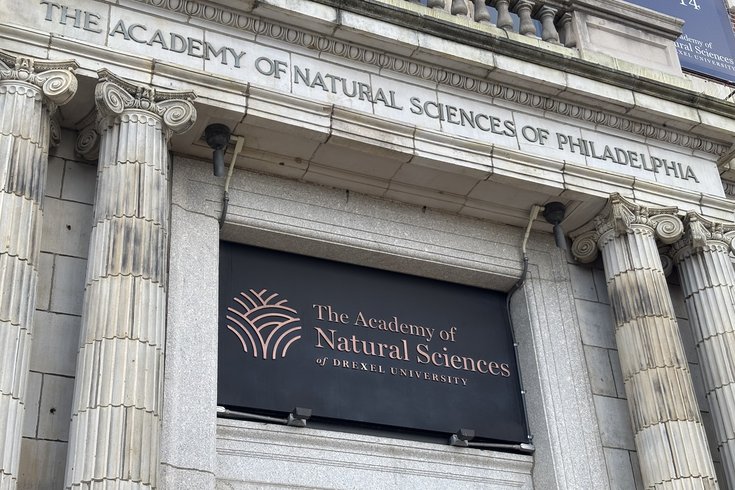
The Academy of Natural Sciences closed its historic museum at the end of September, sparking protests and criticism from city lawmakers.
The long-awaited public hearing on the closure of the Academy of Natural Sciences got off to an explosive start after a top City Hall official skipped out.
Deputy Mayor Patricia Wellenbach had been slated to testify at the Monday meeting of the legislative oversight committee, convened to examine why Drexel University abruptly closed the academy's historic museum in September. But in a "last-minute communication," Wellenbach refused to appear at the hearing in what city council members took as a sign of "disrespect" and "BS."
Wellenbach had been serving as a senior adviser to the academy since last month to, at Mayor Cherelle Parker's directive, help "preserve the essential mission" of the scientific society. She was included on the witness list, albeit crossed out, for the hearing's second panel of speakers that was distributed in City Council chambers. But through written testimony read in council, she claimed "I am not the appropriate person to testify on this matter, as I cannot speak on behalf of Drexel or the academy."
"This is what I think of this testimony," Councilmember Jeffrey Young, Jr. said as he ripped up a copy of Wellenbach's remarks to applause.
Councilmember Isaiah Thomas, chair of the legislative oversight committee, characterized the deputy mayor's withdrawal as unusual, explaining to the gathered audience that "normally" the mayor's office would send a representative to discuss the issue and field questions from city lawmakers. Since Wellenbach did not show, he said, they would not be adjourning the hearing at its conclusion but calling a recess until Monday, Nov. 16, at 10 a.m.
The contentious tone continued as the lawmakers invited Drexel and academy leadership to testify, and another absence was noted. While the university sent two representatives, President Antonio Merlo was not one of them. According to Melissa Richman, the executive director of operations for his office, he had to remain on campus for the Middle States Commission on Higher Education's site visit for reaccreditation. Council members were not impressed.
"It is a shame and disrespectful, not just to all of the advocates, not just to this legislative body, but to your own employees to throw you under the bus like this and not stand here yourself," Thomas said.
Comments from Richman and Suzanne Biemiller, chair of the academy's board of trustees, revealed tension between the affiliated partners. Biemiller testified that the academy had not been in charge of the communications plan for announcing the museum's closure, and that Drexel had not been in touch with the academy about a long-term plan for its future leadership. About a year ago, she said, university officials requested to renegotiate their 2011 affiliation agreement with the academy and offered a "binary choice." The scientific society could either merge fully with Drexel, making its collection university assets, or get a "divorce."
Rue Landau, vice chair of the committee, called this ultimatum "so disturbing" and accused the university of delinquence on "the public facing communication or problem solving parts of this agreement."
Details on the financial costs of operating the academy unleashed a fresh wave of outcry. Biemiller shared that the museum had incurred $3.6 million in operating costs for the Fiscal Year 2025, and made $2.7 million. These figures provoked audible gasps from the audience and shock from the lawmakers, who gave the witnesses an opportunity to restate the numbers. Richman reiterated the sums she shared in her opening comments: The academy's public programs cost $7.7 million and brought in only $3.3 million annually.
The legislators expressed disbelief that the closure was necessary in the case of either deficit. After acquiring St. Christopher's Hospital for Children with Tower Health in 2019 — a move that Richmann proudly touted in her initial comments — Drexel and Tower later asked the city for $10 million to keep the medical center going. Why then, several council members asked, did they not ask for help this time? Thomas also pointed to the $50 million the city pledged to support the African American Museum in Philadelphia as evidence of an existing "appetite to invest in arts, culture."
"That's not a significant amount of money for Drexel or neither the city of Philadelphia's ($7) billion dollar budget that we have," Councilmember Anthony Phillips said of the described deficits. "... I think he thinks we're not smart, the (Drexel) president. And if he does think we're smart, he doesn't care about how people perceive (him). He's not being perceived very well right now."
Richman said the university continues to "be in conversation" with the William Penn Foundation, which has offered to cover the museum's operating costs for at least a year, but did not share any reasons why Drexel had not accepted the offer. She repeatedly said that Drexel had reached out to several "museum institutions" for help, but did not name the organizations. Representatives from the Greater Philadelphia Cultural Alliance, Preservation Alliance, Museum Council of Greater Philadelphia and Skype a Scientist who testified said they had never heard from Drexel.
"I find that really hard to believe," Councilmember Quetcy Lozada said of Richman's outreach claims. "Because when Drexel has been in financial instability or there have been financial questions, Drexel has never had a problem to come to us to say, "This is what is happening, this is how we need help, and we need you to back us up,'" Councilmember Quetcy Lozada said. "And now, in a situation like this one, that's what should have occurred."
Thomas was blunt.
"Help me understand," he told Richman. "Convince me that it was an accident that you didn't come to us this time and that this is not a land grab."
A current staffer of the academy pointed to mismanagement under Scott Cooper, who became the organization's president and CEO in 2017. Mariah Romaninsky, executive director of engagement and visitor experience, said she had observed layoffs every year since 2019, as well as a shift away from children's and family programming and toward more "adult" options.
Cooper resigned his position amid the museum closure.
Councilmember Nina Ahmad, who does not sit on the legislative oversight committee but attended the hearing, said she was still pursuing funding pathways for the academy — including through Ozempic manufacturer Novo Nordisk. The diabetes medication was developed from the venom of the Gila monster, originally classified by an academy scientist.
She will be convening an "advisory task force" through the Committee on Public Health and Human Services, which she chairs.
Follow Kristin & PhillyVoice on Twitter: @kristin_hunt
| @thePhillyVoice
Like us on Facebook: PhillyVoice
Have a news tip? Let us know.