



October 29, 2026

 Ron Lach/Pexels
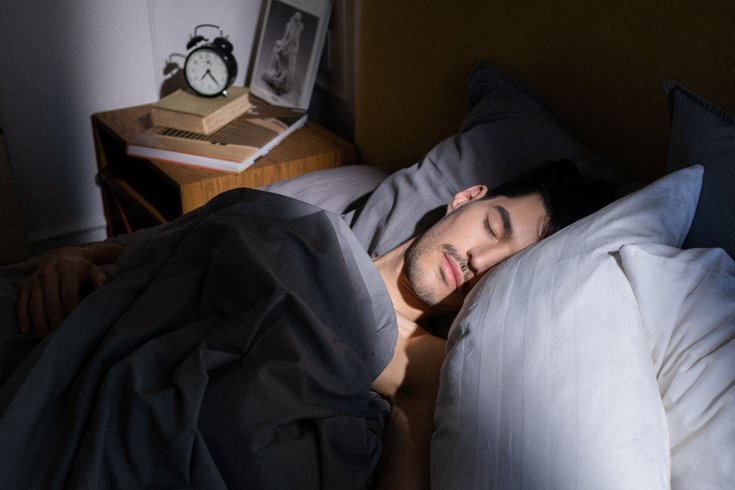
Getting outside for some early morning sunlight after clocks fall back Sunday will help people's bodies adjust to the time change, a Temple sleep specialist says.
With President Donald Trump's Sunshine Protection Act still stalled in the Senate, clocks will fall back one hour at 2 a.m. Sunday when daylight saving time ends.
This is good news to major medical associations and sleep medicine specialists who say that having an extra hour of morning sunlight better aligns with the body's circadian rhythms than tacking that additional hour onto the end of the day, as daylight saving time does when it takes effect each spring.
MORE: Superbugs are becoming a bigger public health threat, CDC warns
The Sunshine Protection Act would make daylight saving time permanent, ending the twice-yearly clock changes. If Congress approves the bill, 19 states – not including Pennsylvania or New Jersey – have passed laws to make DST permanent. These laws cannot take effect until federal legislation is enacted, because current federal law only allows states to make standard time permanent.
But the better course of action would be to make standard time the year-round state of affairs, said Robert Satriale, a pulmonologist and sleep medicine specialist at Temple Health.
"When we are on daylight saving time, our bodies are in what we call circadian misalignment, and things don't function the way they would normally function," Satriale said. "We think that we simply can get over it in a week or two, which is pretty standard on how long it takes to kind of make the adjustments. But studies show that many of the impairments can last all throughout the time that we are on daylight savings."
The American Academy of Sleep Medicine published a position paper in 2020 arguing that "an abundance of accumulated evidence indicates that the acute transition from standard time to daylight saving time incurs significant public health and safety risks, including increased risk of adverse cardiovascular events, mood disorders, and motor vehicle crashes."
Research suggests that vehicle crashes spike after the switch to DST due to driver drowsiness. Disrupted sleep increases risk of anxiety and depression, and research has found a link between the switch to daylight saving time and an increase in suicide deaths among men.
Daylight saving time also is associated with a slight increased risk of heart attacks and strokes. A 2015 study found that students had shorter attention spans and slower reaction times in the days following the switch to daylight saving.
"They're not fully awake when you get them up, and now you're getting them up an hour earlier, and it really impairs their performance," Satriale said.
If people can plan ahead, staying up 10 to 15 minutes later every three to four nights – and waking up 10 to 15 minutes earlier every three to four mornings – in the weeks leading up to falling back can help with the circadian rhythm adjustment.
Making a point of getting some early morning sunlight and some evening light before the sun goes down also can help, Satriale said.
"If they're getting up a little bit earlier because of the time change, go outside and take that walk before you get in the car and go to work," Satriale said. "That kind of cues the brain and helps you delay your sleep phase a little bit."
"The one thing I want to stress to people is that caffeine and energy drinks are really not the answer to staying up later because they can have a long half life," Satriale said. "It can take six to 10 hours for people to metabolize half the caffeine in one of those drinks. If you're having an energy drink or an iced tea at 6 o'clock at night, at 2 or 4 o'clock in the morning, you may still have half of it in your system."