




October 16, 2026
 Michael Tanenbaum/PhillyVoice
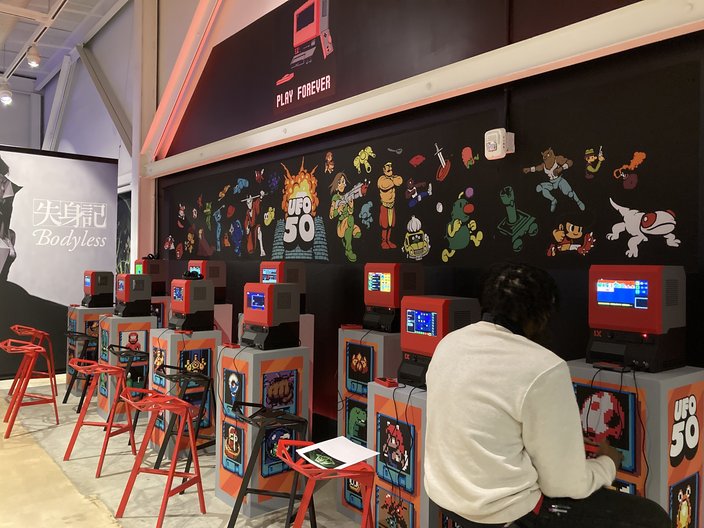
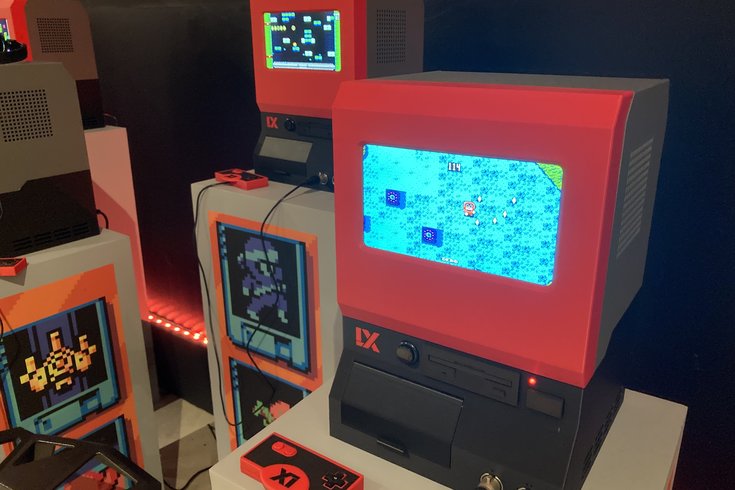
'Escape > Control > Play: The Art of the Video Game' is a new exhibition at Drexel University's Leonard Pearlstein Gallery. It offers an interactive space for people to play a varied selection of indie games and learn about their cultural impact. Above, a station is dedicated to 'UFO 50,' a retro-style game collection made for a console that never existed.
Drexel University's Leonard Pearlstein Gallery has been transformed into a communal video game lounge where visitors can try out indie titles, learn about their creators and explore the history of gaming as a means of cultural resistance.
The exhibition, which opened this week in the gallery at 3401 Filbert St., houses a series of interactive stations that invite guests to explore titles in various formats. Some are arcade games, some are on PCs, some are projected on walls and others are playable using a fictional "retro" console from an alternate history.
The games and designers featured in the gallery challenge ideas about the purpose of video games, offering counterpoints to the blockbuster titles major studios develop for mass appeal.
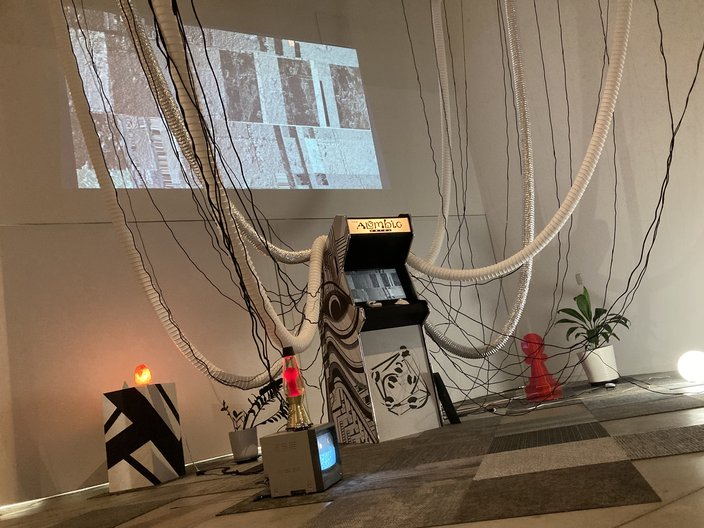
One of the most striking examples is the first-person adventure game "The Alembic Hotel," which doubles as a visual art installation. The game takes place in a hotel populated with characters attempting to create a language to speak with God. As data leaks on the hotel's website and reveals clues, characters encountered throughout the building disclose their competing goals. The story functions as a commentary on data harvesting, the acceleration of artificial intelligence and breeding grounds for radicalization on the internet.
'The Alembic Hotel' is a hybrid art installation and video game developed by members of the Oregon-based .Compost Co-op.
Even though gamers can rack up "data packets" that represent power, the game's narrative subverts this mechanic by offering no means of exchanging the currency. The journey unfolds as an open-ended poem meant to provoke reflection about troubling aspects of futurism and spirituality.
"Hardcore gamers are so much about what a game is, and this is more about what a game can be or what is the exploration process," said Garima Thakur, one of the game's co-creators.
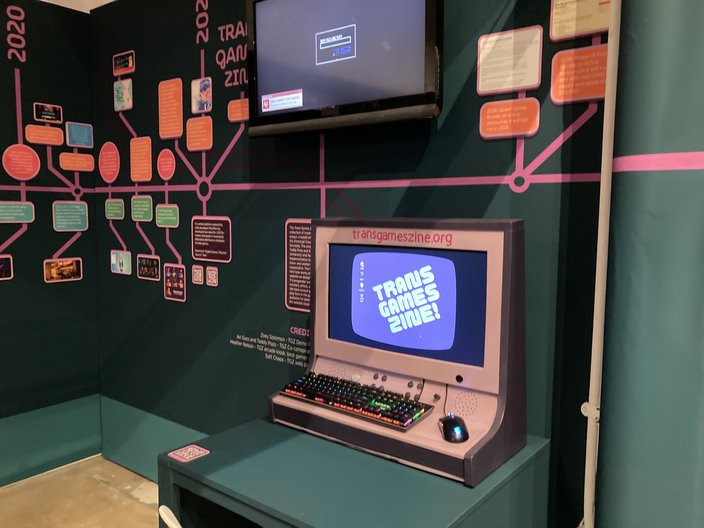
Another section of the gallery is dedicated to the history of LGBTQ+ games and their designers, who have often overcome exclusion from the industry by forming underground communities. A timeline at the exhibit traces three decades of milestones in LGBTQ+ gaming and highlights avant-garde creators who have expanded representation through innovation.
The 'Queer Games >> Histories + Futures' exhibits highlights how LGBTQ+ communities have adpated and innovated in the gaming world. Transgameszine.org, for example, is a community-based platform that promotes playable computer games developed by and for transgender, nonbinary and gender non-conforming people.
The earliest-known indie game made for LGBTQ+ audiences, 1989's "Caper in the Castro," was originally marketed on gay computer bulletin board systems as a form of charityware. Creator C.M. Ralph made the game free as a way to encourage donations to organizations that supported people living with AIDS, but there also was a "straightened" version of the game that had a different title and adapted the story to remove gay themes. The main character is a lesbian detective investigating the disappearance of her drag queen friend, Tessie LaFemme, in San Francisco.
"You're going up and down the businesses on this street in the Castro district of San Francisco trying find out what happens to her," said Adrienne Shaw, a Drexel researcher who collaborated with Ralph to make the game playable via an emulator for the first time in decades. "You uncover clues and put together messages. You have to solve very simple puzzles to basically save Tessie and destroy the evil virus that is killing everyone."
One station at the gallery showcases "UFO 50," a collection of retro-style games made by a small team of independent developers over the past decade. The concept revolves around a made-up console series called the LX that existed in a fictional 1980s timeline. The 8-bit style games on LX span a range of genres, including titles that legitimately would have rivaled the best Nintendo and other platforms had to offer at the time. The lore is that UFO Soft — the fake studio behind the games — ultimately folded in the '90s due to corporate mismanagement. The collection of 50 games was released on major platforms in 2024, earning mainstream attention and a dedicated LX fanbase.
Drexel engineering students took the concept a step further by fabricating 10 playable versions of what they imagine XL consoles might have been. The systems are all loaded with the Nintendo Switch edition of "UFO 50."
The gallery space at Drexel has 10 consoles where visitors can play 'UFO 50,' a collection of retro-style indie games that exist in a fictional universe from the 1980s.
"Part of the idea was the feeling of it being a mass-produced object," said Christopher Grant, a video game journalist who helped plan the Drexel gallery. "If this was a console that existed, what would it be like to see a bunch of them all in one place? This wouldn't have been unusual in the 1980s at a (Consumer Electronics Show) showing off the LX."
When Drexel's exhibition ends in December, visitors who hold the highest scores on "UFO 50" will be able to take the XL consoles home as prizes.
Grant said the gallery space strives to fill the need for more social connection in the gaming world. He thinks it can unite people in the city who otherwise might not have the chance to meet, since playing video games is a hobby most often enjoyed at home.
"The experience of being able to come somewhere and see different things in person with other people is just under-nourished in the gaming community," Grant said.
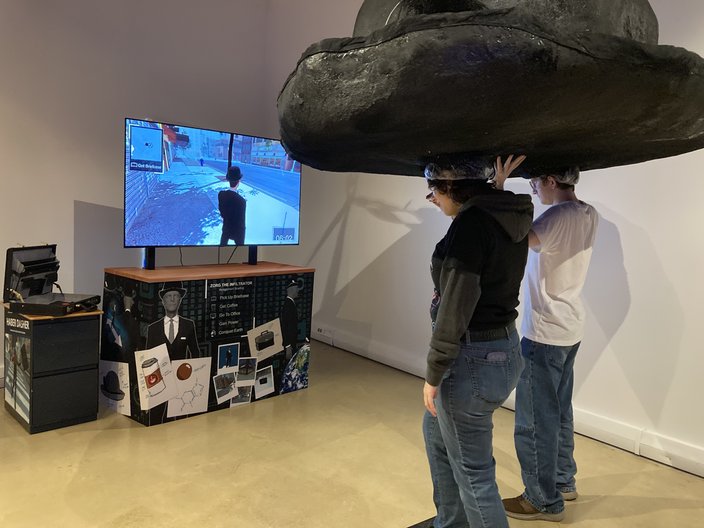
Haber Dasher, a two-person game at the gallery, requires a tandem to operate a giant bowler hat suspended from the ceiling. The hat controls an alien character on screen who's disguised as a businessman and must complete a series of timed challenges.
Drexel University's "Escape > Control > Play: The Art of the Video Game" will be open through Dec. 12. Hours are Tuesday-Friday from noon-5 p.m. and Saturday from noon-6 p.m.