





November 05, 2026
 Daniella Heminghaus/USA TODAY NETWORK via Reuters Connect
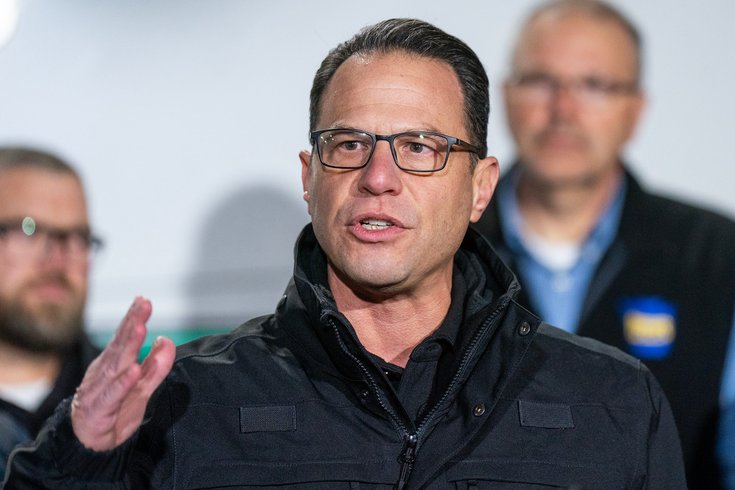
Pennsylvania Gov. Josh Shapiro is expected to weigh a presidential run in 2028 and will be bolstered by Democrats' success in state and national races in Tuesday's midterm elections.
The Democratic tide that swept through Pennsylvania in Tuesday's midterms, giving the party a trifecta in state government for the first time in more than three decades, is widely expected to prime the path for Gov. Josh Shapiro to make a presidential run in 2028.
Shapiro, who defeated Republican challenger Stacy Garrity by a margin of 22 percentage points on Tuesday, wasted little time setting the tone for his second term. With Democratic control secured in Harrisburg, the table is now set for Shapiro to build his case for the White House.
"There's a whole bunch of things that Republicans have been blocking for years," Shapiro said early Wednesday in an appearance on "CBS Mornings." "I want to get that done in the first hundred days with our trifecta."
Shapiro's broad popularity and resounding electoral success in a battleground state may be his strongest selling points for the Democratic ticket in 2028. Ahead of the governor's victory address Tuesday night, Pennsylvania Democratic Party chair Eugene DePasquale underscored the state's importance to the presidential race and boasted about gains in Democratic voter registration. The state has voted for the winner in the past five presidential elections. George W. Bush was the last president to get elected without carrying Pennsylvania.
"There is no math for a Democrat to win the White House without Pennsylvania," DePasquale said in Harrisburg.
Shapiro, who was on Kamala Harris' short list for the vice presidential nomination in 2024, has avoided making public commitments on whether he'll run in 2028. He launched a federal political action committee in October to boost contributions to four Democrats who swept the state's competitive U.S. House races on Tuesday. The results showcased the impact of Shapiro's fundraising abilities at the national level, where he's now armed with another tool to compete in a still-murky Democratic field.
"The iron is hot for him now, for sure," said Ben Berger, a political scientist at Swarthmore College who leads the school's Lang Center for Civic & Social Responsibility. "It's his moment."
Ahead of Tuesday's midterms, Berger cautioned that Shapiro still has work to do in Pennsylvania to grow support for a presidential run. A Quinnipiac University poll in February found that while 90% of Democrats in Pennsylvania approve of Shapiro's job as governor, only 69% said he would make a good president. Among independents, 49% approved of Shapiro as governor compared with 32% who said he would be a good president.
"I think people are smart enough to recognize that the governorship is different from the presidency," Berger said. "And so somebody being a good candidate and a good governor — not only a good candidate, but good in the office — doesn't mean they're necessarily going to be good at the next level or be able to win at the next level."
Part of voters' hesitation to endorse Shapiro could stem from a need to see him prove he can carry out his agenda in Pennsylvania. Democrats in Harrisburg are expected to prioritize raising the state's minimum wage, codifying abortion rights, investing in mass transit and legalizing marijuana. Berger also expects to see Shapiro and the legislature formalize the state's rules on data centers after the governor passed an executive order in August to rein in speculative development.
How much of that platform can be achieved in two years, especially if Shapiro is running for national office, will test the governor's follow-through on promises now that the barrier of Republican obstruction is largely removed.
History offers many examples of popular governors who won state elections by wide margins but failed to break through in presidential primaries. Florida Gov. Ron DeSantis and former Ohio Gov. John Kasich both had massive victories before their presidential runs in recent cycles, and former Massachusetts Gov. Michael Dukakis was reelected in a blowout in 1986 before getting crushed by George H.W. Bush in 1988.
"The only counterexample I can think of, off the top of my head, would be George W. Bush because he had a landslide in Texas in 1998, and that helped to make him the 2000 frontrunner," Berger said.
Early projections for the Democratic field in 2028 include a range of moderate and progressive candidates, including U.S. Sen. John Ossoff of Georgia and California Gov. Gavin Newsom. Former U.S. Transportation Sec. Pete Buttigieg, Illinois Gov. J.B. Pritzker, Kentucky Gov. Andy Beshear and Harris could also run. Newcomers from Tuesday's blue wave could emerge over the coming year as Democrats interpret and build a strategy to leverage their midterm success.
For Shapiro, who has toed the line as a moderate and outspoken critic of President Donald Trump, overcoming history could be a limiting factor in a presidential run. No Jewish candidate has ever won a major-party nomination, and Shapiro's strong support for Israel, despite criticism of Prime Minister Benjamin Netanyahu, could alienate progressive voters. Shapiro's memoir detailed how Harris' vetting team asked him whether he was an "agent of the Israeli government" before the party ultimately opted for Tim Walz as her running mate.
"There's going to be, I think, a lot of pressure from the left, and I think it is going to be a liability," Berger said. "Others have moved in the Democratic Party — kind of away from Israel, and he mostly hasn't."
Berger believes Shapiro views the political landscape as a "long game" that will justify throwing his hat into the presidential race, even if he doesn't get the nomination. He could be tapped as a vice presidential candidate or be offered an attractive cabinet position, which would force him to reckon with his political future and his legacy as governor if Democrats take the White House. Sometimes presidential hopefuls who fail early — John F. Kennedy and Richard Nixon, for example — come back stronger and win.
"I think (Shapiro is) probably somebody who will try for it because he knows he's got some heat," Berger said. "I just think it's the case that he's likely not to make it through because of those issues, but I don't think that's likely to be the the end for him."