

May 01, 2026
 Provided Image/Library of Congress
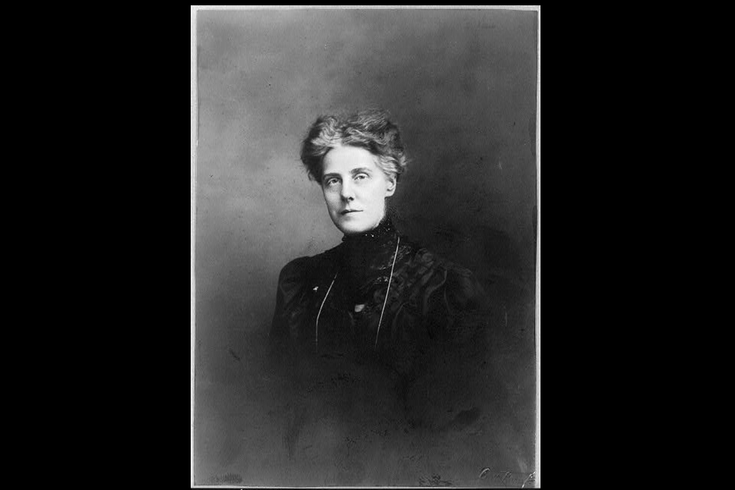
Anna Jarvis, pictured around 1909, organized the first Mother’s Day celebration in the Wanamaker's department store in Philadelphia in 1908.
In 1908, Anna Jarvis organized a celebration that honored the sacrifices mothers make for their children. Held in the Wanamaker's department store in Philadelphia, the celebration is considered the first observance of Mother's Day.
The idea quickly gained traction, and six years later, President Woodrow Wilson made it a national holiday. But in time, Jarvis became displeased with the commercialization of Mother's Day and campaigned against the holiday until her death in 1948. She was buried beside her mother in Bala Cynwyd.
MORE: Purported photos of Billy the Kid, possibly taken in Philly in the 1860s, are up for auction
During the first celebration, the 5,000-seat auditorium in the department store was packed with guests, who Jarvis spoke to for 70 minutes. Over 15,000 people reportedly attempted to enter that day and John Wanamaker ended up extending the event to the plaza in front of City Hall to accommodate for the demand, according to Explore PA History.
By the following year, 46 states, Canada and Mexico had their own versions of Mother’s Day. Jarvis continued to lobby governments and church groups with letter writing campaigns to amass support for national recognition.
On May 8, 1914, Congress passed a law stating the second Sunday in May is to be celebrated as Mother's Day in honor Jarvis’ mother Ann, who died on the second Sunday in May in 1905. Carnations, Ann’s favorite flower, were chosen as the official flower of the holiday.
The first Mother’s Day is one of five “firsts” being honored across the city this month as part of Historic Philadelphia’s yearlong “52 Weeks of Firsts” program.
Each Saturday, a different invention, trend or significant contribution with Philly roots is being celebrated through educational events called "Firstivals." The Historic St. George’s Museum & Archives at 326 New St. will host a Firstival in honor of the holiday on Saturday, May 9, from 11 a.m. until 1 p.m. that will include free card-making activities, educational displays and stories told by Once Upon A Nation actors.
Over the years, Wanamaker's and other retailers used Mother’s Day as a business advantage by hosting lavish parties with flowers and music and promoting sales. The American War Mothers organization, which built care packages for war veterans, also capitalized on the holiday by raising money for their cause.
Jarvis saw these developments as indignant to the original message of Mother’s Day, which was to honor the selfless spirit of her mother, a prominent activist in their home state of West Virginia.
“Anna Jarvis’ Mother’s Day was very sentimental,” Katharine Antolini, associate professor of American history at West Virginia Wesleyan College, said to Mother Jones in 2024. “It wasn’t a day to celebrate all mothers, it was a day for you to celebrate your mother.”
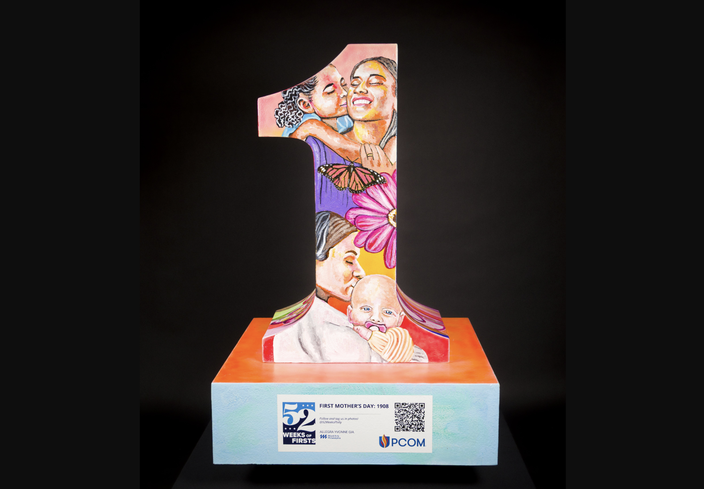
A statue commemorating the first Mother's Day was designed by Allegra Yvonne Gia and will be displayed at Historic St. George’s Museum & Archives at 326 New St.
Jarvis engaged in many legal battles with card manufacturers, florists and candy makers. She was arrested in 1925 for disturbing the peace after intruding on an annual convention for American War Mothers, who were selling carnations to raise money during the holiday, History.com reported.
One story describes Jarvis ordering a “Mother’s Day Salad” at the Wanamaker's tearoom before dumping it on the floor in an act of protest, the Inquirer reported. She referred to greeting cards as “a poor excuse for the letter you are too lazy to write” and, in 1931, attacked first lady Eleanor Roosevelt for hosting what she called an “unauthorized” celebration.
By the 1940s, Jarvis began actively lobbying the federal government to remove Mother’s Day as a national holiday. She was eventually admitted to a sanatorium in West Chester, where she died at 84 years old.
The other four Firstival events in May are listed below. They all run from 11 a.m. to 1 p.m.
• First American-made piano and sousaphone (1775/1895): Johann Berent built the first piano on American soil in Philadelphia. Over a century later, Philadelphian J.W. Pepper invented the sousaphone. Their histories will be shared at the Kimmel Center for the Performing Arts at 300 S. Broad St. on Saturday, May 2.
• First hospital in America (1751): Benjamin Franklin and Dr. Thomas Bond founded the first hospital in the country for patients who couldn’t afford private care. Its Firstival will be held at Pennsylvania Hospital at 800 Spruce St. on Saturday, May 16.
• First World’s Fair on American soil (1876): Philadelphia hosted the first World’ Fair for the country’s centennial celebration, which brought tens of thousands of visitors daily to the city. A celebration will be held at the Please Touch Museum at 4231 Avenue of the Republic on Saturday May 23.
• First steamboat for passengers and freight (1737): John Fitch brought Perseverance, a steam boat that carried passengers and cargo without sails or oars to the Delaware River. His invention marked the birth of engine-powered boat travel and influenced America’s first patent law. An event will be held at the Independence Seaport Museum at 211 S. Christopher Columbus Blvd. on Saturday, May 30.
The full list of Philadelphia's firsts for the year — and the events celebrating them — can be found on Visit Philadelphia's website.