


May 15, 2026
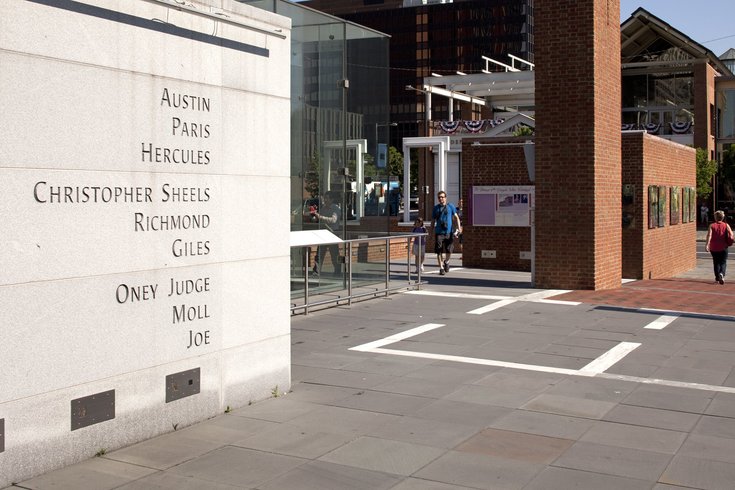 Joseph E.B. Elliott/National Parks System
The President's House already pays tribute to Hercules Posey and his son Richmond, enslaved men who worked at the executive mansion in Philadelphia. But a local preservationist is now seeking a historical marker for George Washington's chef.
The fate of the exhibits at the President's House site, which honors nine enslaved people that George Washington brought with him to Philadelphia, remains in limbo. But one of those nine could soon get his own tribute.
Faye Anderson, founder of the public history project All That Philly Jazz, intends to nominate Hercules Posey for a Pennsylvania historical marker Friday. Posey was the president's chef, known for his elaborate spreads and elegant sense of style. He ran the kitchen at the executive mansion for roughly six years before escaping to freedom in 1797. Friday marks the 214th anniversary of his death.
Some culinary scholars consider Posey the nation's first celebrity chef due to the strong impression he left on diners. According to Washington's step-grandson, Posey was a "celebrated artiste" and "as highly accomplished a proficient in the culinary art as can be found in the United States." His exacting kitchen standards were legendary, and the entire household held him in high esteem. The executive mansion porter would reportedly bow to Posey when he left for his evening walks along Market Street. The chef dressed in silk stockings and coats with velvet trim, purchased from the extra wages he made selling his leftovers.
"He was accorded respect that was unheard of for an enslaved person," Anderson said.
According to historian Ramin Ganeshram, Posey joined the Washington household at Mount Vernon when he was about 20 years old. He and 25 other enslaved people were presented as repayment on an old loan by Washington's neighbor, John Posey. Scholars aren't sure when exactly he began working in the estate's kitchen, but he was listed as a cook in censuses by 1786.
When the nation's capital moved to Philadelphia in 1790, Washington sent for Posey. He lived and worked at the President's House at 6th and Market streets, where he prepared the commander-in-chief's daily meals and diplomatic feasts. Theophilus Bradbury, a U.S. representative from Massachusetts, remembered the "elegant variety of roast beef, veal, turkeys, ducks, fowls, hams, puddings, jellies, oranges, apples, nuts, almonds, figs, raisins, and a variety of wines and punch" at one such dinner in a letter to his daughter.
Washington regularly sent his enslaved staff back to Mount Vernon every few months to circumvent a Pennsylvania law that granted emancipation to slaves who stayed in the state longer than six months. Posey was an exception. He did not attempt to claim his freedom, however, until he was posted back at Mount Vernon in 1797. The move was a sort of punishment; Posey's son Richmond had been accused of stealing, and Washington feared the two were conspiring to escape.
Ironically, the president only pushed Posey toward that path. At the Virginia estate, the celebrated chef was stripped of his kitchen duties and assigned manual outdoor labor instead. Presumably fed up, he fled on Feb. 22, 1797, while Washington celebrated his birthday in Philadelphia.
Anderson wasn't always focused on Posey. Last summer, she was brainstorming ways to preserve the President's House exhibits, a collection of plaques describing the slave trade in America and the nine enslaved workers Washington installed at his Philadelphia residence: Posey, Richmond, Paris, Giles, Moll, Austin, Christopher Sheels, Joe Richardson and Ona Judge. The display was on her mind after Interior Secretary Doug Burgum initiated a review of all public monuments for text that "inappropriately disparage(s) Americans." Independence National Historical Park, where the President's House is located, was mentioned in the executive order calling for this review.
Anderson initially planned to create an AI version of the President's House exhibit. The virtual collection would include digital avatars representing the nine enslaved members of the Philly household. But after federal workers abruptly removed the exhibits in January, sparking a lawsuit from the city, Anderson postponed that project. She didn't want it to be "viewed as an alternative to the real thing."
She also didn't want to sit on her hands as the city's case progressed. So she pivoted to a historical marker. It made sense — Judge, who also self-emancipated, already has one, and Anderson had a good track record of requesting them. She had already successfully pushed for tributes to jazz trumpeter Lee Morgan and the formerly enslaved silhouette artist Moses Williams.
"Markers, I guess, is kind of what I do," Anderson said.
She expects Posey's nomination to be successful, too. The feedback on her pre-application was positive; Pennsylvania Historical and Museum Commission staff said Posey "solidly appears to meet criteria" for a marker. While Anderson waits on a formal response, she plans to take history buffs on a walking tour of Posey's Philadelphia this Saturday. Stops include Old City Hall and the former sites of Ricketts Circus and Chestnut Street Theatre, which Posey attended.
Anderson is hopeful that the city will triumph in its lawsuit over the President's House exhibits. But the prospect of two permanent tributes to the enslaved men and women who worked for George Washington sets her preservationist mind at ease.
"With the marker, regardless of what happens with the President's House, it will keep Hercules' story in public memory," she said.
Follow Kristin & PhillyVoice on Twitter: @kristin_hunt
| @thePhillyVoice
Like us on Facebook: PhillyVoice
Have a news tip? Let us know.